Spatula Design In Delicate Surgery
Oct 11, 2026
The Pain Point: Cutting When Separation Suffices
In plastic, reconstructive, and microsurgery, tissue preservation is paramount. Traditional sharp needles divide tissue indiscriminately, severing small vessels, nerves, and lymphatic channels. This creates unnecessary trauma in procedures where every millimeter of tissue matters. The pain point: how to place a drain without destroying the very architecture you just repaired.
Working Principle: Spatula-Mediated Dissection
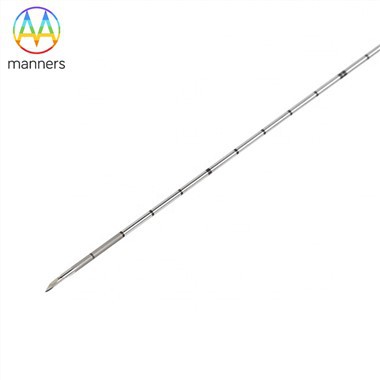
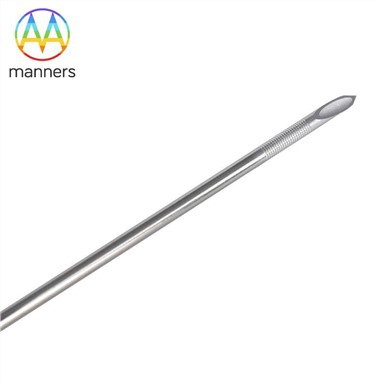
A spatula-shaped Disposable Redon Needle features a flat, blade-like tip that slides between tissue planes rather than through them. It acts as a dissector, gently separating fibers along natural cleavage lines. The principle is blunt dissection with directional control-the flat profile prevents point-deep penetration while the edge allows controlled advancement. This is especially valuable near superficial nerves, vessels, and cosmetic incision lines where scarring must be minimized.
Equipment Classification
|
Spatula Variant |
Width |
Length |
Ideal Use Case |
|---|---|---|---|
|
Micro Spatula |
1.5 mm |
40 mm |
Facial, hand, pediatric |
|
Standard Spatula |
2.5 mm |
60 mm |
Breast, abdominoplasty |
|
Wide Spatula |
4.0 mm |
80 mm |
Large flap donor sites |
|
Curved Spatula |
3.0 mm |
70 mm |
Contoured body areas |
Materials remain SS304/SS303; the spatula edge is precision-ground to a controlled thickness (0.15–0.3 mm) for optimal tissue separation without cutting.
Operational Guide: Spatula Placement Technique
- Identify tissue plane: Palpate or visualize the natural separation between subcutaneous fat and underlying fascia.
- Entry: Use the spatula tip to gently lift and separate the first layer. Avoid downward pressure.
- Advancement: Slide along the plane with a smooth, gliding motion. The spatula should feel like it is "finding its way" between layers.
- Direction control: The flat profile naturally limits depth-if you feel resistance on the flat surface, you are likely hitting a fascial boundary. Adjust angle slightly.
- Drain threading: Once tract is created, advance the Redon drain alongside the spatula, then withdraw the spatula while holding drain position.
- Verification: Gently tug on drain to confirm it is seated within the created plane, not superficially placed.
Field Experience: Aesthetic and Reconstructive Insights
Plastic surgeons report that spatula needles allow earlier drain removal-often 1–2 days sooner than with sharp placement-because fluid collects in a well-defined plane rather than diffusing through traumatized tissue. Patients describe less "pulling" or "burning" pain at the drain site. In breast reconstruction with tissue expanders, spatula placement reduces the risk of needle contact with the expander shell, preventing silent puncture. One center's data showed a 41% reduction in drain-site revision procedures after switching to spatula-tip disposables.
Summary and Elevation
The spatula Redon needle embodies a surgical philosophy: the best intervention is the one that does the least harm while achieving the goal. By separating rather than cutting, it preserves the delicate infrastructure of healing tissue. This is not just technique-it is respect for the patient's anatomy.
Outlook and Recommendation
Spatula needles should become standard in all plastic and reconstructive surgery kits. Manufacturers should develop color-coded spatula widths for instant gauge recognition and flexible-shaft variants for contour-following in body sculpting procedures. Training programs should include specific modules on spatula dissection technique, as the skill set differs from sharp puncture.