Soft Tissue Biopsy Needle Core Material Science And Manufacturer Selection Guide
Apr 21, 2026
Soft Tissue Biopsy Needle Core Material Science and Manufacturer Selection Guide
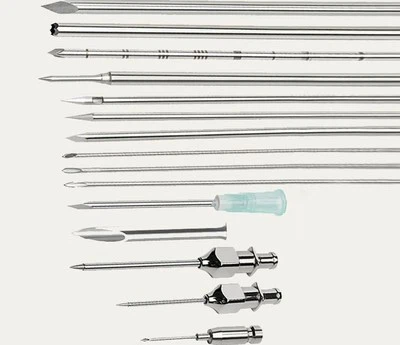
The selection of materials for soft tissue biopsy needles is a critical determinant of sampling quality, patient comfort, and clinical safety. The core material systems encompass three primary categories: titanium alloys, medical-grade stainless steel, and medical-grade plastics/polymers. Manufacturers strategically leverage the distinct properties of these materials to develop differentiated product portfolios tailored to specific clinical demands.
Titanium Alloys: The Premium Choice for Precision and Imaging
Titanium alloys stand out due to their exceptional strength-to-weight ratio, outstanding corrosion resistance, and superior biocompatibility. A key clinical advantage is their non-magnetic nature, making them perfectly safe for use in Magnetic Resonance Imaging (MRI) guided procedures without causing artifacts. Internationally, Bard (now part of BD Interventional) is renowned for its titanium alloy biopsy needles featuring low-traumatic designs, often enhanced with hydrophilic coatings to minimize tissue friction during insertion. Domestically, Jiangsu Huaxing Medical Instruments has developed a series of fine titanium alloy needles (18G-22G), specifically designed for superficial biopsies of the thyroid and breast. These products are CFDA certified and widely adopted in tertiary Grade-A hospitals across China.
Medical-Grade Stainless Steel: The Versatile Workhorse
Medical stainless steel (commonly grades 304 and 316L) remains the mainstream material for biopsy needles. It offers an optimal balance of hardness, toughness, machinability, and cost-effectiveness, along with excellent compatibility with standard sterilization methods. Japan's TSK Laboratory is a market benchmark, producing semi-automatic stainless steel needles from precision seamless tubing. Their signature spiral-cut needle tips achieve a sample integrity rate of over 95%, with specifications ranging from 14G to 22G and lengths of 90mm to 220mm, catering to deep-seated organ biopsies like those of the liver and kidneys. Meanwhile, Demei Te Medical (Demeter Medical) in China focuses on cost-performance, utilizing optimized tip angles and advanced heat treatment processes to reduce penetration resistance by 15%, receiving positive clinical feedback for their reliability.
Medical Plastics/Polymer Composites: Enhancing Usability and Cost Efficiency
Medical-grade plastics and polymers are primarily utilized for non-contact components such as hubs and handles. Their advantages lie in lightweight construction, cost efficiency, and design flexibility, often complementing metal shafts in hybrid designs. Mermaid Medical's biopsy kits, for instance, feature ergonomic handles made from medical-grade ABS plastic paired with stainless steel shafts, enhancing operational stability for clinicians. These kits have a strong presence in European and Asian markets. Shanghai SA Medical's offerings focus on general-purpose, cost-effective models with plastic hubs, streamlining routine biopsy workflows.
Selection Guide for Procurement and Manufacturing
When selecting biopsy needles, manufacturers and procurement specialists must align their choices with specific clinical scenarios:
For Titanium Alloys: Prioritize industry leaders like Bard and Huaxing for their precision engineering and MRI compatibility.
For Stainless Steel: Opt for TSK, Bard, or Demei Te for their proven reliability, sharpness, and deep-tissue performance.
For Plastic Hub Models: Consider Mermaid Medical or Shanghai SA Medical for cost-effective, high-volume routine procedures.
Ultimately, the core considerations must include verified biological safety (ISO 10993), comprehensive size range availability, compatibility with sterilization protocols (e.g., EO, Gamma irradiation), and robust clinical validation data. Ensuring compliance with international standards like ISO 13485 guarantees that the products not only meet regulatory requirements but also precisely match the nuanced demands of diverse soft tissue biopsy procedures.