Soft Tissue Biopsy in Clinical Practice: Diagnostic Value And Disease Applications
Aug 21, 2026
Pain Points In clinical diagnosis, many soft tissue diseases have atypical early symptoms and ambiguous imaging manifestations, which are difficult to distinguish benign and malignant through conventional detection means. Tumor lesions, chronic inflammation, musculoskeletal disorders and atypical proliferative lesions are easy to be misdiagnosed, resulting in missed optimal treatment opportunity. In addition, there is a lack of effective detection means for treatment effect monitoring of chronic soft tissue diseases, unable to accurately judge lesion recovery status. The single detection mode seriously restricts the early diagnosis and precise treatment of soft tissue diseases, forming a clinical diagnosis and treatment bottleneck.
Working Principle Soft tissue biopsy obtains lesion living tissue samples through professional biopsy needles, and realizes accurate typing and judgment of various soft tissue diseases relying on pathological microscopic analysis technology. Different from indirect imaging observation, biopsy directly analyzes cell proliferation, tissue inflammation, lesion differentiation and structural changes, which can accurately identify benign tumors, malignant cancers, chronic inflammatory lesions and musculoskeletal degenerative lesions. At the same time, repeated biopsy sampling can dynamically observe tissue pathological changes before and after treatment, accurately evaluate treatment response, and provide objective basis for adjusting clinical treatment plans.
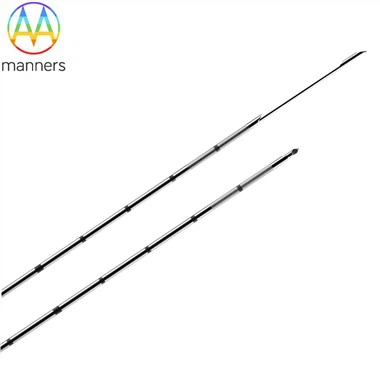
Biopsy Equipment Classification by Clinical Scenario Different biopsy needle materials and specifications form targeted equipment systems for diverse clinical scenarios. First, disposable polymer biopsy needles: suitable for outpatient routine screening, chronic inflammation and benign lesion preliminary diagnosis, realizing rapid and safe large-scale screening. Second, stainless steel standard biopsy needles: suitable for conventional tumor, muscle and connective tissue lesion biopsy, stable performance and high cost performance, suitable for general hospital routine diagnosis. Third, titanium high-precision biopsy needles: suitable for early micro-cancer lesions, deep atypical tumors and difficult musculoskeletal lesion precise sampling, meeting high-precision diagnostic needs.
Scenario-Based Biopsy Operation Guide Implement differentiated biopsy schemes according to different disease types and lesion characteristics. For suspected malignant tumor lesions, select low-gauge high-precision needles to ensure sufficient sampling volume and avoid missed diagnosis of cancer cells. For chronic inflammatory soft tissue lesions, adopt medium-gauge standard needles to obtain inflammatory tissue for typing analysis. For musculoskeletal degenerative diseases, use high-rigidity stainless steel needles to penetrate dense fibrous tissues for effective sampling. For postoperative treatment effect monitoring, select minimally invasive disposable fine needles for repeated sampling detection to reduce patient trauma. Ensure targeted equipment selection and standardized sampling for different diseases.
Clinical Disease Diagnosis Experience Practical clinical application fully verifies the comprehensive diagnostic value of soft tissue biopsy. In tumor diagnosis, biopsy accurately distinguishes benign and malignant soft tissue tumors, with a diagnostic accuracy rate of more than 99%, becoming the gold standard for cancer confirmation. In inflammatory disease diagnosis, it can accurately identify inflammatory types and avoid blind anti-inflammatory treatment. In musculoskeletal disorder diagnosis, it clarifies tissue degenerative changes and guides targeted rehabilitation treatment. In treatment monitoring, dynamic biopsy sampling can accurately judge lesion improvement, providing reliable basis for clinical treatment adjustment.
Summary and Sublimation Soft tissue biopsy is a comprehensive and accurate clinical diagnostic technology covering tumors, inflammation, musculoskeletal diseases and treatment monitoring. It solves the clinical pain point of ambiguous diagnosis of atypical soft tissue lesions, fills the gap of accurate typing and efficacy evaluation of soft tissue diseases, and provides a decisive pathological basis for modern clinical precise diagnosis and individualized treatment. Diversified biopsy needle equipment supports the full-scene popularization of biopsy technology in multiple clinical fields.
Future Clinical Expansion Suggestions Future soft tissue biopsy will further expand clinical application boundaries. First, promote early biopsy screening of high-risk soft tissue tumors to improve early cancer diagnosis rate. Second, formulate special biopsy schemes for rare soft tissue diseases. Third, popularize dynamic biopsy monitoring technology in chronic disease treatment. Fourth, realize the full coverage of standardized biopsy diagnosis in primary medical institutions.