Seven Signs Your Stainless Steel Dispensing Nozzle Needs Replacing
Nov 12, 2026
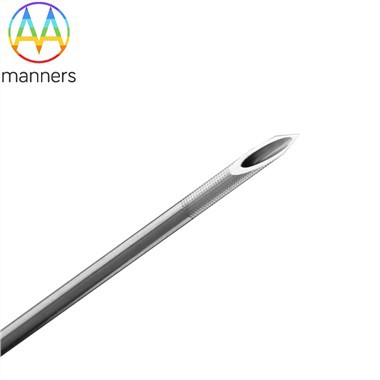
A dispensing nozzle is a consumable, but it rarely fails in a way that announces itself. It wears, deforms, accumulates residue and slowly changes the volume it delivers, while the machine keeps running and the operator keeps compensating. The result is a process that drifts out of control without a single obvious breakdown. These seven signs are the ones worth acting on, and each is something you can observe on the line within a shift. All of them apply to a stainless steel nozzles dispensing needle, whether it is a standard part or one produced to a drawing.
1. Deposits That Shrink Gradually
The most common sign is a slow reduction in deposit size across a shift. Early deposits look correct, later ones are visibly smaller, and the change reverses after a purge or a nozzle change. This pattern points to residue accumulating in the tip, narrowing the flow area.
How to check it properly
Dispense ten deposits on film at the start and end of a shift at identical parameters, then compare diameters. A drift of more than a few percent across a shift is a warning; a step change after each purge indicates that residue, not the valve, is the variable. If the nozzle is coated, check for coating wear at the tip before concluding that the bore has narrowed.
2. A Visible Tail or Satellite Droplet
When a nozzle separates cleanly, the droplet detaches without a thread. When it does not, a tail forms and either lands on the part as a smear or breaks into small satellites that contaminate the fixture.
What it usually means
A tail is often a sign of a damaged or worn orifice, or of adhesive that has thickened at the tip. It can also indicate that standoff has drifted. Check the tip under magnification before adjusting the process: a rolled edge or a nick will confirm the diagnosis, and no amount of parameter tuning will correct it.
Separate the fluid from the geometry
Before condemning the part, warm the adhesive to its specified application temperature and re-test. Many tails disappear once viscosity is back inside its band, which tells you the nozzle was working with a fluid outside its design range rather than against a defective orifice. If the tail persists at correct temperature with a clean tip, the geometry or the edge is the remaining explanation.
3. Purging More Often Than Usual
Every process has a purge interval. When that interval shortens without a change of adhesive, the nozzle is telling you something.
Two causes worth separating
Residue inside the channel suggests the flow path needs a low-energy surface, such as a nickel-PTFE coated or PTFE-enriched nozzle. Residue on the outside, particularly near the tip, often comes from light exposure with UV adhesives or from a nozzle that is being wiped with an incompatible solvent. Separating the two avoids replacing parts that could simply be cleaned differently.
4. Deposits Landing Off-Centre
A dot that lands consistently a little to one side is a strong indicator that the nozzle is not seated squarely. The Luer lock interface should pull the part onto the taper concentrically; if it does not, the tip is offset by a fraction of a degree, which becomes a visible lateral error at the deposit.
The quick test
Dispense ten dots without moving the part. If the landing position drifts, remove the nozzle, clean the taper, and reseat it. If the drift persists, inspect the collar for cracks or deformation and replace the part.
5. Damage You Can See Under Magnification
Not every failure is gradual. A tip that has touched a part, been cleared with a wire, or been dropped onto a hard floor can be deformed in an instant.
What to look for
Look for a polished flat on the tip where it contacted the substrate, a nick on the orifice edge, or an oval rather than circular opening. Any of these justifies replacement. Where nozzles are used in dense fixtures, thin-wall tips provide access but need protective packaging and a removal tool to survive handling.
6. A Change in the Appearance of the Flow Path
New nozzles have a clean, uniform interior. After repeated cleaning, a stainless steel nozzles dispensing needle can show scratching from abrasive wipes, discolouration from dried adhesive, or a patchy surface where a coating has worn.
Why appearance matters at this scale
At inner diameters between 0.1 mm and 0.8 mm, surface condition is a functional property. Roughness increases adhesion, and adhesion increases residue. A nozzle that looks tired is usually a nozzle that has begun to deliver inconsistent volume, even if the change is too small to see in the deposit.
7. A Lot Change Without Documentation
The least obvious sign is administrative rather than physical. If nozzles are drawn from a shared bin and lots are not recorded, a change in performance cannot be traced to its source, and the process is adjusted to fit whichever part happens to be installed.
Why this is a replacement signal
When you cannot say which lot is in the machine, you cannot say whether the current performance is normal. Introduce a simple record of lot, installation date and shift, and replace nozzles at a defined interval based on inspection and deposit data rather than on failure.
What a Replacement Record Should Capture
The minimum fields
Part number and drawing revision, lot number, installation date and shift, product being dispensed, and the reason for removal. Five fields are enough to make a pattern visible after a few months, and they cost an operator less than a minute per changeover.
Why the reason matters most
A nozzle removed because it was dropped is a handling problem; one removed because deposits shrank is a residue problem; one removed because the landing position drifted is a seating problem. Recording the reason turns a consumable into a diagnostic signal, and it gives purchasing evidence when a lot performs differently from its predecessors.
FAQ
How long should a dispensing nozzle last?
It depends on adhesive chemistry, cleaning frequency and handling, so a single figure is misleading. Define an interval from your own inspection and deposit data, review it quarterly, and treat it as a process parameter.
Can I clean and reuse a nozzle that has clogged?
Usually yes, provided the blockage is uncured adhesive and the cleaning agent is compatible with the material and any coating. A nozzle cleared with a metal wire should be inspected and generally replaced, because the bore is likely to be scratched.
Is a coated nozzle worth the extra cost?
It is worth it where the adhesive is reactive and residue forms quickly, because it reduces purge frequency and extends service life. For benign materials the benefit is smaller, and a bare stainless nozzle is a reasonable choice.
Do these signs apply to custom nozzles?
They do, and custom parts deserve a written specification even more than standard ones. Specify burr-free edges, polished and passivated surfaces, bore tolerance and packaging; then the same seven checks apply.
A Simple Replacement Policy
A workable policy needs only three elements: a baseline deposit measurement for each product, a documented inspection at changeover, and a defined lot record. With those in place, the seven signs above become decision points rather than opinions. Suppliers working to ISO13485 can support the policy with dimensional records, change notification and consistent hub quality; custom geometry can be produced from 2D or 3D drawings or from a sample; and parts can be supplied in standard cartons or packaging arranged around your handling requirements. Replace on evidence, and the process stays where it belongs: inside its window.