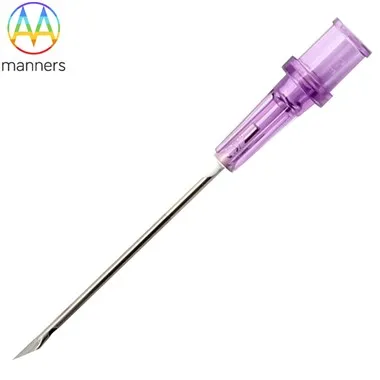
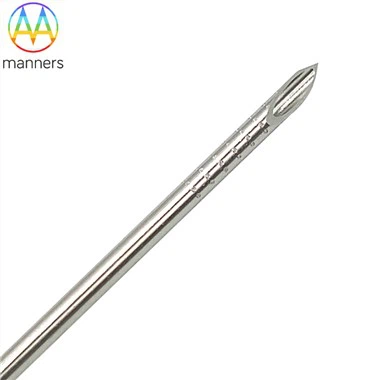
Safety Performance And Clinical Risk Control Of Quincke Style Spinal Needle
Aug 04, 2026
https://www.gstc.com/types-of-spinal-needles/
Safety is the core core competitiveness of Quincke Style Spinal Needle as an invasive clinical anesthesia device. From material selection, structural design to finished product processing, the product strictly follows international medical safety standards, and has excellent biocompatibility, low trauma and high stability, which can effectively control various clinical operation risks and ensure the safety of patients' diagnosis and treatment. After long-term clinical verification, it has extremely low complication rate and high clinical safety, and is recognized as a safe and reliable lumbar puncture anesthesia device.
The high safety of Quincke Style Spinal Needle is first reflected in the high-quality medical stainless steel material. The raw material has no toxic and harmful components, no tissue irritation, and will not cause inflammation, allergy and rejection after invading human tissue. The integrated seamless needle body avoids residual burrs and sharp edges, eliminates the risk of tissue scratching and secondary damage during puncture, and ensures the smooth progress of the operation. The overall structural stability avoids needle body breakage, falling off and offset during use, completely eliminating major safety hazards in the operation process.
In terms of clinical risk control, the product's graded specification design effectively avoids operation trauma risks. The matching of large, medium and small gauges corresponds to different patient groups, avoiding excessive tissue damage caused by inappropriate needle type selection. The dual needle tip design further optimizes risk control: Quincke Point improves operation efficiency to reduce long-time operation risks, and Pencil Point reduces dural damage to avoid postoperative cerebrospinal fluid leakage and intractable headache. Combined with standardized local anesthesia technology, the product completely eliminates deep tissue pain risks, and only retains mild superficial needle hole discomfort.
Cooperated with standardized postoperative nursing, the clinical risk of Quincke Style Spinal Needle lumbar puncture is almost controllable. The 4-6 hours supine rest specification effectively avoids postoperative complications, and the short operation time greatly reduces the probability of intraoperative infection and psychological stress reaction. For neonatal sensitive groups, the ultra-fine special specifications can achieve ultra-low trauma puncture, fully protecting the delicate lumbar tissue and nerve structure of newborns. Its comprehensive safety performance makes Quincke Style Spinal Needle suitable for long-term large-scale clinical promotion and is trusted by global medical institutions.