Safety Definition And Whole-Risk Prevention System Of Subcutaneous Injection
Aug 19, 2026
https://en.wikipedia.org/wiki/Hypodermic
Pain Points The industry lacks systematic safety cognition based on subcutaneous injection definition, leading to blind risk prevention and missed hidden dangers. Many medical staff only focus on puncture safety but ignore the subcutaneous slow-release safety attributes, resulting in inappropriate drug selection and adverse accumulation reactions. Non-standard needle matching and repeated puncture induce subcutaneous infection, induration and lipodystrophy. Disposable needle reuse and unsterile operation cause cross-infection risks. The lack of targeted safety management system based on subcutaneous anatomical definition leads to irregular risk control and occasional clinical safety accidents.
Working Principle The safety definition of subcutaneous injection is standardized low-trauma, pollution-free and stable sustained-release medication safety based on superficial subcutaneous tissue characteristics. Its safety core lies in three dimensions: sterile operation to avoid subcutaneous tissue infection, graded needle matching to control micro-trauma risk, and reasonable drug dosage and speed to prevent local accumulation and adverse reaction. Subcutaneous tissue has weak resistance to foreign bodies and slow metabolism, so safety management must focus on sterile protection, minimal trauma and uniform drug diffusion, forming a whole-process risk prevention mechanism adapted to subcutaneous physiological characteristics.
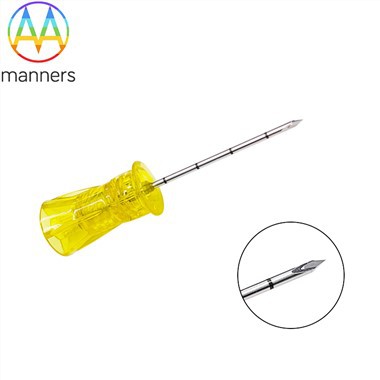
Equipment Classification Safety risk prevention corresponds to hierarchical hypodermic needle safety standards. First, disposable plastic needles: eliminate cross-infection risks, core safety equipment for public health and outpatient subcutaneous injection. Second, siliconized coated needles: reduce trauma and inflammatory risks, improve long-term medication safety. Third, corrosion-resistant alloy and inert glass needles: avoid chemical reaction and drug contamination, ensure special drug subcutaneous delivery safety. Fourth, qualified stainless steel needles: stable physical performance, prevent needle breakage and residual risks in routine injection.
Practical Operation Guide Implement whole-process safety prevention based on subcutaneous injection safety definition. Pre-operation: strictly inspect needle sterility and validity period, select safety-matched equipment according to drug attributes, prohibit repeated use of disposable needles. Intra-operation: standardize skin disinfection, control puncture depth and speed, avoid excessive local drug concentration. Post-operation: standardize needle disposal and local observation, track subcutaneous tissue repair status. For long-term repeated injection, implement site rotation and regular tissue inspection to prevent cumulative safety hazards such as induration and atrophy.
Practical Experience Standardized safety management practice verifies that targeted risk prevention based on subcutaneous definition reduces subcutaneous injection adverse event rate to nearly zero. Graded safe needle matching eliminates equipment-related safety hazards. Whole-process sterile operation realizes zero infection in subcutaneous injection scenarios. Long-term site rotation management completely avoids cumulative tissue damage risks. The safety system adapted to subcutaneous physiological characteristics ensures the high safety and repeatability of clinical subcutaneous medication.
Summary and Sublimation The unique safety definition of subcutaneous injection constructs a targeted risk prevention system different from other injection modes. It breaks the universal safety management mode, realizes precise risk control aiming at subcutaneous tissue characteristics and slow-release medication attributes, and solves various potential safety hazards in traditional subcutaneous operation. The cooperation of graded safe hypodermic needles and standardized norms ensures the long-term safe and stable application of subcutaneous injection in clinical and public health fields.
Future Suggestions Future subcutaneous injection safety management will develop towards full-process intelligent early warning. First, formulate exclusive safety operation guidelines based on subcutaneous injection definition. Second, build equipment safety traceability system for subcutaneous needles. Third, develop intelligent monitoring equipment for subcutaneous tissue long-term medication. Fourth, standardize industry safety assessment standards for subcutaneous injection scenarios.