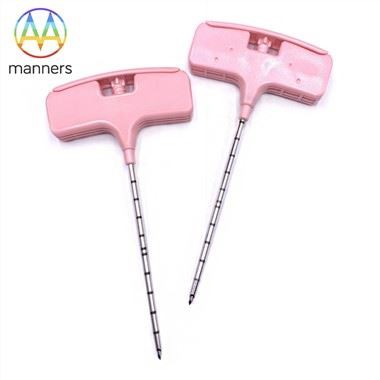
Regulatory Files For Brachytherapy NeedleS
Nov 27, 2026
Ce Mdr Brachytherapy Needle Technical File
Regulatory documentation is where a good needle programme either becomes a sellable product or remains a promising prototype. A brachytherapy needle is a tissue-contacting, invasive device used in an oncology procedure, and every market it enters asks the manufacturer to demonstrate that the design, the manufacturing process and the finished device are controlled.
This article approaches the technical file as a practical engineering document rather than a paperwork obligation: the problems an incomplete file creates, the logic that should organise it, the categories of documentation involved, how to build and maintain it, what experienced teams have learned, a summary and the outlook.
What an Incomplete File Costs
The first cost is market delay. A tender or a distributor request arrives, the file is requested, and the manufacturer discovers that the electropolishing process has no validation record and the coating has no biocompatibility statement. Weeks become months.
The second cost is credibility. Reviewers form an impression quickly. A file whose sections contradict each other, whose drawings do not match the inspection plan, or whose claims are unsupported by data, damages trust in everything else the manufacturer says.
The third cost is complaint handling. When a clinical complaint arrives, the file is the reference that defines intended performance. Without it, there is no baseline against which a deviation can be judged.
The fourth cost is change management. A supplier that changes a coating, a tube source or a grinding parameter without updating the file has created a documentation gap that may only appear years later in an audit.
The fifth cost is the buyer's exposure. Distributors and hospitals that place devices on the market carry obligations of their own, and they increasingly require the manufacturer's file to be complete before they will sign.
The Logic That Should Organise the File
A technical file works when it follows one narrative: what the device is, what it must do, how it is made, how that is proven, and how it is kept under control.
Device description establishes intended use, classification rationale, materials, dimensions, configuration range and the accessories that make up the system. Gauge range from 8G to 20G, tip geometries, hub formats, coating and echo features belong here, described as a controlled family rather than as a list of part numbers.
Design requirements translate clinical need into measurable characteristics: insertion force, bore friction, tip conspicuity, depth reference accuracy, seed retention and sterility. Each requirement should have a verification method attached, because a requirement without a method is a wish.
Manufacturing description documents the route: necking, swaging, grinding, laser cutting, laser marking, electropolishing, coating, assembly and packaging, with the special processes identified and their validation referenced.
Verification and validation report the evidence: dimensional inspection, functional testing, biocompatibility assessment, sterilisation validation where applicable, packaging and transport validation, and shelf-life justification.
Risk management ties the file together. Every hazard identified in the risk analysis should map to a control, and every control should map to a verification activity. When this mapping is complete, the file reads as an argument rather than a collection.
Labelling and instructions for use close the narrative, because they are the part of the file the user actually sees.
Categories of Documentation
Design documentation includes drawings, specifications, material certificates and the design history record. For a customised product range, the drawing control system is critical, because each customer configuration must be traceable to an approved design.
Process documentation includes routing sheets, work instructions, equipment parameters and special-process validation. Electropolishing and coating are the two processes most often under-documented and most often responsible for batch-to-batch differences.
Test documentation includes inspection plans, sampling rationale, measurement methods and instrument calibration. Where a characteristic cannot be measured directly, the method used to infer it must be justified.
Compliance documentation includes the declaration of conformity, the classification justification, the biocompatibility assessment and the sterilisation and packaging validations. These are the documents a reviewer reads first and remembers longest.
Post-market documentation includes complaint handling, vigilance reporting where required, and the change control that links a process change to a file update. A file that is accurate on the day it is written and never revised is a liability.
Building and Maintaining the File
Start from the risk analysis, not from the table of contents. A file organised around hazards and controls writes itself; a file organised around headings becomes a filling exercise.
Write the device description as a family with defined boundaries. Then state explicitly what falls outside the family, and how a new configuration is added. This prevents the common failure where custom parts ship without being covered.
Validate the special processes before they appear in the file. A validation report written retrospectively is usually a description of what happened rather than proof that the process is capable.
Keep drawings, inspection plans and work instructions linked by the same characteristic identifiers. When a reviewer can follow one characteristic from requirement to inspection to record, the file is functioning as designed.
Control change. Every change to material, process, supplier or packaging should trigger a documented assessment and, where needed, a file revision. The discipline is not the paperwork; it is the question "does this change the evidence?"
Rehearse the review. Have someone outside the project read the file and ask the questions a reviewer would ask. The gaps that appear in a rehearsal are far cheaper than the gaps that appear in a submission.
Lessons From Experienced Teams
The first lesson is that biocompatibility cannot be inherited casually. A coating or a lubricant introduced late in development can change the biological evaluation, and the earlier that is recognised, the cheaper it is.
The second is that process validation and product inspection are not substitutes. A validated process reduces the need for inspection; it does not replace the requirement to demonstrate that the finished device meets its specification.
The third is that custom configurations multiply the file. A family approach with clearly defined boundaries keeps the file manageable; a part-number approach turns it into a catalogue that nobody can maintain.
The fourth is that the instructions for use are part of the design. Depth reference conventions, loading steps and handling limits described in the instructions must match what the device actually does, or the file contradicts the product.
The fifth is that distributors ask different questions than regulators. A regulator asks whether the evidence is sufficient; a distributor asks whether the file can be produced tomorrow. Both are satisfied by the same discipline.
The sixth lesson is that the risk analysis should be written by the engineers who know the process, with regulatory input, not the other way round. Files written to a template tend to describe generic hazards and miss the specific ones, such as a change in coating cure that alters adhesion.
The seventh is that every claim in the instructions for use should have a matching verification record. If the instructions state that the tip is visible under ultrasound, there should be a test that demonstrates it, with a defined medium and a defined probe angle.
The eighth is that file maintenance is a calendar activity. A scheduled annual review catches drift before an audit does, and it gives the team time to close gaps while there is still time to do so properly. Waiting for a tender to trigger the review turns maintenance into a rescue operation.
Summary
A technical file for a CE MDR brachytherapy needle is an argument in five parts: what the device is, what it must do, how it is made, how that is proven and how it stays controlled. Gauges from 8G to 20G, silicon coating, polished bores, echo-enhanced tips, foil hub markers with centimetre graduations and drawing-based customisation all belong inside a defined device family, supported by validated special processes, a coherent risk analysis and controlled change. The file is not a market-entry formality; it is the manufacturer's own operating manual.
Outlook
The first trend is structured technical documentation, with content managed in systems that link requirements, risks and evidence rather than in static documents.
The second is stronger scrutiny of special processes, particularly coating and electropolishing, where the link between process parameters and clinical performance is being examined more closely.
The third is customisation under a family umbrella, with configuration rules documented so that new sizes and colours can be added without a new submission each time.
The fourth is post-market data as part of the file, connecting complaint trends and clinical feedback back to design and process decisions.
The constant is the standard. The file must be able to answer, with evidence, why this needle is safe and why it works.
< img alt="news-1-1" src="/uploads/24240/news/202604241539186d0ff.png " />