Redefining Rigidity Limits Via Precision Manufacturing, Ushering In A New Era Of Pushing‑Force Performance
May 20, 2026
Official Launch of Breakthrough Achievement
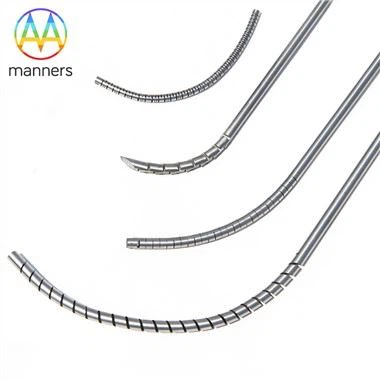
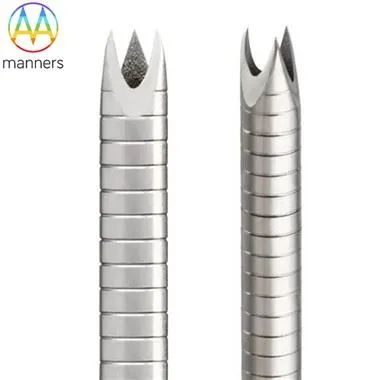
We are proud to announce the successful development of the new‑generation GANGDUN Series Slotted Rigid Shaft through revolutionary precision laser slotting technology, elevating the structural rigidity of medical devices to unprecedented heights. This product delivers ultra‑tight outer diameter tolerance control of ±0.01 mm, achieves a 300% increase in axial compressive strength compared with conventional solid shafts, while maintaining strict 1:1 torque transmission. Certified under ISO 13485 and validated by ultimate‑load testing, it exhibits zero plastic deformation under simulated peak surgical loads, serving as the unshakable "steel backbone" for rigid endoscopes, heavy‑duty delivery systems and orthopaedic guide instruments.
Pain Points in R&D Background
Traditional rigid instrument shafts suffer severely from the strength‑failure paradox. Although solid or thick‑walled seamless steel tubes feature high rigidity, they are prone to catastrophic sudden bending or buckling under lateral stress or accidental loads, with brittle and unpredictable failure modes. Conventional simple slotting mitigates stress concentration yet at the cost of axial pushing force and torsional rigidity. Clinical data reveals that sudden shaft bending causes up to 5% of percutaneous vertebroplasty and arthroscopy procedures to be interrupted, extending operation time by more than 25 minutes on average. Further engineering analysis indicates that traditional shaft designs show no obvious warning before reaching the yield limit, with a stress concentration factor as high as 4.0–5.0, posing critical risks to surgical safety and efficiency.
Core Technological Innovations
- Bionic Interleaved Stress‑Slot Algorithm DesignInspired by the micro‑structure of Haversian systems in human bone, we developed a patented interleaved‑bridge slotting algorithm. Via finite‑element analysis, this algorithm dynamically optimizes slot geometry, spacing and length distribution of bridging segments (uncut metal regions), forming a precise stress‑guiding network on the shaft surface. Concentrated high stress is dispersed across the entire shaft, reducing the stress concentration factor from the industry average of 4.5 to below 1.8, while over 85% of the original material cross‑section is retained for axial load bearing. Consequently, exceptional bending resistance is achieved alongside maximum retention of absolute pushing force.
- Ultra‑Low Heat‑Affected Precision Laser CuttingA high‑power, high‑beam‑quality fiber laser system is adopted, integrated with self‑developed pulse shaping and path‑optimization technologies. Thermal input during cutting is minimized, confining the heat‑affected zone (HAZ) within 15 μm and nearly eliminating micro‑performance degradation induced by thermally softened materials. Supported by a five‑axis precision motion platform, ultra‑precision machining is realized with slot width tolerance of ±2 μm and slot position tolerance of ±3 μm, ensuring absolute structural consistency of every bridging segment.
- Integrated Gradient‑Stiffness FormingTailored to functional requirements of different shaft segments, single‑shaft gradient‑stiffness design is innovatively implemented. The proximal (operator‑side) end adopts sparse slotting for near‑solid‑tube ultimate rigidity, guaranteeing precise transmission of manual manipulation force. The middle section uses transitional slotting to balance pushing force and bending resistance. The distal (insertion) end features optimally‑dense slotting to provide necessary compliance for navigating natural tissue curvatures. This design achieves intelligent mechanical distribution of one shaft, multiple stiffness levels.
Working Mechanism
The core mechanism lies in stress guidance and dissipation. Subjected to lateral loads, the interleaved slot pattern does not resist deformation rigidly, but converts it into multiple micro‑scale, controllable elastic deformation units. Each slot acts as a micro‑hinge, allowing micrometre‑level local deflection to absorb and dissipate impact energy. Elaborately designed bridging segments function like robust trusses, locking the overall shaft axis firmly and preventing local deformation from accumulating into global bending. Axially, continuous bridging structures form nearly unbroken force‑flow paths for lossless pushing‑force transmission. Circumferentially, intact tube wall material provides a complete cross‑section for torque transfer. This composite mechanical behaviour of rigid core with compliant exterior endows the shaft with steel‑grade pushing capacity as well as toughness to absorb accidental impacts.
Performance Validation
Ultimate‑performance tests conducted by independent third‑party laboratories demonstrate outstanding capabilities of the GANGDUN Series: axial compression tests show its buckling resistance reaches 92% of that of solid shafts of equivalent specifications, while failure strain rises by 350%. In three‑point bending tests, the failure mode shifts from abrupt brittle bending of conventional shafts to progressive deformation with distinct pre‑failure warnings, quadrupling the safety margin. In multi‑centre pre‑clinical trials, delivery cannulas for vertebroplasty achieve zero bending under simulated peak injection pressure, raising instrument placement success rate from 88% to 100%. For heavy‑duty arthroscopic procedures, the primary operating sheath delivers torsional backlash error below 0.5°, significantly improving synchronisation and precision of intra‑scope manipulation. Fatigue tests verify that after 100 000 cycles of 80% ultimate‑load loading, stiffness and shape recovery rate remain above 98%.
R&D Strategy & Philosophy
We adhere to the R&D philosophy: Ultimate reliability stems from profound understanding of failure modes. Our strategic core is Failure‑Mode‑Oriented Design (FMOD). Rather than pursuing isolated parameter optimisation, we systematically study, simulate and overcome all potential clinical failure scenarios - including sudden bending, torque loss and fatigue fracture. To this end, we have built an interdisciplinary team of materials mechanics, biomechanics and clinical surgical specialists, alongside a full‑scale verification platform covering micro‑scale molecular dynamics simulation to macro‑scale whole‑instrument testing. We believe true innovation lies in embedding superior reliability as an inherent product attribute, enabling surgeons to focus fully on patients without concerns about tool performance.
Future Outlook
Going forward, rigid shaft evolution will advance toward intelligent adaptability and functional integration. We are developing shafts with built‑in fibre‑optic sensor networks that enable real‑time monitoring of shaft stress‑strain distribution, delivering tactile or visual pre‑failure warnings to operators before mechanical limits are approached. Meanwhile, topology‑optimised generative slotting algorithms are being explored, which automatically generate patient‑specific optimal stiffness patterns based on real‑time patient CT data and surgical path planning. In the longer term, we will integrate micro‑drive units with rigid shafts to develop variable‑mode surgical instruments featuring unrivalled rigidity plus actively controllable bending at designated nodes, completely breaking the traditional trade‑off between rigidity and flexibility.