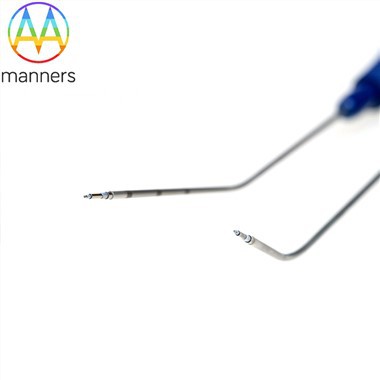
Process Technology Iteration And Performance Upgrade Of Triple Cut Tip Lancet Needle
Oct 12, 2026
1. Technical Iteration Pain Points of Traditional Lancet Processing Industry
The traditional lancet needle processing industry has long been stuck in backward technology and single process, resulting in insufficient product performance and slow technical iteration. First, traditional manufacturers mostly adopt single-sided cutting process, outdated tip processing technology, unable to realize multi-angle synchronous cutting, resulting in large sampling trauma and poor user experience. Second, the surface treatment process is simple, only basic rough polishing is carried out, the needle body has poor smoothness, easy to produce burrs and residual impurities, affecting puncture safety and comfort. Third, the traditional processing mode has low precision, unstable needle size tolerance and inconsistent tip sharpness of different product batches, resulting in uneven product quality. Fourth, the industry lacks innovative process iteration mechanisms, single product functional design, only focusing on basic puncture function, without combining human mechanics and minimally invasive medical concepts, resulting in serious product homogenization. In addition, traditional processing technology cannot support personalized size and process customization, single production mode, unable to adapt to the diversified and refined market demand, restricting the technical upgrading and high-end development of the lancet needle industry.
2. Iterative Upgrade Principle of Triple Cut Core Process
The triple cut tip lancet needle realizes comprehensive technical iteration and process upgrading on the basis of traditional lancet processing technology, with the core iteration principle focusing on tip structure optimization, surface process refinement and precision manufacturing upgrading. First, the cutting structure iterates from single-bevel to three-sided symmetrical bevel, adopting precision CNC integrated cutting technology to form three uniform sharp cutting edges at the needle tip, realizing synchronous multi-angle cutting, solving the tissue tearing defect of traditional single-sided puncture. Second, the surface processing technology iterates from single rough polishing to composite processes of fine polishing, electroplating reinforcement and ultrasonic deep cleaning, removing tiny burrs and processing residues on the needle surface, improving surface smoothness, anti-corrosion and anti-adhesion performance. Third, the precision manufacturing technology iterates, adopting high-precision die casting and laser sizing technology to control needle size tolerance within the micron level, ensuring consistent batch product performance. Fourth, the functional process iterates, integrating independent puncture and injection functions, realizing dual-functional integration of single equipment, breaking the single functional limitation of traditional products. All iterative processes are based on medical safety standards, realizing simultaneous upgrading of product safety, comfort and applicability.
3. Iterative Product Generation Classification and Performance Comparison
After multiple rounds of technical iteration, triple cut tip lancet needles have formed three generations of iterative products with obvious performance differences. The first-generation basic iterative products: complete the upgrade from single-bevel to triple-bevel tip, adopt basic fine polishing process, solve the pain point of large trauma of traditional lancets, and realize preliminary low-pain sampling, suitable for basic household and grassroots medical scenarios. The second-generation optimized iterative products: upgrade surface composite processing technology, add electroplating anti-corrosion treatment, improve needle body durability and sterile stability, with higher puncture precision and smaller wound, suitable for clinical routine sampling and medium-frequency household monitoring. The third-generation high-precision iterative products: adopt full-process ultrasonic cleaning and laser precision sizing technology, support full-dimensional personalized customization of size and process, with ultra-low trauma, ultra-high precision and strong scenario adaptability, suitable for high-end medical detection, scientific research sampling and high-precision health monitoring scenarios. Compared with the first-generation traditional single-bevel products, the third-generation triple cut iterative products have 40% lower trauma, 30% higher sampling success rate and 50% better sterile stability, with comprehensive performance leading the industry level.
4. Standardized Operation Adaptation of Iterative New Technology Products
The iteratively upgraded triple cut tip lancet needles have optimized operational adaptability, and users need to master matching standardized operation methods to exert iterative performance advantages. First, adaptive force adjustment: the new triple cut structure has lower puncture resistance than traditional products, so light vertical pressing force is sufficient to complete puncture, avoiding excessive force leading to unnecessary large wounds. Second, precision puncture positioning: the high-precision iterative needle tip has stronger cutting stability, and users can accurately locate the lateral fingertip sampling point to realize fixed-point micro-puncture, improving sampling accuracy. Third, efficient blood collection adaptation: the upgraded regular wound structure has more stable blood outflow, no need for repeated extrusion, reducing sample contamination probability. Fourth, customized process adaptation: for electroplated and ultrasonically cleaned high-end iterative products, standardized sterile operation shall be implemented to avoid surface contamination and maintain long-term stable performance. Fifth, batch iteration management: medical institutions and users shall distinguish iterative product generations, select matching generation products according to usage scenarios, and realize precise matching of technical performance and application needs.
5. Process Iteration Value and Industry Technical Development Trend
The continuous process iteration of triple cut tip lancet needles has driven the overall technical upgrading of the global lancet needle manufacturing industry, breaking the long-term technical stagnation and homogenization competition of the industry. The innovative triple-sided cutting process has become a new technical benchmark for minimally invasive lancing equipment, guiding the industry to transform from simple functional manufacturing to humanized minimally invasive precision manufacturing. The refined surface composite processing technology improves the overall quality standard of industry products, eliminating low-quality and low-performance backward products. The personalized customization processing mode expands the industry's product service boundary and improves the added value and market competitiveness of products. In the future, the lancet needle industry will continue to iterate towards higher precision, lower trauma, stronger functionality and more intelligent customization. The triple cut tip core technology will be further optimized and popularized, promoting the standardized, high-quality and refined development of the entire medical puncture consumable industry, and providing more advanced technical support for global clinical sampling and civilian health monitoring.