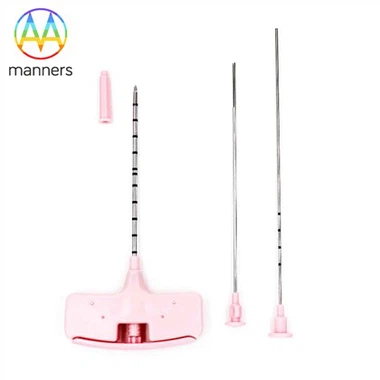
Preoperative Preparation Before Renal Puncture
Feb 12, 2020
Preparing for renal puncture is an important part of reducing complications. The following work should be done before surgery:
(1) Explain the necessity, safety and possible complications of renal biopsy to patients and their families, and obtain the consent of the patients and their families. Explain the renal puncture operation to the patient, relieve the patient's fear, and obtain the patient's cooperation. Let them practice holding their breath (for a short period of time during kidney puncture) and urination in bed (for 24 hours after kidney puncture), so as to cooperate closely.
⑵ laboratory test, coagulation time, platelet count and prothrombin time to know whether there is bleeding tendency.
(3) Check creatinine clearance rate, serum creatinine and blood urea nitrogen to understand renal function, check isotope renogram to understand renal function, and make B-ultrasound to understand kidney size, location and activity.
⑷ Check the blood type, prepare blood, and routinely clean the skin of the kidney area before surgery.
⑸ Oral or intramuscular injection of vitamin K 2 to 3 days before surgery.
(6) Before renal puncture in patients with acute renal failure, in addition to testing prothrombin time, the partial thromboplastin time of white clay should also be measured. In addition to checking the number of platelets, platelet function (aggregation, adhesion and release function) should be checked irregularly. Any abnormalities found should be corrected before surgery. If the platelet count and function are abnormal, fresh platelets can be transfused on the day of puncture. Prolonged bleeding time can be corrected by infusion of factor-rich cryoprecipitate. For patients with severe renal failure, it is best to do hemodialysis several times before renal puncture, stop dialysis 24 hours before renal puncture, and give protamine to neutralize heparin at the end of dialysis. effect disappeared.
⑺ empty the bladder before surgery. Kidney biopsy is usually divided into three categories: (1) percutaneous renal biopsy, which is widely recognized and used in clinical practice; (2) surgical open renal biopsy; (3) renal vein biopsy.
Puncture point location: choose the lateral border of the lower level of the right kidney. The methods of localization are: (1) anatomical localization of the body surface; (2) X-ray localization; (3) isotopic renal scan localization; (4) B-ultrasound localization, which is the most commonly used and relatively safe method at present.
If you have any questions, please contact us. Our company can produce various customized needles, medical needles, puncture needles, hypodermic needles, biopsy needles, vaccine needles, injection needles, syringe needles, veterinary needles, pencil point needle, ovum pick up needles, spinal needles, etc. If you need customized needle products, please contact us. We look forward to your inquiry! The quality of the products manufactured in our factory will surely satisfy you!
Please contact us if you need: zhang@sz-manners.com