Precision Manufacturing Processes Of EBUS-TBNA Needles
Jul 08, 2026
How Grinding, Laser Etching, and Electropolishing Create a Qualified Biopsy Needle
https://profed.olympuschina.com/gs/thoracicsurgery/12628/
A qualified EBUS-TBNA needle appears deceptively simple-a "thin steel tube attached to a handle"-yet embodies sophisticated micro-machining, surface engineering, and cleanroom assembly technologies. The typical manufacturing workflow includes: raw material cutting to length → tube pre-forming and progressive diameter reduction → precision tip grinding → laser etching/laser marking (echogenic patterning) → electropolishing → ultrasonic cleaning → sterile packaging → Ethylene Oxide (EO) sterilization, all governed by ISO 13485 quality systems.
Tube Pre-treatment & Diameter Reduction: Medical-grade 304/316L stainless steel seamless capillary tubes or Nitinol shape-memory alloy tubes are selected based on the target gauge (e.g., 19G OD = 1.06mm, ID = 0.86mm). Multi-pass drawing/sizing controls wall thickness uniformity within ±0.01mm, maintaining hardness at HV 200-250 to balance toughness and puncture rigidity.
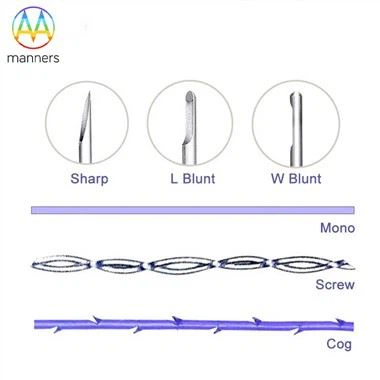
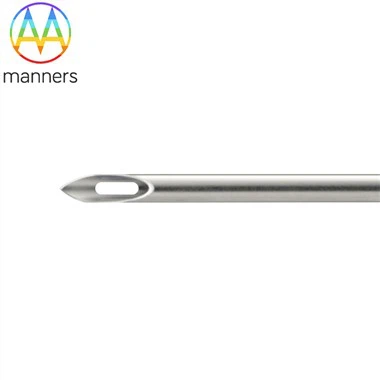
Tip Grinding: EBUS-TBNA needles predominantly utilize a back-cut point design-the main bevel faces backward, leaving a short flat/micro-bevel front as the leading edge. During puncture, the blunt front initially breaches the wall, followed by tissue acquisition via the back-cut edge. CNC precision grinders execute this shape sequentially: rough grinding establishes the primary taper and bevel angle (typically 15°–30°), followed by finish grinding of the back-cut edge, and final deburring/chamfering. Grinding parameters (abrasive grit size, feed rate, coolant composition) critically influence edge sharpness and control micro-cracking; finished edges undergo microscopic and SEM sampling inspection.
Laser Etching & Ultrasound Enhancement: Smooth metal surfaces reflect ultrasound almost entirely, appearing only as a thin, bright line on imaging, hindering tracking. Fiber or CO₂ lasers etch spiral grooves, dot matrices, or micro-pits onto the needle shaft near the tip (typically 5-15mm from the apex). Common specifications include a pitch of 0.2-0.5mm and groove depth of several to tens of microns. These microstructures create acoustic impedance discontinuities, causing diffuse reflection and scattering of ultrasound waves. This significantly enhances the brightness (echogenicity) of the needle tip and shaft on B-mode ultrasound, aiding operators in confirming transmural passage and insertion depth. Five-axis laser cutters achieve complex helical patterns with ±0.01mm tolerance-a key differentiator for premium EBUS needles.
Electropolishing (EP): Post-laser processing leaves micro-melt residue and oxide layers. Electrochemical dissolution removes several microns of surface metal, achieving a mirror-like finish (Ra < 0.2μm). Benefits include: ① reduced surface roughness minimizing tissue drag resistance; ② elimination of micro-cracks enhancing fatigue strength; ③ improved corrosion resistance (against Cl⁻ attack); ④ facilitated subsequent cleaning. Processes must comply with ASTM B912/A967 and ISO 13485 validation protocols.
Ultrasonic Cleaning & Particulate Control: Finished needles undergo multi-stage ultrasonic cleaning baths (commonly 40kHz), utilizing alkaline degreasers, pure water rinses, and isopropyl alcohol dehydration to thoroughly remove cutting fluids, polishing compounds, and sub-micron particles. Within cleanrooms (ISO Class 7 or better), visual inspection and light-passing tests verify lumen patency. Needles are then loaded into PP trays/blisters, sealed in Tyvek透气 bags awaiting sterilization. Comprehensive batch records encompass Material Test Reports (MTRs), critical process parameters, and particulate/bioburden test data.
These rigorous processes ensure EBUS-TBNA needles withstand repeated flexing (Nitinol), piercing cartilaginous membranes, and negative pressure suction without edge chipping, clogging, or fracture, while remaining distinctly visible under ultrasound-constituting the core technological壁垒 for OEM/ODM manufacturers and branded companies.