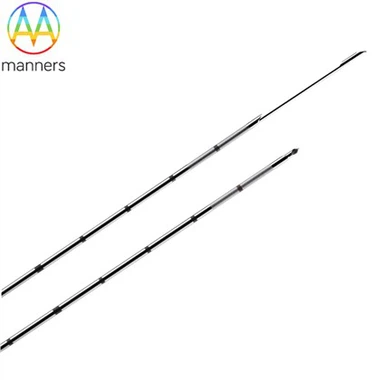
Precision Laser Cut Tubing
Sep 07, 2026
Pain Points
The miniaturization of medical devices is advancing at an unprecedented pace, yet traditional machining methods are hitting fundamental physical limits. As component diameters shrink below 1 mm, conventional mechanical cutting tools induce unacceptable deformation, burrs, and heat-affected zones that compromise the mechanical integrity of the part. In the realm of laser cut tubing, even micron-level inconsistencies in kerf width or strut thickness can lead to catastrophic device failure during minimally invasive procedures. Moreover, the lack of standardized processes for ultra-fine features often results in prolonged development cycles, inflated costs, and regulatory pushback due to insufficient process validation. Manufacturers frequently struggle with balancing cutting speed against edge quality, and the absence of in-process metrology means defects are often discovered only after the tube is completed, leading to high scrap rates. These challenges are particularly acute when working with difficult-to-machine alloys like Nitinol, where thermal damage can permanently alter the material's superelastic properties. The industry urgently needs a reliable, repeatable, and highly precise method to produce complex geometries on microscopic tubing without introducing residual stress or contamination.
Principle
Precision laser cut tubing operates on the principle of localized material removal via photon-induced ablation. A coherent, monochromatic laser beam is focused through a lens system to a spot size that can be as small as a few microns. When this high-energy beam strikes the metal surface, it rapidly heats the material beyond its vaporization point, creating a plasma plume that ejects molten and vaporized material from the kerf. The non-contact nature of the process eliminates mechanical force, preventing part distortion. By precisely controlling pulse duration, energy, and repetition rate, the heat-affected zone (HAZ) can be minimized to sub-micron levels. For instance, ultrafast picosecond or femtosecond lasers deposit energy faster than the lattice can absorb it, resulting in "cold ablation" with virtually no thermal damage to the surrounding material. The focused beam is directed along a programmed path, often while the tube rotates on a high-precision rotary stage, to create intricate patterns. The minimum achievable kerf width-as narrow as 0.012 mm-allows for extremely fine features, enabling designers to tailor the flexibility and torque response of the tube with exceptional accuracy. This level of control transforms a simple hypo tube into a sophisticated, biomechanically engineered component whose properties can be varied along its length to match the anatomical demands of the procedure.
Equipment Classification
Precision laser cutting systems are categorized by laser source technology and ancillary subsystems. The primary laser types include:
- Picosecond Lasers: These ultrafast pulsed lasers deliver pulses in the picosecond range (10⁻¹² seconds), enabling cold ablation with minimal heat-affected zone. They are ideal for cutting heat-sensitive materials like Nitinol and thin-walled stainless steel tubes.
- Green Lasers (532 nm): The shorter wavelength is more readily absorbed by copper, gold, and other reflective metals, making them suitable for cutting tubes with precious metal coatings or markers.
- UV Lasers (355 nm or 266 nm): These wavelengths are strongly absorbed by polymers and composite materials, allowing for precise cutting of polymer tubing or hybrid metal-polymer structures without melting.
- Hybrid Systems: These combine a high-power fiber laser for rapid roughing with a picosecond laser for fine finishing, balancing speed and edge quality.
Auxiliary equipment is equally critical: high-precision rotary stages with encoder feedback ensure concentricity during cutting; vision alignment systems with micron-level resolution allow for pattern registration relative to tube features; fume extraction units remove hazardous byproducts; and inert gas delivery systems (argon or nitrogen) prevent oxidation. Increasingly, integrated metrology platforms perform real-time optical inspection, automatically adjusting parameters to maintain tolerances within ±2 µm.
Practical Guide
Achieving consistent precision in laser cut tubing requires a disciplined, step-by-step approach:
- Material Selection and Preparation: Choose the base tube (e.g., 304 SS, 316L, Nitinol) based on biocompatibility, mechanical properties, and laser absorptivity. Ensure the tube is clean and free of surface defects.
- Laser Parameter Optimization: Conduct a design of experiments (DOE) to determine the optimal pulse energy, frequency, and scanning speed for the specific material and wall thickness. Start with conservative settings to avoid overheating.
- Fixture and Alignment: Secure the tube in a precision chuck and rotary stage. Use a vision system to align the laser beam perpendicular to the tube axis and to register any existing features.
- Pattern Programming: Import the CAD design into CAM software, ensuring smooth transitions between cut and uncut zones. Simulate the toolpath to verify there are no collisions or excessive accelerations.
- Test Cut and Metrology: Perform a test cut on a scrap piece. Measure the kerf width, strut thickness, and surface roughness using a laser scanning microscope or SEM. Adjust parameters as needed.
- Production and In-Process Control: Run the production batch with continuous monitoring. Use statistical process control (SPC) to track critical dimensions. Implement automated optical inspection (AOI) for 100% verification.
- Post-Processing: Electropolish or passivate the cut tube to remove any residual dross and improve surface finish, which is crucial for reducing thrombogenicity in cardiovascular applications.
Documentation: Maintain detailed records of all parameters, inspections, and deviations to comply with ISO 13485 and FDA requirements.
Real-World Experience
An OEM producing endoscopic retrieval baskets faced a recurring problem: their laser cut tubes exhibited inconsistent strut widths, causing uneven deployment and occasional basket fracture during clinical use. Initial investigations blamed operator error, but deeper analysis revealed that the laser's pulse-to-pulse stability was drifting due to thermal lensing in the gain medium. The company upgraded to a picosecond laser with active cooling and added a vision-guided alignment system that compensated for tube runout. They also implemented a closed-loop feedback system that adjusted pulse energy in real time based on optical emission spectroscopy. The result was a dramatic improvement in repeatability, achieving ±2 µm consistency across thousands of parts. The key lesson learned was that investing in advanced laser sources and metrology pays for itself many times over by reducing scrap, avoiding costly redesigns, and accelerating time-to-market. Furthermore, the experience highlighted the importance of understanding the subtle interplay between laser physics and material behavior-a lesson that continues to inform their R&D efforts.
Conclusion and Sublimation
Precision laser cutting elevates tubing from a commodity to a critical engineered component. It enables the realization of complex geometries that were once deemed impossible, fostering innovation in device miniaturization and functionality. This technology is not merely a manufacturing process; it is an enabler of life-saving therapies, allowing designers to push the boundaries of what is mechanically and biologically possible. By mastering the nuances of laser-material interaction, manufacturers can create devices that are smaller, smarter, and more effective, ultimately improving patient outcomes and reducing healthcare costs. The journey from a raw tube to a precision-cut component is a testament to human ingenuity and the relentless pursuit of perfection.
Prospects and Suggestions
The future of precision laser cut tubing will be shaped by several emerging trends. First, the integration of artificial intelligence and machine learning will enable self-optimizing laser systems that can predict and compensate for variations in material properties or environmental conditions. Second, the demand for personalized medicine will drive the need for on-demand manufacturing of patient-specific tubes, requiring flexible, rapid-changeover production lines. Third, new materials such as bioresorbable metals and high-entropy alloys will challenge existing laser technologies, necessitating the development of novel beam delivery systems and pulse shaping techniques. Companies that invest in research and development, foster collaboration between laser physicists and biomedical engineers, and embrace digital transformation will be best positioned to lead this evolution. As the industry moves toward Industry 4.0, the convergence of laser cutting with digital twins, IoT-enabled machines, and advanced data analytics will unlock unprecedented levels of quality, efficiency, and innovation.