Precise Destruction Of Tumor Lesions: Panoramic Clinical Application Of Brachytherapy Needles
May 25, 2026
Brachytherapy is hailed as a precision-guided missile in radiotherapy, with treatment needles serving as the launching platform. Its core advantage lies in confining high-dose radiation strictly within tumor targets and forming a steep dose gradient with intensive radiation inside lesions and sharp dose drop-off toward peripheral areas. It effectively eliminates cancer cells while maximally safeguarding adjacent vital organs including the bladder and rectum. Such superior properties render it irreplaceable in the treatment of prostate cancer, cervical cancer, breast cancer and other malignancies.
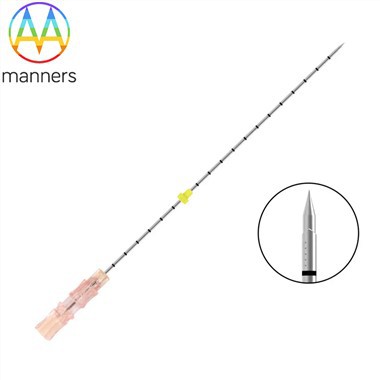
Brachytherapy needles see the most classic and mature application in prostate cancer management. Permanent seed implantation stands as one standard therapy for early localized prostate cancer. Under real-time transrectal ultrasound guidance and template positioning, clinicians insert multiple 14G-18G implantation needles loaded with iodine-125 or palladium-103 seeds into the prostate via the perineum, placing radioactive sources precisely in line with preoperatively designed matrix layouts. These tiny radioactive seeds act as sentries embedded inside tumors, releasing continuous low-dose radiation to eradicate cancer cells within several months. The procedure causes minimal trauma, allowing patients to be discharged on the same day, and delivers remarkable advantages in preserving urinary control and sexual function. For intermediate and high-risk cases, high-dose-rate afterloading brachytherapy serves as a boost therapy combined with external beam radiotherapy. Multiple hollow afterloading needles are implanted, and high-activity iridium-192 radioactive sources travel sequentially to designated dwell positions inside needle lumens under treatment planning system control, inflicting fatal damage on tumor tissues within a short period.
Brachytherapy constitutes the cornerstone of radical radiotherapy for gynecological tumors, especially cervical cancer. For locally advanced cervical cancer, standalone external beam radiotherapy fails to deliver sufficient curative dose to primary cervical lesions without damaging the rectum and bladder. Combined intracavitary and interstitial brachytherapy becomes the pivotal solution. Under anesthesia, clinicians place uterine tandems and vaginal applicators. For patients with bulky, irregular tumors or parametrial invasion, slender 17G-19G interstitial needles are punctured deep into tumor-infiltrated tissues via vaginal access under CT or MRI guidance. This combined therapeutic modality shapes high-dose regions to perfectly encapsulate irregular tumor masses, substantially elevating local tumor control rate. The 2025 Guidelines on Target Delineation, Treatment Planning and Quality Control of 3D Brachytherapy for Cervical Cancer issued by the National Cancer Center also emphasizes the clinical significance of image-guided individualized interstitial implantation techniques.
Accelerated partial breast irradiation has emerged as a major therapeutic option after breast-conserving surgery. Eligible patients receive high-dose short-course irradiation targeting only the original tumor cavity via multiple afterloading needles or single-lumen balloon catheters, replacing whole-breast radiotherapy. It greatly shortens treatment duration and reduces radiation exposure to normal breast tissues, heart and lungs.
Furthermore, interstitial brachytherapy with dedicated treatment needles exerts unique clinical value in cutaneous carcinoma, head and neck tumors and soft tissue sarcomas. For recurrent or residual head and neck tumors after surgery, flexible applicator tubes can be directly placed on tumor beds during operations for postoperative irradiation.
The whole treatment procedure relies heavily on multidisciplinary collaboration and rigorous quality control. Every step plays a decisive role, including preoperative imaging assessment and 3D treatment planning, intraoperative image-guided puncture and needle position verification, real-time dose delivery and postoperative efficacy evaluation. Technical specifications such as the 2025 Guidelines on Precise Radioactive Seed Ablation Brachytherapy for Solid Tumors released by the National Cancer Center standardize clinical operations and guarantee therapeutic safety and effectiveness. Brachytherapy needles serve as powerful tools for radiation oncologists. Supported by advanced imaging and medical technologies, clinicians accurately direct radiation - a double-edged sword - toward malignant lesions to achieve optimal therapeutic outcomes.