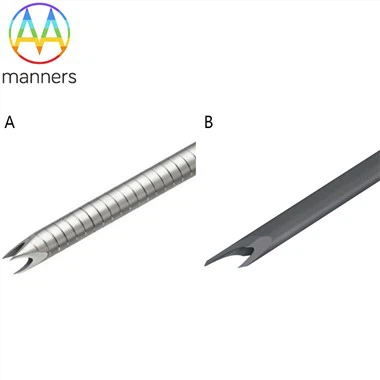
Patient Comfort: The Comfort-First Tip Strategy
Oct 16, 2026
The Fear Barrier in the Dental Chair
Dental anxiety remains one of the strongest barriers to regular care, and scaling is often its epicenter. Patients describe ultrasonic scaling with language that should worry every clinician: "jarring," "scratchy," "painful," "like a jackhammer in my mouth." The fear is not irrational-a vibrating metal instrument pressed against sensitive teeth is, from the patient's perspective, an aggressive experience. Clinicians feel the tension acutely: a nervous patient tightens the jaw, the tip slips off the tooth, the gingiva is nicked, and the experience worsens. The pain point is emotional as much as physical, and the dental ultrasonic scaler tip sits at the center of it. No amount of chair-side reassurance can fully compensate for an instrument that feels hostile. The comfort problem is therefore a design problem, a selection problem, and a technique problem-and it is solvable. Practices that solve it gain a competitive advantage that no marketing campaign can match: patients who actually want to come back.
How Tip Design Influences Sensation
Patient discomfort during scaling comes from two primary sources: vibration intensity and tactile sharpness. High-frequency tips with smooth, rounded contours distribute energy more gently across the tooth surface, producing a sensation of vibration rather than impact. Excessively sharp or worn tips, by contrast, concentrate energy at a point, increasing pressure sensitivity and creating a scratching sensation that patients describe as "gritty." The geometry of the working end matters as much as the material: a rounded, blunt tip delivers power without piercing sensation, while a chisel-edged tip-ideal for tenacious calculus-feels aggressive on healthy enamel. Water temperature and flow also modulate sensation dramatically. Warm irrigation reduces dentinal sensitivity by a significant degree, while cold water intensifies it; a tip that delivers inadequate flow creates frictional heat, which is one of the least recognized sources of scaling discomfort. Even the shank design influences sensation: a thinner, more flexible shank transmits less vibration to the gingival margin, while a stiff shank transfers energy to the tissue wall. The clinical conclusion is that the tip is not merely a tool-it is a patient-psychology instrument, and its design parameters are comfort parameters.
Classifying Comfort-Oriented Tips
The comfort-oriented tip market has matured, and the classification is now well defined. Rounded, blunt-tipped designs are the first choice for sensitive patients: they deliver adequate power for routine deposits while minimizing the piercing sensation that triggers flinching. Slim, flexible tips reduce tissue contact and allow gentle exploration of subgingival areas without distending the pocket. Coated tips, including polymer, PEEK, and titanium variants, further dampen the metallic feel-the patient senses a smoother, less "cold-metal" instrument, which measurably reduces anxiety. For pediatric and geriatric patients, short-tip variants with reduced amplitude provide effective cleaning with minimal distress; a child's first scaling experience shapes their dental attitude for life, and a gentle tip is the difference between a cooperative patient and a lifelong dental phobic. For patients with dentinal hypersensitivity, tips that pair well with low-power settings and warm irrigation are essential. The selection principle is simple: match the tip to the patient's anxiety and sensitivity profile, not just to the calculus load. A practice that maintains a comfort tip arsenal-rounded universal tips, slim flexible tips, coated variants, and short-tip pediatric options-can treat every patient in the chair with the gentlest effective instrument.
Practical Comfort Protocol
The comfort protocol begins before the instrument touches the tooth. Explain the sensation honestly: "You will feel vibration and a spray of water-that is normal and it means the machine is working." Desensitization through expectation is one of the most powerful tools in the clinical repertoire; patients who know what to expect are measurably calmer than those who are surprised. Use warm water for irrigation-a single switch that reduces sensitivity and transforms the overall feel of the procedure. Start at low power and increase gradually as the patient relaxes; most routine scaling can be completed at lower power settings than clinicians assume. Anchor the handpiece with a finger rest to control pressure and eliminate the "floating handpiece" sensation that patients experience as instability. Work in short, unhurried strokes, offering a break every few teeth; a thirty-second pause resets the patient's tolerance. Pair ultrasonic scaling with topical anesthetic when sensitivity is high, and always finish with a gentle polish to remove any residual texture that the patient might perceive as roughness. Throughout the procedure, watch the patient's body language-a tightened grip on the armrest or a raised shoulder signals that the sensation is too intense, and the clinician should reduce power or switch to a gentler tip rather than pushing through.
What Experienced Clinicians Report
Clinicians who adopted comfort-first protocols report results that are both clinical and commercial. Hygienists who switched to rounded tips and warm-water irrigation found that patients stopped canceling recall appointments-the memory of a comfortable scaling experience replaced the memory of an uncomfortable one. One practice documented a thirty percent increase in six-month recall compliance after adopting comfort-oriented tips and communication-led instrumentation. Another found that explaining the sensation in advance halved the number of patients requesting anesthetic, saving time and reducing the practice's pharmacological load. The most telling data comes from new-patient referrals: patients who experienced gentle scaling told friends and family, and the practice's new-patient flow increased measurably. The pattern is consistent across practices: comfort is a clinical strategy, not a courtesy. It reduces anxiety, improves compliance, shortens appointments, and builds a practice reputation that patients actively describe to others.
Comfort as a Clinical Value
A comfortable scaling experience builds trust, reduces chair-side stress, and encourages preventive attendance. When the tip honors the patient's sensitivity, the entire practice benefits-from case acceptance to word-of-mouth referrals. Comfort is not a luxury; it is a measurable clinical outcome with financial consequences. The practice that treats patient comfort as a design problem rather than an inevitable cost of dental care is the practice that patients choose, recommend, and return to. In an era when patients have more choices than ever, the gentle practice wins.
The Comfort-First Future
Manufacturers are exploring amplitude modulation that automatically reduces power when the tip contacts sensitive tissue, smart pressure feedback that warns the clinician when contact is too heavy, and temperature-controlled irrigation that maintains optimal warmth throughout the procedure. Some systems already offer "comfort modes" that adjust vibration patterns for anxious patients. Forward-looking practices should adopt comfort-oriented tips, train teams in communication-led instrumentation, and treat the patient's reported comfort as a clinical metric to be tracked and improved. The future of scaling is one where the patient's experience is designed in from the start, not managed after the fact-and the dental ultrasonic scaler tip is where that design begins.