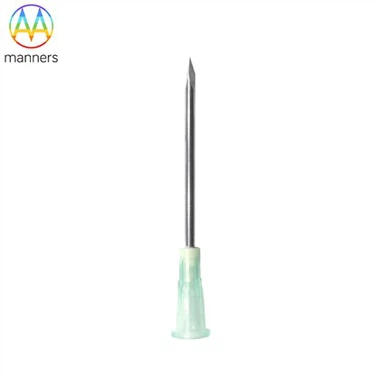
Panoramic Clinical Application And Standard Operating Guidelines Of Bone Marrow Biopsy Needles
May 25, 2026
Bone marrow biopsy needles serve as indispensable diagnostic instruments in hematology, oncology, emergency and infectious departments. The acquired bone marrow tissue cores and fluid provide direct evidence for exploring hematological disorders and tracing tumor lesions. This article systematically elaborates extensive clinical applications and illustrates standardized operational procedures as well as key precautions.
1. Core Clinical Applications: Gold Standard for Diagnosis, Staging and Efficacy Evaluation
Bone marrow biopsy needles cover the full clinical cycle including disease diagnosis, staging, prognosis assessment and therapeutic effect monitoring.
- Diagnosis and classification of hematological diseasesIt represents the most classic application. Combined with smear examination, bone marrow biopsy enables definitive diagnosis of acute leukemia, chronic leukemia, myelodysplastic syndrome, aplastic anemia, primary myelofibrosis and multiple myeloma. Histological structural information obtained via biopsy is irreplaceable for distinguishing hypoproliferative leukemia from aplastic anemia, assessing myelofibrosis severity and identifying nodular or diffuse lymphoma infiltration patterns, which cannot be achieved by marrow smear alone.
- Tumor staging and metastasis screeningBone marrow biopsy is a critical procedure to confirm clinical staging and determine marrow involvement for lymphoma patients, directly guiding treatment regimen selection. For solid tumors such as breast, prostate and lung cancer, it ranks among the most sensitive methods to detect micrometastases, with diagnostic accuracy sometimes superior to imaging examinations, delivering vital reference for staging and prognosis judgment.
- Investigation of unexplained abnormal blood parametersIn cases of unknown pancytopenia, splenomegaly, fever and ostealgia, biopsy helps differentiate infections, autoimmune disorders, metabolic diseases and early tumor infiltration.
- Therapeutic monitoring and prognosis predictionRepeated biopsy after chemotherapy or targeted therapy quantifies reduced tumor burden such as decreased blast cell and plasma cell ratios, and evaluates the recovery of hematopoietic function. It offers objective evidence for efficacy assessment and treatment adjustment.
- Stem cell transplantation and medical researchBiopsy assesses marrow conditions prior to hematopoietic stem cell transplantation, and monitors donor cell engraftment as well as rejection reactions after surgery. It also facilitates collection of precious marrow samples for medical research.
2. Standard Operating Procedures (Taking Posterior Superior Iliac Spine Puncture as Example)
Standardized manipulation guarantees operational safety and successful specimen acquisition. Core procedures formulated in accordance with clinical guidelines are listed below:
- Preoperative preparation and positioningVerify indications and exclude contraindications including severe coagulation disorders and local infections. Patients adopt lateral or prone position for posterior superior iliac spine puncture to fully expose the operative site, followed by routine disinfection and draping.
- Local anesthesiaInject 1% to 2% lidocaine for sufficient infiltrative anesthesia on skin, subcutaneous tissues and periosteum.
- Needle insertionFix the skin with the left hand, hold the assembled biopsy needle with the right hand, and insert perpendicularly or slightly cephalad toward the bone surface. Apply rotational compression until the needle tip is firmly anchored in the cortical bone.
- Tissue core acquisitionPull out the stylet and connect an extension column to enhance operational leverage. Reinsert the stylet and rotate clockwise forward to the preset depth of 1.0 to 1.5 centimeters. Rotate the cannula over 360 degrees in a single direction to separate the tissue core.
- Needle withdrawal and specimen collectionSlowly extract the needle while maintaining consistent rotation. Gently push out the intact cylindrical specimen measuring 1 to 1.5 centimeters via the hub using the stylet or guide wire. Qualified specimens appear pink or red with attached white cortical bone at one end.
- Specimen handlingRoll the tissue core gently on glass slides to make imprint smears for cytological observation, then immerse specimens immediately in 10% neutral buffered formalin. Samples are delivered to the pathology department for decalcification, paraffin embedding, sectioning and staining.
- Postoperative managementDisinfect and apply compressive bandage on the puncture site. Advise patients to stay in bed temporarily and monitor for bleeding and other complications.
3. Key Precautions and Complication Prevention
- Dual-function operational sequence: For integrated biopsy needles, perform marrow aspiration for smear preparation prior to tissue biopsy. Local hemorrhage after biopsy may dilute marrow fluid and impair smear quality.
- Complication prevention: Major risks include local bleeding and hematoma (evaluate coagulation function preoperatively and conduct effective compression postoperatively), surgical site infection (strict aseptic manipulation), puncture failure or insufficient sampling (ensure the tip enters the marrow cavity with obvious breakthrough sensation), and rare adjacent tissue injuries such as mediastinal damage caused by excessive sternal puncture depth.
- Special populations: Thin and short dedicated needles such as 13G and 18G specifications are applied for pediatric patients. Extended-length needles are selected for obese patients to reach the marrow cavity smoothly.
4. Clinical Value in Emergency Settings
Rapid definitive diagnosis is essential for critical emergency cases including acute leukemia and severe unexplained pancytopenia accompanied by fever. Disposable biopsy kits feature ready-to-use application, zero cross-infection risk and standardized procedures, enabling emergency physicians to complete sampling and submission within 30 minutes and gaining precious time for chemotherapy, anti-infection and other rescue treatments.
Conclusion
Though compact in size, bone marrow biopsy needles act as a vital bridge connecting clinical practice and pathology, macroscopic symptoms and microscopic lesions. Proficiency in clinical indications and standardized manipulation constitutes fundamental skills for physicians in hematology and related departments. With continuous upgrades toward intelligence and precision, this classic invasive technique will maintain irreplaceable core value in the era of precision medicine.
本回答由AI生成,仅供参考,请仔细甄别,如有需求请咨询专业人士.