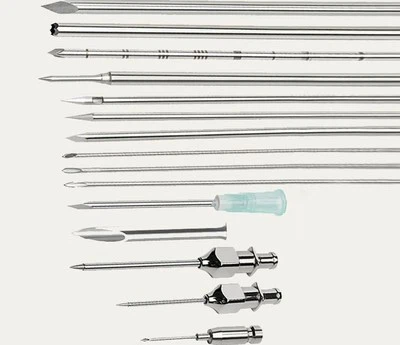
Panorama Of Top 10 Technological Innovations And Material Process Evolution For Menghini Liver Biopsy Needles in 2026
Apr 16, 2026
Panorama of Top 10 Technological Innovations and Material Process Evolution for Menghini Liver Biopsy Needles in 2026
In 2026, the Menghini liver biopsy needle is far more than the simple instrument it was at its inception in 1958. Under the deep integration of material science, precision manufacturing, and digital technology, it is evolving into a highly engineered smart diagnostic tool. Competition among global leading manufacturers has shifted from mere product supply to a comprehensive contest involving underlying material innovation, cutting-edge manufacturing processes, and human-centric design.
Breakthroughs in Material Science: From Stainless Steel to Smart Composites
Needle material forms the foundation of performance. While traditional medical-grade 304/316L stainless steel remains the mainstream choice due to its strength, corrosion resistance, and biocompatibility, high-end products are exploring more advanced materials:
Medical Titanium Alloys: Favored for their higher strength-to-weight ratio, superior biocompatibility, and an elastic modulus closer to human bone, reducing puncture resistance and patient discomfort.
Nitinol (Nickel-Titanium Alloy): Utilizing superelasticity and shape memory effects, the needle body can return to its original shape after bending, significantly improving safety and navigability in complex anatomical paths.
High-Performance Polymers: Used for manufacturing disposable hubs and auxiliary components, ensuring lightweight properties and controlled costs.
Precision Engineering of Needle Tips and Cutting Mechanisms
The needle tip is critical in determining sample quality and tissue trauma. Modern manufacturing processes achieve nano-level precision in cutting edges:
Femtosecond Laser Micromachining: Capable of sculpting multi-bevel, ultra-sharp geometries that traditional mechanical grinding cannot achieve. This ensures "atomic-level sharpness," cleanly severing tissue while preserving cellular structures to meet the high demands of subsequent molecular pathological analysis.
Multi-stage Bevel and Optimized Flute Design: Using computational fluid dynamics (CFD) simulations to optimize the length, width, and edge angles of the sample notch (side window). This allows tissue to be aspirated smoothly and retained completely, significantly reducing sample fragmentation or slippage.
Revolutionary Surface Coating Technologies
Surface treatment directly impacts handling feel, patient safety, and sample quality. Advanced techniques like ultrasonic coating have revolutionized application quality:
Super-hydrophilic Permanent Lubricant Coatings: Using techniques like plasma polymerization to firmly bond hydrophilic polymers (e.g., polyvinylpyrrolidone/PVP) to the needle surface. The needle is easy to handle when dry, and upon contacting tissue fluid, the coating instantly hydrates to form a stable lubricating layer, reducing puncture friction by over 80%, ensuring smoother insertion and less tissue drag.
Echogenic (Ultrasound) Coatings: Applying coatings containing micro-bubbles or special acoustic impedance materials to specific needle parts, creating bright, clear, and persistent echoes on ultrasound images. This greatly facilitates real-time needle tip tracking and localization, enhancing puncture precision and safety.
Antimicrobial Coatings: For immunocompromised patients, loading sustained-release antimicrobial agents (e.g., silver ions) onto the needle surface to prevent puncture tract infections over several hours post-procedure.
Intelligent Manufacturing and Consistency
Behind every high-quality biopsy needle lies a fully automated precision manufacturing system:
Fully Automated Production Lines & Machine Vision: From tube cutting, tip forming, inner stylet assembly to laser welding and final cleaning/packaging, all processes are completed by robots in cleanroom environments. High-precision machine vision systems conduct 100% online inspection of every process, ensuring zero defects in tip angle, edge sharpness, and lumen smoothness.
Digital Twins and Process Simulation: Before physical manufacturing, simulations of mechanical properties and fluid dynamics during the entire puncture process optimize design parameters, shortening R&D cycles and enhancing product performance.
Integration with Image Navigation and Smart Technologies
Menghini needles are transitioning from standalone instruments to components of smart diagnostic systems:
Electromagnetic Navigation Compatibility: Integrating miniature sensors into the needle to cooperate with electromagnetic navigation systems, achieving sub-millimeter real-time 3D positioning within the operating room. This is particularly useful for puncturing tiny lesions or navigating dangerous anatomical areas.
Robotic-Assisted Puncture: Integrating Menghini needles into robotic-assisted puncture systems. Robotic arms execute operations with stability, completely eliminating hand tremors and achieving unprecedented repeatable precision, allowing physicians to plan and operate remotely from a console.
Customization and Flexible Manufacturing
To meet special clinical needs (e.g., pediatrics, severe cirrhosis, or special site biopsies), manufacturers like Manners Technology offer customization services. This relies on flexible manufacturing systems capable of quickly adjusting production lines for small-batch, high-precision production according to specific length, diameter, or tip angle requirements requested by clinicians.
Future Outlook
Looking ahead, technological innovation in Menghini liver biopsy needles will trend towards less invasiveness, greater intelligence, and higher integration. Examples include integrating miniature optical sensors for real-time tissue analysis ("biopsy-as-diagnosis") or adopting bioabsorbable materials for temporary access needles. These technological evolutions, driven by top manufacturers, are continuously redefining the boundaries of safety, precision, and efficiency in liver biopsy.