Operational Stability And Precision Control Of Quincke Tip Spinal Needles
Aug 10, 2026
Clinical Precision Operation Pain Points
Puncture deviation and unstable operation are common precision pain points in lumbar puncture clinical work, easily inducing nerve irritation, local tissue damage and anesthesia failure. Traditional low-precision Quincke tip products have unbalanced bevel angles, rough needle bodies and poor straightness, which are prone to left-right deflection during propulsion. Slight angle deviation will cause cutting damage to normal nerve tissues and dural fibers, increasing postoperative pain and neurological discomfort. For deep spinal puncture and precise diagnostic sampling scenarios, unstable needle body attitude leads to inaccurate puncture depth and unstable cerebrospinal fluid outflow speed, affecting diagnostic accuracy and anesthesia effect. The lack of high-precision processing standards in the industry results in uneven product stability and poor clinical precision control effect.
Precision Machining and Stable Puncture Principle
Modern high-precision Quincke tip spinal needles realize stable and precise puncture based on integrated precision machining and balanced mechanical structure principles. Adopting five-axis synchronous grinding technology, the product ensures symmetrical and balanced bevel angle, uniform cutting edge force and no unilateral deflection during puncture. The integrated molding process ensures ultra-high needle body straightness and smooth surface, eliminating shaking and jitter during propulsion. The precise lumen calibration ensures stable and uniform cerebrospinal fluid outflow speed, realizing accurate sampling and quantitative drug injection. The overall structural design takes mechanical balance and precision stability as the core, effectively avoiding operational deviation and instability problems of traditional low-precision cutting-tip needles.
Hierarchical Precision Equipment Classification
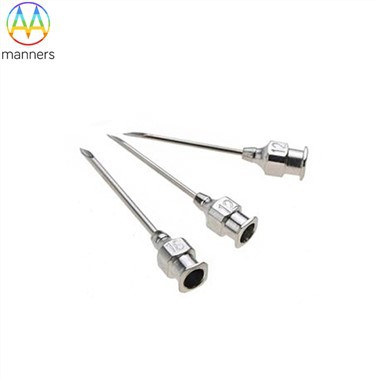
The full-series Quincke tip products form a hierarchical precision control system adapting to different operational accuracy needs. High-precision minimally invasive specifications of 24G-27G adopt ultra-fine precision grinding, suitable for precise diagnostic sampling and sensitive patient puncture with extremely high accuracy requirements. Standard balanced precision specifications of 21G-23G have stable mechanical performance, suitable for most routine anesthesia and conventional diagnostic puncture scenarios. High-stability heavy-duty specifications of 16G-20G strengthen structural balance and anti-deformation capacity, maintaining operational stability in high-resistance and deep puncture scenarios. All specifications adopt unified precision tolerance standards and color-coded identification to ensure consistent batch precision performance.
Standard Precision Operation Guidelines
Standardized precision operational norms are formulated to give full play to the stability advantages of high-precision Quincke tip needles. Preoperatively, select matched precision-grade specifications according to surgical accuracy requirements and patient sensitivity. During puncture, keep the needle body parallel to the spinal midline, advance at a uniform slow speed, and use the product's balanced structural advantages to maintain stable attitude. Judge tissue breakthrough and depth accurately, avoid excessive propulsion and angle deviation. Control CSF outflow speed stably to ensure accurate sampling and uniform drug diffusion. Postoperatively, observe neurological function and local wound conditions closely to avoid latent precision damage-induced discomfort.
Clinical Precision Control Practical Experience
Clinical precision operation practice proves that modern high-precision Quincke tip spinal needles have excellent operational stability and accuracy. The balanced bevel structure completely solves the unilateral deflection problem of traditional cutting needles, significantly reducing the incidence of puncture deviation and nerve stimulation damage. Ultra-high straightness needle body ensures stable propulsion attitude, improving the accuracy of puncture depth and positioning. Stable lumen flow control ensures consistent diagnostic sampling quality and uniform anesthesia drug diffusion, improving surgical anesthesia stability. Graded precision matching realizes accurate docking of different scenario accuracy needs, making clinical puncture operation more standardized, precise and controllable.
Summary and Technical Sublimation
In conclusion, modern high-precision Quincke tip spinal needles solve the industry pain points of poor stability and low operational accuracy of traditional cutting-tip puncture tools through precision machining and balanced structural optimization. The hierarchical precision classification system meets the precise control needs of different clinical scenarios, realizing stable, accurate and safe lumbar puncture operation. It greatly improves the precision level of clinical spinal anesthesia and diagnostic puncture, and provides high-quality equipment support for refined medical diagnosis and treatment.
Industry Development Prospect and Suggestions
In the future, the industry should further upgrade ultra-precision grinding and integrated molding technology, improve the mechanical balance and operational stability of Quincke tip products. Establish unified industry precision tolerance standards for cutting-tip spinal needles, eliminate low-precision defective products. Strengthen the popularization of high-precision graded products in precision diagnosis and high-standard anesthesia scenarios. Continuously improve the industry's clinical precise operation guarantee capacity, and promote the high-precision upgrading of Quincke tip spinal needle manufacturing technology.
https://www.kdlnc.com/the-anatomy-of-the-quincke-tip-spinal-needle/