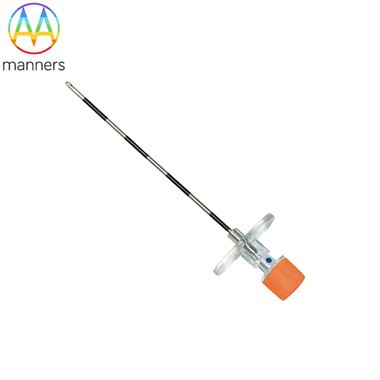
Needle Cannula: OEM Customization & Dimensional Tolerance Management
Sep 13, 2026
OEM customization and dimensional tolerance management are major pain points for needle cannula component suppliers. Medical device OEM clients propose highly customized cannula dimensions, tip geometry and hypo tube cut patterns according to their unique device design. Tight tolerance requirements on micro cannula under Ø0.3mm OD are difficult to maintain in mass production. Minor dimensional drift of cannula outer diameter, inner diameter or wall thickness changes assembly fit with hypo tube and guidewire movement. Different customers adopt different drawing standards, causing misunderstanding on tolerance definition. When customizing cannula paired with bespoke laser cut hypo tube, small geometry change of cannula may require rework on hypo tube cut layout. Many projects face prototype approval delay due to dimensional non-conformity. Frequent drawing revision increases manufacturing cost and risk of production confusion. Tolerance stack-up between cannula and hypo tube assembly is often underestimated at early design stage.
The working principle of dimensional tolerance management for needle cannula is controlling variation of every manufacturing step to keep final assembly within allowable deviation range. Raw tubing drawing determines initial OD, ID and wall thickness tolerance. Tip grinding controls bevel angle, tip offset and tip length tolerance. Laser cutting defines hypo tube kerf width, cut pitch and segment length. Welding process controls coaxiality between needle cannula and hypo tube. All individual feature tolerances stack up and affect final assembly performance. Excessive dimensional variation increases friction, reduces torque transmission efficiency and degrades trackability. Tolerance analysis helps engineers allocate reasonable tolerance limit for each feature. Too tight tolerance raises production cost and scrap rate; too loose tolerance leads to functional failure in clinical use. For customized projects, designers balance performance requirement, machining capability and manufacturing cost. The minimum kerf width of matched hypo tube can reach 0.012mm for ultra-precise custom design.
Needle cannula OEM customization projects can be classified by customization level and matched hypo tube design. Simple customization only changes cannula outer diameter, length and tip bevel angle, paired with standard spiral cut hypo tube. Medium customization modifies cannula material and adds special surface treatment, matched with interrupted spiral cut or radial cut hypo tube. Full deep customization redesigns cannula tip profile and whole hypo tube variable stiffness cut pattern, developed for abdominal aortic aneurysm, neurological or peripheral vascular intervention devices. Customers provide 2D/3D drawings or physical samples for custom development. Material options include 304, 316L,17-7PH stainless steel, Nitinol and L605 cobalt alloy. Custom packaging can also be offered. Different customization levels require different design review, prototype verification and process validation workflow. Full custom project needs finite element simulation, mechanical testing and biocompatibility evaluation before mass production.
Practical operation guideline covers drawing review, tolerance stack-up analysis, prototype machining, capability study and mass production control. First technical team reviews customer 2D/3D drawing, clarifies tolerance definition and identifies difficult-to-machine features. Conduct tolerance stack-up simulation of needle cannula and hypo tube assembly. If required, build FEA model to predict how dimensional variation influences mechanical performance. Manufacture prototype samples according to drawing or customer sample. Measure all critical dimensions with optical comparator and coordinate measuring machine. Perform full functional test: push, torque, kink resistance and fatigue test on cannula-hypotube assembly. Complete process capability study (Cpk) to verify whether production process can stably meet tolerance requirement. Once prototype approved, lock process parameters and document in quality system. During mass production, implement in-line sampling inspection. If dimensional drift occurs, trigger corrective action. Pack finished goods in standard cartons or customized packaging, with full batch traceability under ISO13485.
From OEM project experience, unclear drawing requirement is the top cause of customization delay. In one neurological micro cannula project, customer drawing did not specify tip coaxiality tolerance. After prototype delivery, the client rejected samples due to unstated tip offset requirement. Aligning tolerance definition in early technical review avoided similar issues in later projects. Another custom cannula case underestimated tolerance stack-up between cannula ID and hypo tube lumen, resulting in guidewire jamming inside assembly. Adjusting dimension tolerance allocation solved the fit problem. For ultra-small cannula, tool wear causes gradual dimensional drift during long production run; regular tool calibration and Cpk monitoring are necessary. Communication between supplier design engineer and OEM R&D team is critical. Before drawing revision, evaluate the impact on hypo tube laser cutting and welding process. All drawing changes must go through formal engineering change control in ISO13485 quality system.
In conclusion, OEM customization of needle cannula relies on systematic dimensional tolerance management rather than single part measurement. Reasonable tolerance allocation balances clinical performance, machining feasibility and manufacturing cost. Custom cannula design cannot be separated from hypo tube cut pattern and assembly tolerance stack-up. Early technical review and tolerance simulation reduce prototype rework risk. The future direction of OEM service is adopting digital model-based definition instead of 2D drawing, to eliminate ambiguity on tolerance. High precision online optical measurement equipment can achieve real-time dimensional feedback during production. Medical component suppliers should build standardized custom project workflow, covering drawing review, prototype validation, process capability study and change control, fully complying with ISO9001:2015 and ISO13485, to support global medical OEM customers' needle cannula and hypo tube development projects efficiently.