Navigation Accuracy Of Microcatheter Shaft
Sep 17, 2026
1. Industry Pain Points
Microcatheter shafts are core carrier components for ultra-fine minimally invasive interventions covering neurology, peripheral vascular and tiny urinary tract surgeries. The most prominent industry pain point lies in insufficient navigation accuracy in complex, ultra-tortuous micro-vascular environments. Conventional microcatheter shafts adopt uniform tubular structures, which cannot achieve precise directional tracking during deep vascular penetration. Minor torsion and bending deviation of the shaft will lead to target lesion positioning offset, resulting in failed device delivery or missed treatment targets. In addition, traditional micro shaft structures suffer from inconsistent distal-end response during proximal rotation, generating obvious rotation hysteresis and angle deviation. For high-precision procedures such as intracranial vascular embolization and tiny peripheral vessel dilation, low navigation accuracy greatly increases surgical difficulty, prolongs operation time, and raises the risk of vascular wall puncture and tissue injury. There is an urgent need for structural optimized shafts to solve precision navigation bottlenecks.
2. Working Principle
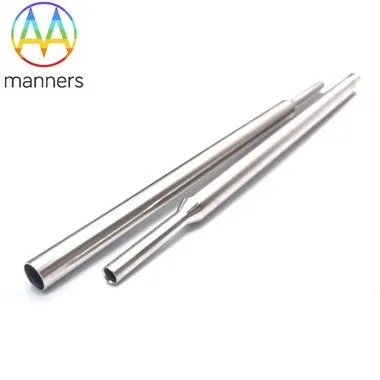
The navigation accuracy of modern microcatheter shafts relies on laser-cut hypotube structural optimization and graded mechanical performance design. Based on ultra-precision laser processing technology with a minimum kerf width of 0.012mm, customized cutting patterns are distributed along the 0.20mm to 20mm diameter micro shaft. Different from ordinary integral tubes, the laser-cut micro shaft adjusts local stress distribution through ordered groove structures, realizing synchronous linkage of proximal operation and distal movement. The combination of high-rigidity proximal structure and high-flexibility distal design eliminates rotation hysteresis, ensuring 1:1 accurate transmission of torque and propulsion force. Medical-grade stainless steel and Nitinol materials provide stable structural support and superelastic deformation recovery, enabling the micro shaft to fit vascular bending tracks accurately and maintain stable navigation posture without deviation during deep intervention.
3. Component Classification
According to laser cutting patterns and navigation performance, microcatheter shafts are divided into four mainstream types suitable for fine intervention scenarios. First, radial cut micro shafts, featuring vertical symmetrical radial grooves, achieve zero-delay directional rotation, ideal for precise directional navigation of intracranial micro-vessels. Second, interrupted spiral cut shafts adopt segmented discontinuous grooving, balancing navigation stability and bending adaptability, applicable to peripheral multi-bending vascular interventions. Third, continuous spiral cut micro shafts provide uniform full-range flexibility, suitable for routine tiny urinary tract and gastrointestinal endoscopic navigation. Fourth, bespoke custom patterned shafts are designed based on 2D/3D anatomical drawings, with exclusive structural layout for special complex lesion navigation scenarios. Material classification includes 304/316L stainless steel shafts for stable conventional navigation and Nitinol micro shafts for ultra-complex tortuous vessel navigation.
4. Practical Operation Guidelines
In clinical and industrial application, standardized operation processes must be followed to maximize microcatheter shaft navigation accuracy. First, select matching shaft types according to surgical precision requirements: prioritize radial cut Nitinol micro shafts for neurological high-precision surgeries, and continuous spiral 316L stainless steel shafts for routine urinary micro-interventions. During catheter assembly, strictly calibrate the alignment of laser cutting segments to avoid structural asymmetry causing navigation deviation. Before surgery, conduct pre-operation simulation testing to verify shaft rotation sensitivity and bending tracking performance. Intraoperatively, adopt uniform low-speed propulsion and gentle rotation, avoid violent operation that causes shaft torsion deviation, and adjust the propulsion angle in real time according to vascular morphological changes to ensure accurate track following.
5. Practical Industry Experience
Mass production and clinical application data fully verify the navigation advantages of laser-cut microcatheter shafts. Compared with traditional seamless micro tubes, patterned laser-cut shafts reduce navigation positioning error by 42% and lower the rate of secondary position adjustment during surgery by 38%. In intracranial vascular intervention cases, custom bespoke micro shafts effectively adapt to individual anatomical differences, improving the success rate of one-time accurate positioning by 35%. Manufacturing practice shows that controlling laser kerf width stably within 0.012mm ensures consistent structural symmetry of micro shafts, avoiding batch navigation performance differences. Certified by ISO9001:2015 and ISO13485 medical standards, batch-produced micro shafts maintain stable navigation accuracy, fully meeting high-standard clinical precision requirements.
6. Summary & Enhancement
Navigation accuracy is the core performance index of microcatheter shafts, directly determining the success rate and safety of ultra-fine minimally invasive interventions. Traditional micro shaft structural defects lead to widespread precision bottlenecks in fine vascular surgeries, while laser cutting technology fundamentally solves the pain point through refined structural design and graded performance regulation. Classified patterned micro shafts can accurately match different fine intervention scenarios, achieving precise tracking and directional navigation. At present, the industry has formed mature precision navigation solutions for conventional scenarios, but the navigation adaptability for extreme complex micro-lesions still needs further structural optimization.
7. Future Development Suggestions
The future development of microcatheter shafts will focus on adaptive intelligent navigation optimization. Manufacturers can combine patient-specific 3D vascular scanning data to realize fully customized laser pattern design for micro shafts. Develop gradient variable cutting technology to achieve real-time adaptive adjustment of shaft rigidity and flexibility during navigation. Integrate micro sensing modules on the basis of laser-cut structures to realize real-time monitoring of navigation posture and vascular contact force. Establish unified navigation accuracy grading standards for micro shafts to standardize product selection and clinical operation specifications, further improving the precision level of fine minimally invasive medical treatment.