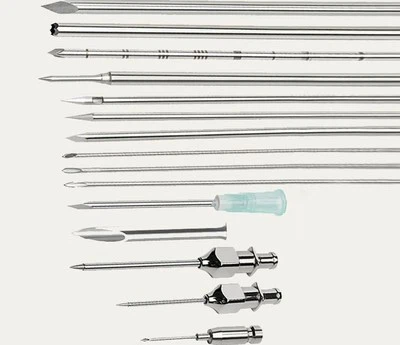
Nasal Surgery Electrode Needle + Manufacturer: Clinical Application Progress And Surgical Outcome Evaluation
Apr 22, 2026
Nasal surgery electrode needle + Manufacturer: Clinical application progress and surgical outcome evaluation
The nasal surgery electrode needle, as an important tool in minimally invasive otolaryngology surgery, plays a crucial role in the treatment of various nasal diseases. Its clinical application is extensive, and the surgical outcomes are remarkable, providing patients with a treatment option that involves less trauma and faster recovery.
Endoscopic sinus surgery (ESS) is the main application field of electrode needles in otolaryngology. Chronic sinusitis, nasal polyps and sinus diseases are common nasal disorders. Traditional surgeries are invasive and have a long recovery period. The combination of endoscopic sinus surgery and electrode needle technology enables the removal of diseased tissues through minimally invasive methods while protecting normal mucosa, significantly improving surgical outcomes [citation: provided by user]. The precise ablation function of the electrode needle allows doctors to accurately treat the lesion area under direct vision, reducing damage to surrounding tissues. Clinical studies have shown that endoscopic sinus surgery assisted by electrode needles shortens the operation time, reduces bleeding, alleviates postoperative pain for patients, and speeds up recovery.
During sinus surgery, electrode needles are used to address sinus obstruction and drainage issues [citation: provided by user]. The anatomy of the sinuses is complex, and traditional surgeries often struggle to thoroughly treat deep-seated lesions. The slender design and adjustable length of electrode needles enable them to reach areas that are difficult for conventional instruments to access, precisely ablate obstructive tissues, and restore normal sinus drainage. Particularly for deep sinus conditions such as frontal and sphenoid sinus diseases, electrode needle technology demonstrates significant advantages. During the operation, doctors can adjust the length of the electrode according to the location and size of the lesion, allowing for personalized treatment.
Turbinate volume reduction surgery is an effective method for treating chronic nasal congestion. Enlargement of the inferior turbinate is a common cause of nasal congestion. Traditional surgical resection is difficult to control the extent of resection and is prone to over-resection or under-resection. The electrode needle radiofrequency ablation technique uses controllable thermal energy to cause coagulation necrosis of the turbinate tissue, which is then gradually absorbed and reduced in size, achieving the effect of volume reduction. This method has less trauma and bleeding, and can precisely control the ablation range and depth, protecting the function of the turbinate mucosa. Clinical follow-up shows that the long-term effect of electrode needle turbinate volume reduction surgery is stable, and patient satisfaction is high.
Septoplasty corrects a deviated nasal septum to improve airflow [citation: provided by user]. A deviated nasal septum can cause nasal congestion, headaches, and recurrent nosebleeds. Traditional septoplasty involves removing part of the cartilage and bone tissue, which is quite invasive. The electrode needle technique can adjust the cartilage tension through radiofrequency ablation while preserving the integrity of the nasal septum structure, thus correcting the deviation. This method reduces tissue removal, maintains the nasal septum's support function, and lowers the risk of complications such as perforation. For mild to moderate nasal septum deviations, electrode needle correction is an effective minimally invasive option.
Nasal tumor ablation is an important application direction of electrode needles. Benign tumors such as papilloma and hemangioma, as well as malignant tumors such as squamous cell carcinoma, can all be treated by ablation with electrode needles [citation: provided by the user]. The precise ablation function of electrode needles enables doctors to completely remove tumor tissues while protecting important structures. Especially for deep-seated tumors surrounded by important blood vessels and nerves, electrode needle technology shows unique advantages. Intraoperative real-time image guidance combined with electrode needle ablation improves the accuracy and safety of tumor treatment.
Radiofrequency surgery utilizes controlled thermal energy application to achieve various therapeutic goals. Radiofrequency energy is delivered to the target tissue through electrode needles, generating a thermal effect that causes tissue coagulation and necrosis. This technique is characterized by excellent hemostasis, minimal tissue damage, and rapid recovery. In rhinological surgeries, radiofrequency technology is not only used for tissue ablation but also for hemostasis and reduction of vascular tumors. The design of the electrode needles enables precise concentration of radiofrequency energy in the target area, minimizing thermal damage to surrounding tissues.
The treatment of chronic rhinitis improves nasal breathing by reducing inflammation of the nasal mucosa [citation: provided by the user]. In patients with chronic rhinitis, the nasal mucosa is congested and swollen, leading to symptoms such as nasal congestion and runny nose. Radiofrequency ablation with electrode needles can selectively act on the submucosal layer of the nasal mucosa, reducing glandular secretion and vascular dilation, and alleviating inflammatory reactions. Compared with traditional drug treatment, radiofrequency treatment has a longer-lasting effect and fewer side effects. For patients with chronic rhinitis who have poor responses to drug treatment, radiofrequency treatment with electrode needles is an effective option.
Surgical operation skills have a significant impact on the treatment outcome. The use of electrode needles requires professional training and experience accumulation. Before the operation, the appropriate electrode length and power parameters should be selected based on the type and location of the lesion; during the operation, the electrode should be precisely placed under the direct vision of the endoscope, and the ablation time and range should be controlled; after the operation, the patient's reaction should be closely observed, and complications should be dealt with in a timely manner. Professional manufacturers help doctors master the use skills of electrode needles by providing training and technical support, thereby improving the success rate of the operation.
Clinical effect evaluation shows that the electrode needle for nasal surgery has advantages in multiple aspects. It causes less surgical trauma, results in mild pain for patients, and leads to a faster recovery; it causes less bleeding and provides a clear surgical field of vision; it has high precision and can protect important structures; it has a wide range of indications and can be used to treat various nasal diseases. Long-term follow-up studies have shown that the effect of electrode needle treatment is stable, the recurrence rate is low, and the quality of life of patients has significantly improved.
Safety considerations are an important aspect of clinical application. Although electrode needle surgery is relatively safe, potential risks still need to be noted. Improper placement of electrodes may damage important structures such as the base of the skull and the orbit; improper energy control may lead to excessive ablation or insufficient ablation; some patients may experience complications such as bleeding, infection, and adhesion. Strict adherence to surgical indications, meticulous operation techniques, and comprehensive postoperative management are the keys to ensuring the safety of the surgery.
The future clinical application development directions include several aspects. First, expanding indications, exploring the application of electrode needles in the treatment of more nasal diseases; second, technology integration, combining electrode needles with navigation systems, robotic technology, etc., to improve the accuracy of surgery; third, personalized treatment, customizing treatment plans based on the anatomical characteristics and lesion nature of patients; fourth, optimizing therapeutic effects, improving treatment efficacy and safety through parameter optimization and the application of new technologies.
Overall, the electrode needle for rhinological surgery has demonstrated significant advantages in clinical applications, providing an effective minimally invasive option for the treatment of nasal diseases. With the advancement of technology and the accumulation of experience, the application of electrode needles in rhinological surgery will become more widespread, bringing benefits to more patients. Professional manufacturers, through product innovation and technical support, are driving the development of this field, providing better tools for clinicians and better treatment for patients.