MP35N Robotic Shafts
Sep 11, 2026
Pain Points
Robotic surgical systems, such as those used in laparoscopic, thoracoscopic, and endoscopic procedures, demand instrument shafts that can transmit torque with zero backlash, endure millions of articulation cycles, and withstand repeated sterilization-all while maintaining a small diameter for minimally invasive access. Current materials fall short in one or more of these areas. Polymer shafts, while flexible, creep under sustained load, leading to a loss of positional accuracy and "play" in the instrument's movement-a phenomenon known as torque hysteresis. Stainless steel shafts, even when laser-cut, suffer from fatigue cracking after prolonged use and may fracture under the high-cycle demands of robotic articulation. Titanium alloys are strong but difficult to laser-cut into fine patterns and can be expensive. The pain point is the absence of a material that can simultaneously deliver high torsional stiffness, exceptional fatigue life, corrosion resistance for repeated sterilization, and the ability to be laser-patterned into complex, flexible structures. Without such a material, robotic surgical instruments are limited in their precision, durability, and range of motion, ultimately constraining the surgeon's ability to perform delicate procedures and increasing the total cost of ownership due to frequent instrument replacement.
Principle
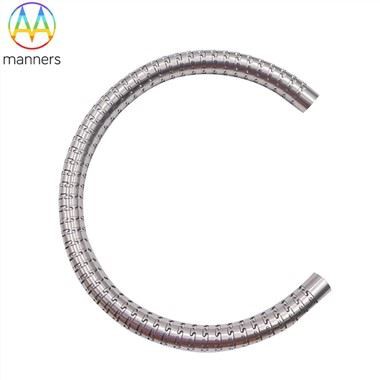
MP35N's ultra-high strength and corrosion resistance make it an ideal candidate for robotic surgical shafts. With tensile strength up to 300 ksi, MP35N can be formed into thin-wall hypotubes that act as both a torque-transmitting spine and a flexible guide. Laser-cut patterns-such as symmetric spiral cuts, articulated link structures, or variable-pitch helices-can be engineered to provide joint-like flexibility at specific points along the shaft while maintaining torsional rigidity along the rest of its length. The alloy's ability to withstand high-cycle fatigue (exceeding 50 million cycles in some configurations) ensures long-term reliability, even under the relentless articulation demands of robotic systems. When properly processed, MP35N shafts exhibit minimal torque hysteresis, meaning the rotational input at the robot console is faithfully reproduced at the instrument tip. The material's excellent resistance to hydrogen peroxide plasma, autoclaving, and other sterilization methods prevents degradation over hundreds of cycles. This transforms the shaft from a passive conduit into an active, responsive component of the robotic system-a deterministic element that enhances the surgeon's dexterity and precision. The principle of "engineered determinism" is realized: the shaft's mechanical behavior is precisely programmed through its geometry and material properties, providing a predictable, reliable interface between the robot and the tissue.
Equipment Classification
Producing MP35N robotic shafts requires a sophisticated manufacturing infrastructure. Multi-axis fiber laser cutting systems with rotary vision stages execute complex patterns with kerf widths down to 0.012 mm. Robotic test arms equipped with encoders and torque sensors validate performance by subjecting shafts to millions of articulation cycles while logging torque hysteresis, angular deflection, and positional accuracy. Autoclave and hydrogen peroxide plasma sterilizers simulate repeated clinical reprocessing to verify corrosion resistance and mechanical integrity. Electropolishing rectifiers and passivation lines ensure a smooth, biocompatible surface finish. Advanced metrology tools, including laser scanners, optical comparators, and coordinate measuring machines (CMM), verify dimensional accuracy to micron tolerances. Digital twin platforms simulate the entire manufacturing process and predict the performance of the final shaft under various loading conditions, reducing the need for physical prototypes. All processes are conducted under ISO 13485 quality management systems, with full traceability from raw material to finished instrument.
Practical Guide
Specifying MP35N for robotic shafts begins with selecting the appropriate material condition: cold-drawn MP35N is typically used for maximum strength and torsional stiffness. The laser pattern should be designed using finite element analysis (FEA) to optimize the balance between flexibility and torque transmission. Symmetric spiral cuts with radiused bridges distribute stress evenly and enhance fatigue life. Avoid sharp internal corners or abrupt transitions that could act as stress risers. Electropolish 10–15 µm to remove the laser recast layer and achieve a low surface roughness (Ra < 0.2 µm). Passivate per ASTM A967 to enhance corrosion resistance. Hydrophilic or hydrophobic coatings may be applied to reduce friction, but only after fatigue testing to ensure the coating does not mask surface defects. Validation should include torque hysteresis logging per 1 million cycles, with acceptance criteria typically set at less than 5% torque loss. Articulation testing should simulate the most extreme ranges of motion expected in clinical use. Collaborate closely with robotic system developers to ensure seamless integration of the shaft into the instrument's kinematic chain. Documentation for regulatory submissions (FDA 510(k), CE Mark) must include detailed material certifications, process validations, and biocompatibility testing per ISO 10993.
Real-World Experience
A leading laparoscopic robotic system manufacturer replaced 316L stainless steel shafts in their articulating instruments with laser-cut MP35N hypotubes. Over 12 million articulation cycles, the MP35N shafts maintained torque within 3% of initial values, while the 316L controls drifted by 19% and showed visible cracking at cut bridges. In clinical use, surgeons reported smoother, more precise movements and reduced "play" in the instruments, translating to improved dissection accuracy and shorter learning curves for complex procedures. The MP35N instruments also survived 250 sterilization cycles with no signs of pitting or corrosion, compared to 316L instruments that required replacement after 80 cycles. Another company developing a robotic endoscope for natural orifice surgery used MP35N shafts to achieve multi-plane articulation, enabling access to previously unreachable anatomical sites. These real-world successes demonstrate that MP35N is not just a theoretical improvement-it delivers measurable gains in robotic surgical performance, reliability, and cost-effectiveness. The collective experience of early adopters confirms that MP35N has become the material of choice for next-generation robotic surgical shafts.
Summary & Elevation
Robotic surgery demands deterministic performance, and MP35N hypotubes deliver exactly that. By providing a robust, fatigue-resistant, and torque-efficient backbone, MP35N is helping to define the next era of surgical robotics. Its adoption marks a shift toward instruments that are not only more capable but also more durable, safer for patients, and more cost-effective for healthcare systems. The transformation of a simple tube into a high-performance robotic shaft exemplifies the power of materials engineering to revolutionize medical practice. As robotic surgery expands into new specialties-from microsurgery to transoral procedures-MP35N will remain the skeletal metal that makes these advancements possible. This technology elevates the entire field, turning the surgeon's intent into precise, reliable action and ultimately improving patient outcomes.
Outlook & Recommendations
The future of robotic surgical shafts lies in hybridization and intelligence. Future MP35N shafts may integrate embedded sensors-such as fiber Bragg gratings or micro-strain gauges-to provide real-time feedback on tissue contact forces, enabling haptic feedback for the surgeon. Shape-memory alloy segments combined with MP35N could create shafts with variable stiffness that adapt to different tissues or procedural phases. Research into surface modifications, such as diamond-like carbon (DLC) coatings or antimicrobial layers, will further enhance durability and safety. As robotic systems become smaller and more dexterous, the demand for MP35N micro-shafts (OD < 0.5 mm) will grow, driving advancements in micro-laser cutting and ultra-thin wall tube drawing. Manufacturers should invest in developing standardized MP35N supply chains and processing protocols to support high-volume production. Collaboration between material scientists, laser engineers, roboticists, and clinicians will be essential to fully realize the potential of MP35N in surgical robotics. By embracing these innovations, the industry can ensure that MP35N remains at the cutting edge of robotic surgical technology, delivering value to both healthcare providers and patients for decades to come.