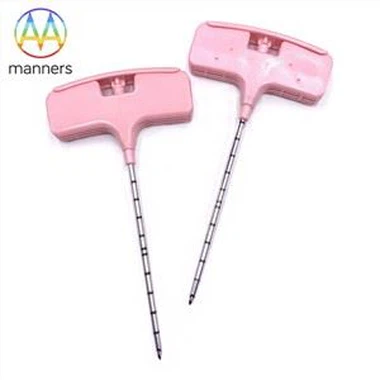
Minimally Invasive Puncture Technology Of Single-Use Redon Needle
Oct 11, 2026
1. Pain Points of Traditional Drainage Puncture Technology
Traditional postoperative drainage puncture technology has long been plagued by poor minimally invasive effect and many adverse clinical reactions. Most traditional drainage needles adopt conical ordinary sharp tips, which will produce large-area tissue cutting and extrusion during puncture, resulting in large puncture wounds, obvious intraoperative pain and severe postoperative subcutaneous edema. The blunt and uneven tip structure is easy to scratch blood vessels and nerve tissues, causing excessive bleeding and local numbness, prolonging patient recovery time. In addition, traditional puncture tools have poor positioning accuracy, relying entirely on the subjective experience of medical staff, which is prone to deviation of puncture depth and position, resulting in incomplete wound effusion drainage, secondary hematoma and infection. Repeated puncture adjustment caused by inaccurate positioning will further expand tissue damage and increase patient pain. At the same time, the non-smooth needle body of traditional instruments is easy to adhere to tissues during withdrawal, causing secondary tearing of puncture wounds, affecting wound healing and increasing the risk of scar hyperplasia. These technical defects seriously affect the quality of postoperative nursing and patient medical experience, and cannot meet the current clinical requirements of minimally invasive, precise and low-trauma treatment.
2. Minimally Invasive Puncture Principle of Single-use Redon Needle
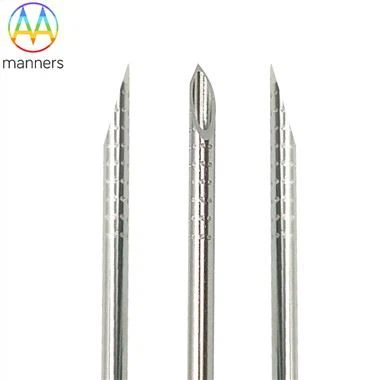
The core technical advantage of single-use Redon needle lies in its innovative spatula-shaped needle tip minimally invasive puncture design, which breaks through the technical bottleneck of traditional conical tip puncture. Different from the point-to-point penetration of ordinary sharp tips, the spatula-shaped flat tip adopts surface contact and layered separation technology. During puncture, it can gently separate subcutaneous loose connective tissues along the tissue gap, instead of violent cutting and tearing, realizing low-trauma penetration. The precisely polished flat tip has no sharp edges and burrs, which can avoid damaging tiny blood vessels and nerve endings in the tissue, effectively reducing intraoperative bleeding and postoperative pain. Combined with the high-precision smooth needle body made of medical stainless steel, the friction resistance during puncture and withdrawal is minimized, avoiding secondary tissue damage. Matching with the low-vacuum closed drainage principle, the puncture position can accurately reach the bottom of the wound effusion cavity, and the closed drainage mode avoids repeated tissue stimulation caused by open drainage. The overall puncture technology realizes the integration of accurate positioning, minimal trauma and stable drainage, and completely solves the pain points of large trauma, severe pain and low accuracy of traditional puncture technology.
3. Classification of Minimally Invasive Puncture Structures
According to the structural design and puncture adaptation characteristics, the minimally invasive puncture structures of single-use Redon needles are divided into three types, covering all conventional clinical puncture scenarios. The first is standard spatula tip structure, which is the basic mainstream structure, with uniform flat tip thickness and smooth transition. It is suitable for routine superficial tissue puncture in general surgery, with stable separation effect and low trauma, meeting the minimally invasive needs of most routine surgeries. The second is reinforced narrow spatula tip structure, which narrows the tip width on the basis of the standard structure, improves the penetration precision, and is suitable for narrow space and precise puncture scenarios such as facial plastic surgery, hand surgery and minimally invasive endoscopic surgery. It can realize ultra-small wound puncture and reduce postoperative scar formation. The third is gradient radian spatula tip structure, which combines the advantages of curved needle body and flat tip, and is suitable for deep cavity and irregular wound puncture such as thoracic surgery and pelvic surgery. The gradient radian can adapt to the physiological curvature of human tissues, avoid forced extrusion of tissues, and realize in-depth minimally invasive puncture. All three structures adopt one-piece precision polishing process, with smooth needle body transition and no structural dead corners, ensuring no tissue hanging damage during puncture and withdrawal.
4. Standard Minimally Invasive Puncture Operation Guide
To give full play to the minimally invasive advantages of single-use Redon needles, clinical puncture operations must follow standardized minimally invasive operation specifications. Before puncture, complete strict skin disinfection and local infiltration anesthesia to eliminate intraoperative pain factors and ensure a sterile operating environment. Select the corresponding puncture structure model according to the wound position, depth and tissue thickness: standard model for conventional superficial wounds, narrow tip model for precise minimally invasive surgery, and gradient radian model for deep irregular wounds. During puncture, hold the needle body stably with the thumb and index finger, keep the spatula tip parallel to the tissue layer gap, and advance slowly and uniformly at a constant speed, avoiding fast piercing and forced shaking. Adjust the puncture angle in real time according to the tissue physiological curvature to ensure layered separation of tissues without forced cutting. After reaching the predetermined wound cavity position, stop advancing immediately to avoid excessive penetration damaging deep tissues. After completing drainage tube placement and fixing, withdraw the needle body slowly along the original puncture track to prevent secondary tearing of the puncture wound. After the operation, apply sterile dressing gently to reduce wound extrusion and create a good minimally invasive healing environment.
5. Practical Experience of Minimally Invasive Puncture in Clinical Scenarios
A large number of clinical practices have proved that the minimally invasive puncture technology of single-use Redon needles has significant clinical effects and optimized treatment experience. In cosmetic and plastic surgery scenarios, the narrow spatula tip minimally invasive puncture can control the puncture wound within 2-3mm, basically avoiding obvious postoperative scars, greatly improving the surgical aesthetic effect and meeting patients' aesthetic needs. In pediatric surgery, the low-trauma puncture structure reduces tissue damage and postoperative pain, reduces children's crying and restlessness after surgery, and is conducive to stable wound recovery. In deep tissue surgery, the gradient radian structure accurately adapts to complex tissue structures, avoids repeated puncture adjustments, reduces operation time, and improves surgical efficiency. Clinical comparative data show that compared with traditional puncture tools, the single-use Redon needle reduces intraoperative puncture trauma area by more than 70%, postoperative pain score by 40%-50%, and wound healing time by 3-4 days. Standardized minimally invasive operation can also effectively reduce the incidence of postoperative bleeding, edema and infection complications, with extremely high clinical promotion value.
6. Technical Advantage Summary and Value Sublimation
The innovative spatula-shaped minimally invasive puncture technology is the core technical breakthrough of single-use Redon needles in the field of postoperative drainage. It subverts the traditional violent cutting puncture mode and realizes layered low-trauma tissue separation, solving the industry pain points of large puncture trauma, severe patient pain and low positioning accuracy. The diversified structural classification design realizes precise matching with different surgical scenarios, making minimally invasive puncture technology applicable to all kinds of postoperative drainage operations. Standardized operation guidelines and mature clinical experience further standardize the technical application process and ensure the stable play of minimally invasive effects. This technology not only improves the safety and comfort of clinical treatment, reduces postoperative complication rates, but also promotes the upgrading of postoperative drainage nursing from traditional traumatic operation to modern minimally invasive precise nursing, injecting new vitality into the standardized development of surgical nursing technology.
7. Technical Optimization Prospects and Industry Suggestions
With the rapid development of minimally invasive surgery and precision medical concepts, the minimally invasive puncture technology of single-use Redon needles still has great optimization space. In terms of product technology research and development, manufacturers can optimize the tip radian and flatness parameters according to different human tissue characteristics, develop scenario-specific customized puncture structures, and further improve the minimally invasive precision. Add micro-scale positioning scales on the needle body to realize quantitative precise puncture and eliminate positioning errors. In terms of industry technology promotion, strengthen the standardized training of medical staff's minimally invasive puncture operation skills, unify the operation process and technical standards, and avoid the attenuation of minimally invasive effect caused by irregular operation. Medical institutions should establish a special minimally invasive drainage operation system, promote the full replacement of traditional traumatic puncture tools with single-use Redon needles, and comprehensively improve the level of postoperative minimally invasive nursing. In the future, with the integration of intelligent manufacturing technology, the minimally invasive puncture performance of products will be further upgraded to adapt to more high-precision and complex surgical scenarios.