Micron-Level Craftsmanship: A Look Inside The Birth Story Of An RF Transseptal Needle Interrogative Unveiling:
Apr 17, 2026
Micron-Level Craftsmanship: A Look Inside the "Birth Story" of an RF Transseptal Needle
Interrogative Unveiling:
How is an RF needle, capableof performing precise "thermal perforation" within the beating heart, actually manufactured? What extraordinary chasm of precision manufacturing must its creation cross?
Historical Context:
The manufacturing history of medical devices is a chronicle of ever-increasing precision-evolving from basic lathes to CNC machines and today's ultra-precision machining, where tolerances have shrunk from millimeters to microns. The manufacturing of the RF transseptal needle represents the pinnacle of current interventional consumable production. It originates from an ultimate pursuit of "reliability"-in the unforgiving battlefield of the heart, any minor defect in the device can lead to catastrophic consequences. Early attempts often faced issues like insufficient needle strength, unstable conductivity, and peeling coatings. Solving these problems requires a systematic precision manufacturing framework that transcends single technologies, integrating material science, mechanical engineering, electrochemistry, and physics.
Definitions and Standards:
The creation of a qualified RF transseptal needle is a "micron-level guardianship" across the entire supply chain.
The process begins with material selection: The needle body typically uses specific grades of medical stainless steel or alloys to ensure superior rigidity, elasticity, and biocompatibility.
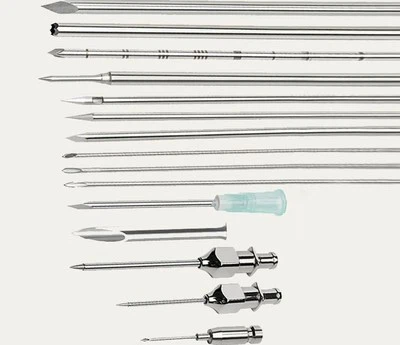
The core stage is ultra-precision machining: World-class Swiss-type lathes, such as the Citizen Cincom R04, are used to cut the needle tube and sculpt the geometry of the atraumatic, rounded tip at a micron scale. This blunt "atraumatic tip" design is crucial, allowing the needle to safely abut tissue before RF energy release, preventing unintended mechanical injury.
This is followed by surface treatment: Electropolishing removes microscopic burrs, achieving a mirror-like finish to minimize the risk of thrombus formation. This is followed by ultrasonic cleaning to彻底 (thoroughly) remove all processing residues.
Electrode integration and insulation present another major challenge, requiring precise and reliable conductivity at the needle tip while ensuring excellent insulation along the rest of the shaft.
Finally, assembly and primary packaging are completed in a Class 10,000 cleanroom, followed by a validated sterilization process (e.g., Ethylene Oxide). Every batch must pass rigorous biological testing (cytotoxicity, sensitization, intracutaneous reactivity, etc.), and the entire Quality Management System must comply with international standards ISO 13485 and ISO 9001:2015.
Clinical Applications:
Such stringent manufacturing standards translate directly into clinical safety and efficacy.
The blunt tip allows physicians to confidently perform "exploratory" contact and fine-tune positioning. This is especially vital in cases of a thin fossa ovalis or abnormal anatomy, as it prevents inadvertent perforation.
Micron-level dimensional accuracy and surface finish ensure the needle navigates tortuous vessels and cardiac chambers smoothly, reducing the risk of vascular injury and intimal dissection.
Stable and reliable electrode performance guarantees the uniformity and controllability of RF energy delivery, creating a perfectly sized puncture hole with neat edges. This facilitates the passage of subsequent devices while promoting post-procedural healing.
Absolute sterility assurance is the lifeline for preventing intracardiac infections.
Therefore, the "birth story" of an RF puncture needle is, in essence, the translation of an engineer's challenge of physical limits into a dependable "extension" of the physician's hand-a silent yet precise escort for life within the patient.