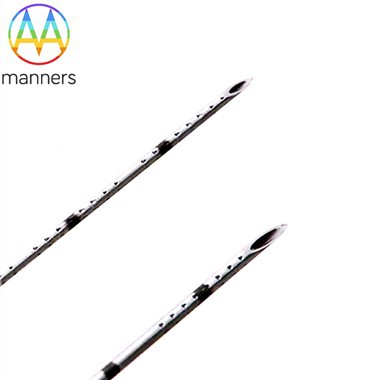
Metallic Backbone Of Lifeline: Material Science And Selection Philosophy Of AVF Puncture Needles For Dialysis
May 26, 2026
Keywords: AVF puncture needle, manufacturer, material science, stainless steel, biocompatibility
On the lifeline of hemodialysis, arteriovenous fistula puncture needles serve as a vital bridge connecting the patient's internal circulation and dialysis machines. Material selection directly determines the safety, comfort of each treatment and the service life of long-term vascular access for millions of dialysis patients. Professional manufacturers regard material science as the core foundation of products. Surgical-grade stainless steel, particularly 304 and 316L grades, has become the dominant material for AVF puncture needles, representing a precise trade-off among corrosion resistance, mechanical properties and biocompatibility.
1. Harsh Service Environment: Why Stainless Steel Stands Out
AVF puncture needles operate under extremely rigorous conditions. They repeatedly pierce human tissues and stay exposed to electrolyte and chloride-rich blood and tissue fluid at constant temperature. The needles withstand high-speed blood flushing 2 to 3 times a week for hours each session, with flow rates ranging from 200 to 500 milliliters per minute. They also endure cyclic sterilization via high-temperature high-pressure steam, ethylene oxide and radiation. Ordinary metals tend to corrode severely under such circumstances, triggering metal ion precipitation, inflammation, allergic and toxic reactions. Roughened surfaces may damage vascular intima and accelerate thrombosis.
Qualified materials must satisfy four core requirements:
Outstanding corrosion resistance against erosion from blood, tissue fluid and disinfectants.
Superior mechanical performance, including appropriate hardness of HRC 30-40 for sharp puncture, favorable toughness against fracture and fatigue resistance for repeated use.
Strict biocompatibility complying with ISO 10993 standards, free of cytotoxicity, irritation and allergic risks.
Excellent machinability to support precision grinding, laser cutting and other sophisticated processing.
Surgical-grade stainless steel perfectly meets all criteria. 304 and 316L stainless steel jointly cover clinical demands from general scenarios to high-end applications.
2. 304 Stainless Steel: Cost-effective Universal Choice
304 stainless steel (06Cr19Ni10) is a classic austenitic stainless steel containing approximately 18% chromium and 8% nickel. Chromium forms a dense passive oxide film on the surface, providing fundamental corrosion resistance. It boasts balanced mechanical properties, favorable formability and weldability at relatively low cost.
304 stainless steel fulfills basic clinical requirements for most dialysis treatments and resists corrosion during routine blood contact and sterilization. Manufacturers prefer this material for mass production, cost control and standard performance compliance. Time-tested and highly reliable, it guarantees accessible hemodialysis services worldwide.
3. 316L Stainless Steel: Premium Corrosion-resistant Material
316L stainless steel (022Cr17Ni12Mo2) is the top choice for scenarios demanding superior corrosion resistance. The addition of 2% to 3% molybdenum brings remarkable performance improvement.
It greatly enhances resistance to pitting and crevice corrosion. Molybdenum effectively prevents chloride ions from damaging passive films, stabilizing material properties in chloride-rich blood and saline environments, which is critical for long-term repeated dialysis puncture.
Its enhanced corrosion resistance minimizes metal ion release inside human bodies and delivers better biosafety. It is an ideal option for patients with metal allergies and long-term indwelling needle application.
The letter "L" refers to ultra-low carbon content below 0.03%, which restricts chromium carbide precipitation at grain boundaries during welding and heat treatment, avoiding intergranular corrosion and maintaining stable corrosion resistance after processing.
Leading manufacturers adopt 316L stainless steel for high-reliability products, premium overseas markets and sophisticated needles with laser-cut side holes. It is acknowledged as the gold standard material for AVF puncture needles.
4. Beyond Material Grade: Strict Material Management System
Top manufacturers implement full lifecycle traceable quality control covering raw material sources to finished products.
Source qualification: Only certified medical-grade stainless steel wires and tubes from reputable steel mills complying with ASTM A276 standards are purchased.
Factory re-inspection: Chemical composition verification via spectral analysis and microstructure examination via metallographic testing ensure high material purity and qualified inclusion content.
Biocompatibility assessment: Biological tests including cytotoxicity, intradermal reaction and sensitization evaluation are conducted in accordance with ISO 10993 to obtain independent compliance reports.
Whole-process traceability: Unique batch numbers link raw materials to all production records, enabling rapid source tracing once defects occur.
5. Exploration of Innovative Materials
Despite the dominant position of stainless steel, material innovation continues.
High-nitrogen stainless steel improves strength and hardness without compromising corrosion resistance, supporting the production of thinner and tougher needle tubes.
Cobalt-chromium alloy features higher specific strength and fatigue resistance yet costs much higher, currently widely applied in cardiovascular stents.
Surface modification technologies such as ion implantation and physical vapor deposition deposit inert and smooth diamond-like carbon coatings on 316L substrates, reducing friction, tissue damage and thrombus adhesion, becoming a promising development direction.
Conclusion
Material selection for AVF puncture needles balances scientific properties, engineering performance and clinical demands. The dual application of 304 and 316L stainless steel delivers tailored solutions for diversified clinical needs and budget levels. The core competitiveness of outstanding manufacturers lies not only in proper material selection, but also in establishing rigorous consistent quality control systems. Serving as the solid metallic backbone, tiny puncture needles guarantee safe and smooth dialysis treatment. The underlying material science provides steady and powerful support to human life.