Matching 11 Gauge Vs. 15G Vascular Access Infusion Needles To Patient Needs
Jul 31, 2026
https://www.sciencedirect.com/topics/nursing-and-health-professions/intraosseous-needle
Introduction: Gauge as a Determinant of Efficacy
In emergency medicine, there is no universal vascular access device. The selection of a Vascular Access Infusion Needle gauge directly impacts flow dynamics, patient outcomes, and complication rates. The 11 Gauge (~2.3mm ID) and 15G (~1.8mm ID) represent two distinct clinical philosophies: high-volume adult resuscitation versus precise pediatric care. A proficient Vascular Access Infusion Needle Manufacturer must understand these nuances to support clinicians in making optimal choices.
11 Gauge 4 Inch Length: Maximizing Flow for Adult Resuscitation
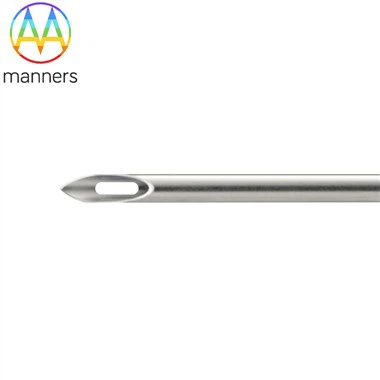
In hemorrhagic shock or major trauma, rapid volume expansion is paramount. The 11 Gauge 4 Inch Length IO needle is engineered for this scenario. Poiseuille's Law dictates that flow rate is proportional to the fourth power of the radius; thus, the large lumen of an 11G needle delivers exceptional gravity flow rates (>150 mL/min), scalable to >300 mL/min with pressure bags. This facilitates rapid transfusion of crystalloids, colloids, and blood products. The 4-inch length accommodates adipose tissue thickness and ensures deep placement within the medullary cavity of the proximal tibia or proximal humerus. Manufacturing this规格 demands high torsional rigidity. The Vascular Access Infusion Needle Manufacturer must optimize Stainless Steel properties and Swaging techniques to prevent buckling under insertion force. It is the definitive tool for cardiac arrest, anaphylaxis, and burn resuscitation.
15G: Precision for Pediatrics and Fragile Patients
Pediatric IO access requires delicacy. Children's bones feature open growth plates (epiphyseal plates) sensitive to injury. The 15G needle minimizes disruption to trabecular bone and growth centers. As noted in product descriptions ("distal femur (pediatrics)"), the 15G is standard for femoral access in children. Its smaller diameter reduces the risk of physeal damage. However, pediatric bone is denser than adult bone, necessitating exceptional sharpness. Vascular Access Infusion Needle Manufacturers must perfect Grinding and Laser Cutting to produce an Ultra-Sharp Trocar Tip that penetrates with minimal force, reducing pain and fracture risk. Shorter lengths (2.5–3.5 cm) prevent contra-cortical penetration. Beyond pediatrics, 15G needles suit osteoporotic geriatric patients where cortical bone is thin and brittle, mitigating fracture risks associated with larger gauges.
Custom Size Flexibility: Addressing Anatomical Outliers
Clinical reality often defies standardization. Custom feature services bridge this gap. Bariatric adults may require longer shafts (5–6 inches) to traverse adipose tissue before reaching bone. Premature infants need ultra-fine gauges (18G–20G). Anatomical variations-such as the curved trajectory required for humeral head access-may necessitate custom bend angles or tip geometries achieved via Laser Cutting. Upon receiving a 2D/3D Drawing or sample, the manufacturer evaluates feasibility, adjusts tooling, and prototypes rapidly. This agility distinguishes advanced Vascular Access Infusion Needle Manufacturers.
Matching Length to Anatomy
Length selection is as critical as gauge:
Proximal Tibia: Standard 4 Inch for adults; shorter for obese patients.
Distal Tibia: Shallow site, typically 2.5–3 inches.
Proximal Humerus: Thin cortex but challenging angles; may require customized tip geometry.
Distal Femur: Primarily pediatric; requires careful avoidance of epiphyseal plate.
Manufacturers must mark Laser Marking depth gauges clearly on the shaft. These durable, high-contrast marks guide clinicians, preventing over-penetration. Ultimately, the synergy of appropriate gauge, optimized length, and Ultra-Sharp tips ensures efficacy while minimizing complic
Clinical Selection in Critical Care: Matching 11 Gauge vs. 15G Vascular Access Infusion Needles to Patient Needs
Introduction: Gauge as a Determinant of Efficacy
In emergency medicine, there is no universal vascular access device. The selection of a Vascular Access Infusion Needle gauge directly impacts flow dynamics, patient outcomes, and complication rates. The 11 Gauge (~2.3mm ID) and 15G (~1.8mm ID) represent two distinct clinical philosophies: high-volume adult resuscitation versus precise pediatric care. A proficient Vascular Access Infusion Needle Manufacturer must understand these nuances to support clinicians in making optimal choices.
11 Gauge 4 Inch Length: Maximizing Flow for Adult Resuscitation
In hemorrhagic shock or major trauma, rapid volume expansion is paramount. The 11 Gauge 4 Inch Length IO needle is engineered for this scenario. Poiseuille's Law dictates that flow rate is proportional to the fourth power of the radius; thus, the large lumen of an 11G needle delivers exceptional gravity flow rates (>150 mL/min), scalable to >300 mL/min with pressure bags. This facilitates rapid transfusion of crystalloids, colloids, and blood products. The 4-inch length accommodates adipose tissue thickness and ensures deep placement within the medullary cavity of the proximal tibia or proximal humerus. Manufacturing this规格 demands high torsional rigidity. The Vascular Access Infusion Needle Manufacturer must optimize Stainless Steel properties and Swaging techniques to prevent buckling under insertion force. It is the definitive tool for cardiac arrest, anaphylaxis, and burn resuscitation.
15G: Precision for Pediatrics and Fragile Patients
Pediatric IO access requires delicacy. Children's bones feature open growth plates (epiphyseal plates) sensitive to injury. The 15G needle minimizes disruption to trabecular bone and growth centers. As noted in product descriptions ("distal femur (pediatrics)"), the 15G is standard for femoral access in children. Its smaller diameter reduces the risk of physeal damage. However, pediatric bone is denser than adult bone, necessitating exceptional sharpness. Vascular Access Infusion Needle Manufacturers must perfect Grinding and Laser Cutting to produce an Ultra-Sharp Trocar Tip that penetrates with minimal force, reducing pain and fracture risk. Shorter lengths (2.5–3.5 cm) prevent contra-cortical penetration. Beyond pediatrics, 15G needles suit osteoporotic geriatric patients where cortical bone is thin and brittle, mitigating fracture risks associated with larger gauges.
Custom Size Flexibility: Addressing Anatomical Outliers
Clinical reality often defies standardization. Custom feature services bridge this gap. Bariatric adults may require longer shafts (5–6 inches) to traverse adipose tissue before reaching bone. Premature infants need ultra-fine gauges (18G–20G). Anatomical variations-such as the curved trajectory required for humeral head access-may necessitate custom bend angles or tip geometries achieved via Laser Cutting. Upon receiving a 2D/3D Drawing or sample, the manufacturer evaluates feasibility, adjusts tooling, and prototypes rapidly. This agility distinguishes advanced Vascular Access Infusion Needle Manufacturers.
Matching Length to Anatomy
Length selection is as critical as gauge:
Proximal Tibia: Standard 4 Inch for adults; shorter for obese patients.
Distal Tibia: Shallow site, typically 2.5–3 inches.
Proximal Humerus: Thin cortex but challenging angles; may require customized tip geometry.
Distal Femur: Primarily pediatric; requires careful avoidance of epiphyseal plate.
Manufacturers must mark Laser Marking depth gauges clearly on the shaft. These durable, high-contrast marks guide clinicians, preventing over-penetration. Ultimately, the synergy of appropriate gauge, optimized length, and Ultra-Sharp tips ensures efficacy while minimizing complications-a goal achievable only through close clinical-manufacturing collaboration.