Manufacturing Processes And Supply‑Chain Barriers: The Value Chain From Raw Materials To Precision Instruments
May 12, 2026
The production of OPU needles is far more than simple raw‑material procurement and assembly; it represents a specialized industrial chain deeply integrating metallurgy, precision machining, surface engineering, and sterilization technologies. Enterprises mastering core material applications and advanced manufacturing processes will dominate this high‑value‑added supply chain.
Core Processes of Precision Manufacturing
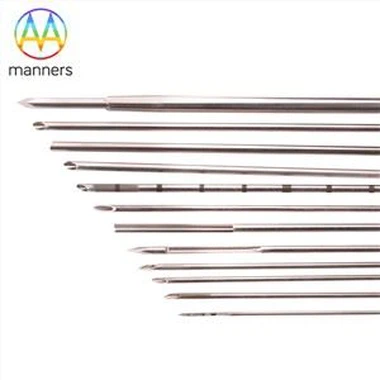
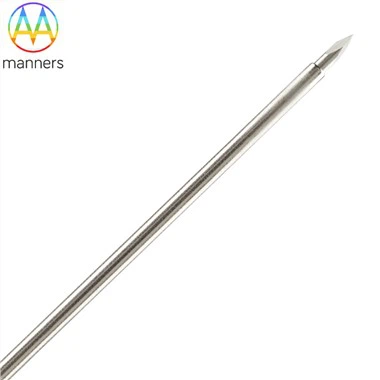
The manufacturing of OPU needles involves multiple high‑precision steps. The first stage is cutting and forming, in which selected materials are cut and shaped into needle assemblies, including shafts, tips, and auxiliary features such as stylets. The next step is grinding and sharpening, where precision finishing ensures sharp, smooth, and accurately profiled needle tips - a critical factor for atraumatic insertion and minimal tissue trauma. In surface treatment, needles may undergo coating or modification to enhance corrosion resistance, reduce insertion friction, or improve biocompatibility. Finally, rigorous quality control and inspection are performed: every OPU needle undergoes stringent checks including visual inspection, dimensional metrology, and functional testing to meet exacting standards.
Performance Optimization Through Material Selection
To improve oocyte retrieval efficiency and survival rates, manufacturers continuously develop advanced materials such as specialty alloys and composites to reduce weight while boosting rigidity. Ultra‑lubricious coatings (PTFE, hydrophilic polymers) applied to needle tips and inner lumens minimize tissue friction and cellular damage, introducing specialty coating suppliers as a new link in the supply chain. Medical‑grade stainless steel remains the most widely used material, offering excellent durability, corrosion resistance, and biocompatibility for both reusable and single‑use OPU needles. Titanium is another premium alternative: stronger, lighter, and highly corrosion‑resistant, making it suitable for long‑term or specialized clinical scenarios.
Customization and Intelligent Evolution
To address diverse clinical needs, custom‑engineered needles with variable lengths, gauges, and curvatures have been developed - for example, to treat patients with PCOS and high follicle counts. In the future, smart OPU needles integrated with miniature pressure and temperature sensors are expected to emerge, extending the supply chain into microelectronics and sensor technologies. Manufacturers such as Manners Medical now offer ultra‑fine 20G–21G OPU needles for minimally invasive retrieval in high‑risk patients, including those with bleeding disorders or fragile ovarian tissue.
Globalized Supply‑Chain Layout
Leading manufacturers have built globally integrated supply‑chain systems. Cook Medical earns clinical trust through a comprehensive product portfolio and strict quality assurance systems; CooperSurgical focuses on gynecological surgical instruments with cutting‑edge OPU‑needle design; Vitrolife addresses complex clinical challenges via substantial R&D investment. Regional players such as Merop Scientific are also gaining traction in targeted markets like the Asia‑Pacific and Eastern Europe, driven by rising demand for assisted reproductive technologies amid evolving social norms.
Regulatory and Standardization Challenges
Global regulators are harmonizing standards - including EU MDR, FDA regulations, and ISO 13485 - to ensure consistent safety and performance across markets, facilitating international trade and access to advanced OPU technologies. ISO 13485 certification is a mandatory prerequisite for global market entry. Rigorous regulatory approvals present significant hurdles for medical‑device manufacturers, requiring strict adherence to quality and safety protocols.