Lightweight Conductive Housings
Oct 27, 2026
The most persistent complaint from electrical engineers is not about performance but about weight. Steel enclosures and copper chassis have served the industry for decades, yet every kilogram added to a control cabinet, a drone gimbal, or a mobile substation translates into higher shipping costs, more difficult installation, and unnecessary strain on mounting structures. When power density increases, thermal management becomes another burden, and heavy metallic housings often trap heat instead of moving it. Aluminum electrical parts have emerged as the natural answer, but only when the design community understands that switching materials is not a drop-in substitution. It is a re-engineering exercise that rewards those who respect the metal's unique behavior.
Aluminum works so well for electrical housings because it combines three properties that rarely coexist. First, its density is roughly one-third that of steel, which immediately solves the weight problem. Second, its thermal conductivity, while lower than copper, is still high enough to spread heat effectively across a housing surface, turning the enclosure itself into a radiator. Third, when properly anodized or plated, aluminum provides excellent electromagnetic shielding, which is essential for modern electronics that must coexist with motors, inverters, and wireless transceivers. The key is to understand that aluminum does not merely replace steel; it changes how the housing must be designed, because thinner walls can be used, ribs must replace thick sections, and thermal paths must be deliberately engineered.
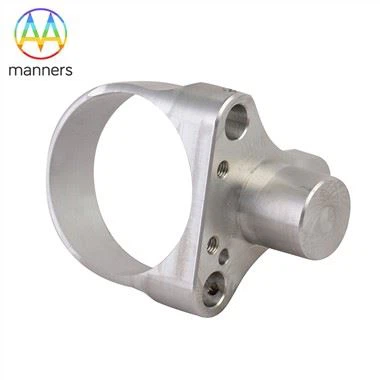
The equipment that benefits from this material falls into several distinct families. Junction boxes for industrial automation are typically milled from 6061-T6 plate, with gasketed lids and cable entries that keep dust and moisture out while allowing heat to escape through the base. Actuator shells, which house linear motors or pneumatic pistons, are usually turned and then milled to create mounting flanges and sensor pockets, with the bore held to tight tolerances so that the internal moving parts do not bind. PCB chassis for power electronics are five-axis machined from billet, with standoffs, guide rails, and card slots cut in a single setup to maintain datum consistency. Outdoor enclosures for telecom and grid equipment are frequently extruded from 6063, then CNC trimmed and hard-anodized to resist salt spray and UV degradation.
Practical guidance for machining these parts starts with wall thickness. A minimum of 0.8 millimeters is advisable for structural integrity, but beyond that, ribs and gussets should be used instead of simply thickening the wall, because thick sections create uneven cooling and internal stress that warps the part after machining. The datum chain must be defined before tolerancing any holes, otherwise the inspector and the machinist will disagree about what is true. Grounding pads and contact surfaces must be masked before anodizing, because the anodic layer is an electrical insulator, and a beautifully finished housing that cannot be grounded is a safety hazard. The sealing face, where a gasket or O-ring will sit, should always be machined last, so that any distortion from earlier operations is removed in the final cut.
Field experience reveals a pattern that new shops often miss. Thin-wall housings may pass inspection while clamped in the vise, but they twist when released, and the distortion only appears when the customer tries to assemble the lid. The solution is to rough-machine the part, then stress-relieve it, then finish-cut the critical faces. Another common mistake is ignoring anodize growth. A hard anodize layer can add twelve microns per side, which changes hole diameters and groove widths, so the machinist must cut undersize by that amount. Shops that skip this compensation produce parts that are dimensionally perfect before coating and dimensionally wrong after.
The deeper insight is that an aluminum housing is not a simple metal box. It is an integrated subsystem that manages electrical continuity, thermal flow, structural stiffness, and environmental sealing all at once. Engineers who treat it as a passive container will be surprised by overheating, grounding faults, and premature corrosion. Those who treat it as a designed component will find that aluminum gives them a lighter, cooler, and more reliable product than steel ever could.
Looking ahead, the trend is toward hybrid housings that combine extruded rails with CNC-machined inserts and selectively conductive anodize layers. Electric vehicle battery enclosures, solar inverters, and edge-computing nodes will all demand this level of integration, and aluminum will remain the baseline material because no other metal offers the same balance of weight, thermal performance, and manufacturability.