Length And Reach Of Peripheral Nerve Block Needles
Sep 27, 2026
The Pain Point
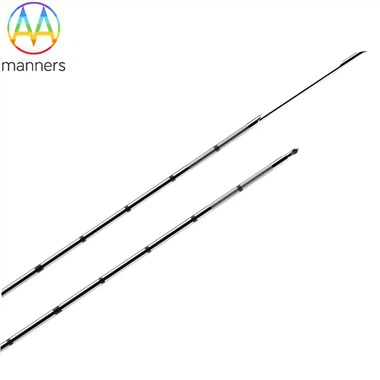
While gauge receives most of the attention, needle length is equally critical and frequently overlooked. Many clinicians remember to order a 22G needle but forget to specify length, leading to the assumption that one length fits all. This results in two common problems: using a needle that is too short, which forces the clinician to insert the hub too close to the skin and risks losing control of the shaft; or using a needle that is too long, which increases the risk of overshooting the target and damaging deeper structures. In deep blocks such as the sciatic or lumbar plexus, an inadequate length can turn a straightforward procedure into a frustrating series of failed attempts, while in superficial blocks, excessive length creates unnecessary hazard. The pain point is the lack of a depth-based length selection system in most operating rooms.
Underlying Principle
Needle length must be matched to the distance from the skin to the target nerve, with an additional margin for safe handling. Ultrasound measurement provides the most accurate assessment of this depth. The local anesthetic works by diffusing from the needle tip through the perineural tissue, so the tip must be placed adjacent to the nerve, not buried within it. A needle that is too short may not reach the nerve even at maximum insertion, while a needle that is too long may cause the tip to pass completely through the nerve or into a vascular structure. Epinephrine, when added to the anesthetic, reduces local blood flow, prolongs the block, and lowers systemic absorption, but its use must be carefully considered in areas with precarious blood supply.
Device Classification
Based on length, nerve block needles are categorized as:
- 13–25 mm: Superficial blocks such as digital, facial, and superficial cervical plexus.
- 30–50 mm: Intermediate-depth blocks including axillary brachial plexus and superficial femoral.
- 50–80 mm: Standard peripheral blocks for most adult limbs.
- 90–120 mm: Deep blocks such as sciatic, popliteal, and interscalene.
- 120–150 mm or more: Specialized deep trunk and pelvic blocks, often custom-made.
- Manufacturing processes such as necking and swaging allow for precise control of shaft diameter along the length, ensuring optimal balance between flexibility and strength.
Practical Guide
A step-by-step length selection protocol:
Use ultrasound to measure skin-to-nerve distance in the planned approach.
Add 10–20 mm to the measured depth to allow for hub control and minor adjustments.
Select the nearest standard length that meets or slightly exceeds this total.
For in-plane ultrasound guidance, ensure the entire shaft is visible; shorter needles may be preferable for out-of-plane approaches.
Always aspirate before injection to confirm the needle tip is not intravascular.
Inject slowly with minimal resistance; if resistance is encountered, reposition the needle.
Real-World Experience
A regional anesthesia department that implemented a depth-based length selection protocol reported a 30% reduction in failed blocks and a significant decrease in vascular punctures. In bariatric patients, using 120 mm needles for sciatic blocks eliminated the need for multiple redirections. Conversely, a trauma center found that using 50 mm needles for deep blocks led to frequent hub-to-skin contact, loss of leverage, and accidental withdrawal of the needle tip from the target area. Experienced practitioners emphasize that length is not just about reaching the nerve; it is about maintaining control throughout the procedure.
Summary
Needle length is a critical but often neglected variable in nerve block success. Matching length to target depth improves first-pass success, reduces complications, and enhances operator confidence.
Outlook
Future developments may include color-coded length indicators on needle hubs, pre-packaged procedure-specific length sets, and smart needles with depth-sensing technology. Manufacturers should collaborate with clinicians to establish evidence-based length guidelines for each type of block, ensuring that every needle in the operating room is fit for purpose.