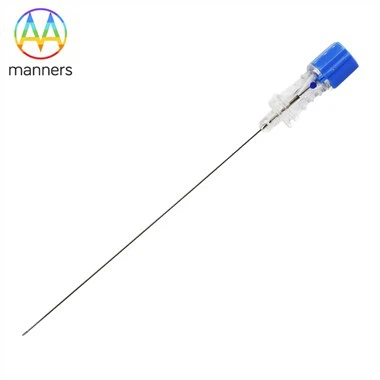
Laser Cutting Technology For Hypodermic Needle Tubing
Sep 22, 2026
Pain Points
Traditional mechanical cutting of hypodermic needle tubing has prominent technical defects. Mechanical cutting tools are prone to produce burrs, tube wall deformation and incision scratches, which not only affect the smooth assembly of needles, but also cause friction damage to human tissues during injection. For special-shaped hypodermic needles used in cardiovascular and urinary endoscopic devices, mechanical cutting cannot realize complex patterns such as continuous spiral cutting and interval radial cutting. In addition, mechanical processing has low precision, large kerf width, and serious material waste, which is difficult to meet the ultra-fine processing requirements of 0.20mm–20mm diameter medical tubing. Batch production has poor consistency, and defective products are difficult to detect, bringing hidden dangers to medical safety.
Working Principle
Laser cutting of hypodermic needle tubing adopts high-energy focused laser beam instantaneous melting and gasification processing principle. The precision laser beam focuses on the surface of medical stainless steel or Nitinol tubing, generating instantaneous high temperature to melt and vaporize local materials. With the linkage movement of the numerical control system, the laser beam cuts according to the preset pattern path, forming smooth and precise incisions. The core advantage is that the laser processing has no contact with the workpiece, no mechanical extrusion deformation, and the minimum kerf width can reach 0.012mm. By adjusting laser power, pulse frequency and cutting speed, the thermal influence area is accurately controlled, avoiding tubing material performance degradation. Different cutting patterns can be customized to adjust the flexibility and torsion resistance of hypodermic needles from the near end to the far end, meeting the functional requirements of minimally invasive intervention equipment.
Equipment Classification
First, fiber laser cutting machines are the mainstream equipment for medical hypodermic tubing processing, with high beam quality and stable energy output, suitable for fine cutting of 304, 316L, Nitinol and L605 medical alloy tubing. Second, numerical control pattern laser cutting machines support custom programming of spiral cutting, radial cutting and interval cutting patterns, dedicated to functional hypodermic needles for endoscopic and interventional devices. Third, micro laser trimming equipment is used for secondary finishing of cutting incisions to eliminate tiny residual burrs. Fourth, online laser detection and calibration equipment monitors cutting size and pattern accuracy in real time. Auxiliary equipment includes dust removal and smoke purification systems and constant-temperature processing platforms to ensure dust-free and constant-temperature processing environments.
Operation Guidelines
Before operation, import 2D/3D drawings or sample parameters of hypodermic needles into the numerical control system, and calibrate the laser focal length and kerf width to ensure the minimum processing accuracy reaches 0.012mm. Fix the drawn precision tubing on the constant-temperature fixture to avoid displacement and vibration during cutting. Set differentiated laser parameters according to different materials: high-power short-pulse parameters for high-hardness L605 alloy tubing, and low-power stable pulse parameters for superelastic Nitinol tubing. During operation, start the smoke purification system to avoid metal vapor adhesion affecting cutting quality. After cutting, use micro trimming equipment to polish the incision, and conduct full inspection of pattern integrity, dimensional tolerance and incision smoothness. Sort out qualified products and store them in a dust-free sealed environment.
Practical Industry Experience
Professional medical tubing processing factories adopt segmented laser cutting parameter matching according to product application scenarios. Hypodermic needles for conventional injection adopt simple flat cutting to improve production efficiency; interventional catheter matching hypodermic needles adopt spiral and radial composite cutting to balance push performance, tracking performance and kink resistance. Production practice shows that real-time focal length calibration every 4 hours can effectively avoid cutting pattern deviation. Adopting closed-loop processing of cutting and detection greatly reduces the defective rate of special-shaped needles. All laser cutting processes are recorded in batches to ensure product traceability, which meets the certification standards of medical device manufacturers for product quality control.
Summary and Improvement
Laser cutting technology solves the precision bottleneck of traditional mechanical processing of hypodermic needles, realizing high-precision and custom pattern processing of various medical alloy tubing. Contactless processing effectively avoids tubing deformation and burr defects, and customizable cutting patterns endow hypodermic needles with excellent comprehensive mechanical properties. It is the core processing technology for high-end medical hypodermic needle production. Standardized parameter setting and process detection are key to stabilizing product quality and improving yield.
Future Suggestions
It is recommended to popularize intelligent laser cutting systems with automatic parameter optimization functions to adapt to multi-variety and small-batch customized production. Develop ultra-fine laser micro-cutting technology for ultra-thin-wall micro-hypodermic needles to meet the development needs of neurological and peripheral vascular minimally invasive surgery. Combine laser cutting with online intelligent detection to realize full-process automatic production, further improve processing accuracy and production efficiency, and reduce manual operation errors.