Industry Iteration And Future Development Of Triple Cut Lancets
Oct 03, 2026
1. Industry Development Pain Points
The overall iteration speed of the traditional lancet industry is slow, with serious product homogenization and single technical innovation point. Most enterprises stay in the low-end production link of universal lancets, lack core structural innovation and customized research and development capabilities. The industry has imperfect standard systems, uneven product quality, and low threshold for backward small and medium-sized manufacturers, resulting in chaotic market competition. In addition, the industry's response speed to market demand is slow, unable to keep up with the development trend of medical miniaturization, low trauma and intellectualization. The single profit model and insufficient technical added value restrict the high-quality iterative development of the whole industry.
2. Iteration Core Principle
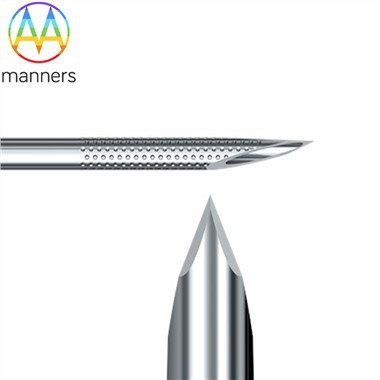
The industrial iteration of triple cut tip lancets is based on the core logic of structural upgrading, technological innovation and demand matching. On the basis of inheriting the basic puncture function of traditional lancets, it innovates the three-sided cutting structure, realizing the iterative upgrade from single cutting to balanced three-dimensional cutting, and solving the fundamental problems of pain and trauma of traditional products. Relying on precision processing technology and medical material innovation, it realizes the upgrade from fixed specification universal products to multi-specification customizable products. Guided by market segmented demand, it realizes the iterative evolution from single medical scenario to full-scene coverage, driving the whole industry to develop towards high precision, low trauma, high safety and personalization.
3. Iterative Product Classification
Combined with industry iteration history, triple cut tip lancets are divided into three iterative generations. The first generation is basic triple cut lancets, which realize structural optimization compared with traditional single-cut products, with reduced pain and improved blood collection efficiency, suitable for basic universal scenarios. The second generation is standardized customized triple cut lancets, realizing full specification coverage and personalized customization, with improved safety and adaptability, covering multiple segmented scenarios. The third generation is intelligent safety triple cut lancets, integrating automatic needle retraction, self-destruction and anti-puncture safety structures, with intelligent operation and higher safety, which is the latest iterative direction of the industry.
4. Iterative Product Operation Guidelines
For the first-generation basic products: follow the standard fingertip puncture operation, focus on basic disinfection and wound protection, suitable for simple routine blood collection. For the second-generation customized products: select targeted specifications according to user groups and scenarios, adjust operation strength and massage methods according to customized parameters to give full play to the advantages of personalized matching. For the third-generation intelligent safety products: activate the intelligent safety structure according to the product manual, realize automatic needle retraction after puncture, avoid manual misoperation risks, and complete safe blood collection and waste disposal efficiently. All iterative products need to abide by medical sterile operation specifications to ensure use safety.
5. Industry Iteration Practical Experience
After three generations of industrial iteration, the comprehensive performance of lancet products has been qualitatively improved. The first-generation structural optimization solves the core pain of traditional products and realizes the initial upgrading of the industry. The second-generation customized products meet the diversified market demands and break the homogenization competition dilemma of the industry. The third-generation intelligent safety products further improve the safety threshold of the industry, realizing the upgrade from functional use to safe and intelligent use. Market data shows that with the continuous iteration of triple cut lancet technology, the market share of high-performance lancets continues to rise, user satisfaction and medical recognition are greatly improved, and the industry is gradually moving towards standardized and high-end development.
6. Summary and sublimation
The iterative development of triple cut tip lancets leads the transformation and upgrading of the traditional blood collection lancet industry. From structural optimization to customized upgrading and then to intelligent iteration, it continuously solves the pain points of backward technology, single function and insufficient safety of the traditional industry, and promotes the industry from low-end homogenization competition to high-end personalized and intelligent development. As a revolutionary product in the field of capillary blood collection, triple cut lancets not only improve the product performance and user experience of the industry but also promote the continuous improvement of the industry's technical standards and quality system.
7. Future Development Prospects and Suggestions
In the future, the lancet industry will continue to develop towards intellectualization, refinement, safety and environmental protection. It is suggested that enterprises continue to increase technical research and development investment, promote the popularization of third-generation intelligent safety triple cut lancets, and improve the overall intelligent level of the industry. Strengthen industry standard construction, unify production and quality inspection specifications, and standardize market competition. Carry out green environmental protection production technology research and development, realize environmental protection and recyclable production of consumables. Continuously optimize product refinement design, develop more humanized low-trauma products, and finally promote the triple cut tip lancet industry to achieve high-quality, standardized and sustainable global development.