In-Depth Analysis Of The Global Echogenic Needle Market Landscape And Competitive Dynamics Of Key Manufacturers
May 05, 2026
As the core tool for ultrasound-guided interventional procedures, the global echogenic needle market is experiencing rapid growth alongside the popularization of minimally invasive medical technology. According to the latest market research reports, the global ultrasound-guided needle market is expected to maintain a 6.3% compound annual growth rate (CAGR) from 2025 to 2035. This growth trend reflects the continuously increasing demand for precise and safe interventional procedures in the healthcare industry.
Market Size and Regional Distribution
In 2024, North America held the largest share of the global ultrasound-guided needle market, with a market size of USD 1.1 billion. This leading position is attributed to the region's well-developed healthcare system, high technology acceptance, and strong purchasing power. Europe followed closely, with countries such as Germany, the United Kingdom, and France demonstrating outstanding performance in technological innovation and clinical research. The Asia-Pacific region is the fastest-growing market; improvements in medical infrastructure and accelerated technology adoption in countries including China, Japan, and India have driven market expansion. The Asia-Pacific market size is projected to reach USD 1 billion by 2035.
By application area, the biopsy market is expected to grow to USD 1.3 billion by 2035, becoming the largest segment. The aspiration market is projected to increase from USD 500 million in 2024 to USD 900 million by 2035, while the drainage segment also shows steady growth. These figures indicate that the applications of echogenic needles in diagnostics and therapeutics are continuously expanding.
Competitive Landscape of Key Manufacturers
The echogenic needle market features a multi-layered competitive landscape, with international giants, specialized manufacturers, and regional players each leveraging unique strengths to establish differentiated market positioning.
International medical device giants such as Teleflex, B. Braun, and Vygon dominate the high-end hospital market through comprehensive solutions and extensive distribution networks. These companies typically offer end-to-end solutions spanning from puncture needles to imaging equipment, covering the entire value chain from product design to clinical services via vertical integration capabilities. Their product portfolios include not only basic echogenic needles but also fully integrated solutions combining ultrasound visibility and electrical stimulation to address complex clinical needs.
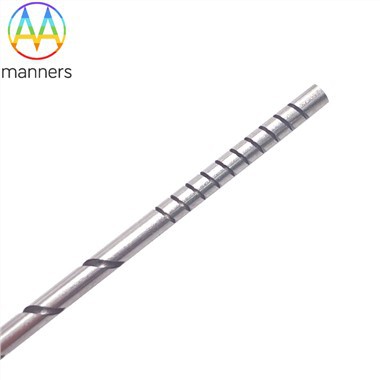
Specialized manufacturers are represented by PAJUNK (Germany), an industry leader in technological innovation. Since launching its NanoLine® coating technology in 2004, PAJUNK has continuously advanced echogenic enhancement technology. Its patented Cornerstone Reflectors technology creates pyramid-shaped three-dimensional relief structures on the anterior needle shaft, enabling full-angle visibility and completely eliminating the angle dependency limitation of traditional echogenic enhancement technologies. PAJUNK's SonoPlex series has built a strong professional reputation in nerve blocks, establishing a deep market foundation through clinical research and physician training programs.
Chinese domestic enterprises such as Weigao, Tuoren Medical, and 海尔施 are in a rapid catch-up phase. They already mass-produce mid-to-low-end products and are overcoming manufacturing challenges for echogenic needles and insulated stimulation needles through independent R&D or collaborations, advancing the process of domestic substitution. Leveraging cost advantages and rapid response capabilities, these enterprises compete effectively in the mid-to-low-end market and customized product segments. Supported by China's medical device innovation policies and growing market demand, domestic manufacturers are expected to increase their market share in the coming years.
Product Segmentation and Differentiation Strategies
The echogenic needle market is divided into multiple segments by product type, with manufacturers adopting distinct differentiation strategies to compete.
Nerve block needles represent the most technologically advanced segment, accounting for approximately 35% of the total market. This segment demands exceptional needle visibility, flexibility, and maneuverability, with relatively low price sensitivity. PAJUNK's SonoPlex® series establishes technological barriers via Cornerstone Reflectors technology, delivering full-angle visibility and precise nerve localization. In 2024, global production of ultrasound-guided nerve block needles reached approximately 22.587 million units, with an average market price of ~USD 24 per unit and an industry average gross margin of 26%. This high profitability has attracted numerous entrants, though technical barriers limit new market participants.
The biopsy needle segment holds a 25% market share, with demand driven primarily by oncology diagnostics, pathological research, and organ transplant evaluations. This segment prioritizes tissue sampling efficiency and cell protection performance. Product differentiation centers on tip designs (e.g., side-hole, groove) and specification diversity (25G fine needles to 14G thick needles). In 2024, the EUS-FNB (Endoscopic Ultrasound-Guided Fine Needle Biopsy) product line expanded significantly, accounting for 33% of all biopsy products launched by major manufacturers. Manufacturers enhance customer loyalty by offering comprehensive biopsy solutions (including needles, positioning devices, and specimen processing systems).
Vascular access needles account for 20% of the market, representing the most widely used application. This market is cost-sensitive with relatively high product homogeneity. Manufacturers compete by improving first-pass success rates, reducing pain, and minimizing complication risks. Some innovative products integrate safety features (e.g., auto-retractable tips) or visualization aids (e.g., tip position indicators) to add value beyond basic functionality. The clinical value of ultrasound-guided vascular puncture is well-documented: first-pass success rates increased from 46% (traditional) to 83%, puncture attempts decreased from 3.0 to 1.3, and venous puncture-related complications dropped from 15.8% to 2.4%.
Specialty application needles comprise the remaining 20% of the market, including epidural, arthrocentesis, and cyst treatment needles. These products are typically designed for specific clinical needs, with smaller market sizes but high profit margins. Manufacturers gain competitive advantages by deeply understanding specialist physicians' operational habits and clinical challenges to develop customized solutions. Manufacturers like ZorayPT provide one-stop OEM/ODM solutions, offering premium needles in 18G–25G, 90–250 mm, or custom specifications to meet specialized clinical requirements.