Hypotube Defined
Sep 20, 2026
Pain point
Engineers new to interventional devices often treat a hypotube as "just a metal tube." That assumption creates serious failures. A solid tube may push well but cannot navigate tortuous coronary or neurovascular anatomy. A polymer shaft may bend easily but loses torque and buckles under load. OEMs then iterate for months, changing coatings and handles, while ignoring the real problem: the shaft itself was never engineered. The result is poor trackability, torque hysteresis, kink at the aortic arch, and delayed product approval.
Principle
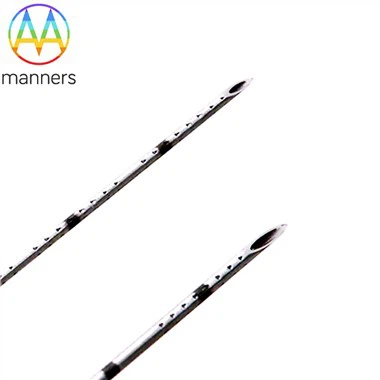
A hypotube is a precision thin-walled metal tube-usually 304, 316L, 17-7PH, Nitinol, or L605-that acts as the mechanical spine of a catheter or delivery system. Its power comes from selective material removal. The base tube carries axial push and rotational torque. Laser cuts remove local stiffness and create flexibility. Uncut bridges preserve continuity. With kerf as fine as 0.012 mm and diameters from Ø0.20 mm to 20 mm, the tube can be programmed: stiff proximally, flexible distally, torque-stable in the middle, kink-resistant at the bends.
Beam theory explains it simply: bending stiffness scales with wall geometry; torsional stiffness depends on uncut circumferential material. A laser-cut pattern is therefore not decoration-it is mechanical coding.
Equipment classification
- Precision tube draw benches: create seamless medical-grade blank tubing
- Fiber laser tube cutters: general stainless steel and cobalt alloy cutting
- Femtosecond / UV lasers: fine Nitinol and thin-coat tubes with low HAZ
- 5-axis CNC laser workstations: spiral, radial, brickwork, jigsaw patterns
- Electropolish / passivation lines: remove recast, improve lubricity and corrosion resistance
- Torque-bend-fatigue rigs: validate clinical performance, not just dimensions
Practical guide
Start with the clinical path. Coronary work needs torque and push. Neuro work needs atraumatic flexibility. Peripheral work needs kink resistance. Urinary work needs corrosion resistance and smooth navigation. Choose 316L for body-fluid exposure, Nitinol for superelastic navigation, 17-7PH for high-strength delivery, 304 for cost-sensitive general devices. Define OD, ID, wall, cut pattern, transition zones, and surface finish before cutting. Never specify "gauge only." Validate torque transmission, push force, kink angle at 50 % lumen loss, and cyclic bending fatigue.
Real-world experience
One coronary balloon program used a solid 304 shaft. It pushed well but could not cross a tortuous lesion. Switching to an interrupted spiral hypotube preserved torque while adding flexibility. Crossing success improved without changing the balloon. Another neuro program over-cut the distal tip for "floppiness"; the tip folded under push. The fix was not a new material-it was a graded pattern with more uncut metal proximally and a softer but supported distal zone.
Conclusion
A hypotube is not tubing. It is a mechanically programmed shaft. Whoever controls the cut program controls the device's feel in the physician's hand.
Outlook
Future hypotubes will be generative-designed: anatomy in, pattern out. AI will propose spiral/radial/hybrid zones, simulation will predict torque hysteresis, and the tube will become a patient-specific mechanical implant.