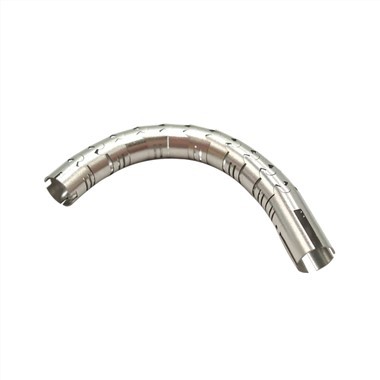
Hypodermic Tubing Nitinol Grade For Superelastic Interventional Shafts
Sep 12, 2026
Pain Point
Designers selecting Nitinol hypodermic tubing face unique challenges compared with stainless steel alternatives. Nitinol's superelastic performance is highly sensitive to heat treatment and laser thermal damage. Improper laser cutting introduces heat-affected zones, destroying shape recovery capability. Nitinol tubing is more expensive than stainless steel and harder to machine. Fatigue performance varies significantly with alloy composition and surface finish. Nitinol hypodermic tubing may develop surface cracks after repeated bending inside neurovascular and peripheral vessels. Material batch variation changes transformation temperature, altering flexibility at body temperature. Many engineers overestimate Nitinol performance, designing complex cut patterns without validating superelastic recovery after laser processing. Procurement also struggles to source implant-grade Nitinol hypodermic tubing with complete certification and stable dimensional tolerance.
Introduction Principle
Nitinol hypodermic tubing is precision thin-walled nickel-titanium alloy tubing, famous for superelasticity and shape memory effect. Within body temperature range, superelastic Nitinol can undergo large bending deformation and return fully to original geometry once load is removed. The tubing is available from Ø0.20mm to 20mm, with laser kerf width minimum 0.012mm. Laser cut patterns create graded stiffness: the proximal section transfers torque and push force, while the Nitinol distal segment bends freely in curved vascular anatomy. Unlike stainless steel, Nitinol does not retain permanent bend deformation under normal physiological loads. After laser cutting, specialized heat treatment restores superelastic properties damaged by laser heat. Biocompatible Nitinol resists bodily fluid corrosion, making it suitable for long contact in neurovascular and peripheral vascular interventions. Cut patterns including interrupted spiral and bespoke geometries tune flexibility while preserving shape recovery.
Classification of Nitinol Hypodermic Tubing
Superelastic Nitinol hypodermic tubing is the dominant type for interventional delivery shafts, optimized for use at human body temperature. Shape-memory Nitinol hypodermic tubing deforms at low temperature and recovers preset shape upon heating, used for specialized implant delivery. Different transformation temperature grades are selected for neurovascular or peripheral vascular applications. Laser cut pattern types for Nitinol include interrupted spiral cut, continuous spiral cut and fully bespoke custom patterns. Tube wall thickness and OD/ID dimensions are customized according to device requirements. Implant-grade Nitinol meets ASTM F2063 standard for medical use. Compared with stainless steel hypodermic tubing, Nitinol provides much larger elastic strain range but requires tighter control over laser thermal input and post-cut heat treatment.
Practical Operation Guide
Confirm target transformation temperature before selecting Nitinol hypodermic tubing grade for body-temperature applications. Prepare 2D/3D drawings defining OD, ID, wall thickness and laser cut pattern. Avoid excessive laser power during cutting to minimize heat-affected zones. After laser cutting, perform controlled heat treatment to recover superelasticity. Apply electropolishing to improve surface finish and reduce fatigue crack initiation. Conduct superelastic recovery testing, cyclic bending fatigue test and torsion test. Verify chemical composition certificates and ASTM compliance documents. Confirm ISO13485 certification of the Nitinol tubing supplier. Bench test samples under 37°C simulated body temperature, matching clinical operating conditions. Evaluate surface defects using microscopy. Use custom packaging to protect delicate Nitinol hypodermic tubing against plastic deformation during transport.
Practical Industrial Experience
Laser heat is the biggest enemy of Nitinol hypodermic tubing; excessive heat will permanently degrade superelasticity. Many prototype failures come from skipping post-laser heat treatment. Surface scratches on Nitinol tubing act as crack initiation points and drastically reduce fatigue life. Electropolishing improves fatigue resistance significantly. Continuous spiral cut Nitinol tubing offers excellent bending but must limit total slot removal to maintain push strength. Interrupted spiral patterns balance superelastic recovery and torque transmission for neurovascular devices. Engineers must test Nitinol performance at 37°C, not room temperature, because transformation temperature directly changes flexibility at body temperature. Batch variation in nickel-titanium ratio shifts transformation temperature, so material certification review is essential.
Summary
Nitinol hypodermic tubing delivers unmatched superelastic bending recovery for complex anatomical pathways. Its performance depends heavily on alloy grade, laser thermal control and post-cut heat treatment. Surface polishing is critical to extend fatigue life. Testing must be executed at physiological temperature. Nitinol is not a universal replacement for stainless steel and should be selected when large reversible bending is required.
Prospect and Suggestion
Future Nitinol hypodermic tubing will explore composite layered structures combining Nitinol outer layers and stainless steel inner liners. Design teams should build thermal simulation models to predict laser heat influence. Suppliers should optimize low-heat femtosecond laser cutting for Nitinol. Material characterization must include transformation temperature testing for every batch. Use risk analysis to compare Nitinol and stainless steel options early in device design.