How Vacuum-Assisted Breast Biopsy (VABB) Is Reshaping Standards For Breast Minimally Invasive Diagnosis And Treatment
Apr 11, 2026
How Vacuum-Assisted Breast Biopsy (VABB) Is Reshaping Standards for Breast Minimally Invasive Diagnosis and Treatment
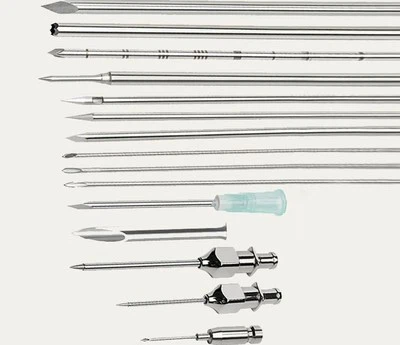
In the interdisciplinary field of modern breast surgery and radiology, the advent of Vacuum-Assisted Breast Biopsy (VABB) technology marks the official entry of breast disease diagnosis and treatment into a new era of "precision minimally invasive surgery." As the core executing component of this revolutionary technology, the VABB needle is not merely a simple puncture needle; it is a miniature surgical robot integrating fluid mechanics, precision machinery, and biomedical engineering.
While traditional Core Needle Biopsy (CNB) meets pathological sampling requirements to a certain extent, its limitations are evident: limited sample size, difficulty in acquiring microcalcifications, and a high risk of missed diagnoses for multifocal lesions. The VABB needle perfectly addresses these pain points through its unique "coaxial dual-lumen" or "multi-lumen" design. Its working principle utilizes high vacuum pressure to draw target lesion tissue into the needle tip's collection window. Subsequently, a built-in rotating cutter excises the tissue at high frequency, transporting the sample through the needle shaft to the exterior. This mechanism allows physicians to continuously acquire up to 10–20 or even more tissue samples following a single needle insertion.
Clinical studies indicate that VABB achieves exceptionally high diagnostic accuracy. Particularly when handling BI-RADS category 4 lesions, intraductal lesions, and microcalcifications, its Negative Predictive Value (NPV) far exceeds that of traditional methods. This significantly reduces the risk of false negatives caused by inadequate sampling, preventing patients from undergoing the trauma of open surgery.
Regarding the breadth of application, the clinical value of VABB needles has extended beyond pure diagnosis into the realm of minimally invasive therapy. For benign breast fibroadenomas or cysts less than 3 cm in diameter, physicians can perform a "minimally invasive excision" using VABB needles under ultrasound or stereotactic mammography guidance. These procedures are typically performed under local anesthesia, require only a 3–5 mm incision, and usually do not require sutures, leaving no noticeable scarring. This perfectly aligns with modern women's high demands regarding "body aesthetics." Furthermore, VABB demonstrates irreplaceable advantages in the excision and marking of high-risk lesions (such as atypical hyperplasia).
With the continuous advancement of image-guided technologies (such as Digital Breast Tomosynthesis and high-field MRI), the compatibility and precision of VABB needles are also being continuously upgraded. For instance, biopsy needles produced by certain manufacturers (such as Manners mentioned in the text) are now fully compatible with mainstream international biopsy systems like BD. This high-compatibility consumable design not only reduces equipment procurement costs for medical institutions but also promotes the standardized global proliferation of minimally invasive techniques, truly realizing the goal of "exchanging the greatest diagnostic and therapeutic benefit for the least amount of trauma."