How Vacuum-Assisted Biopsy Surpasses Conventional Core Needle Biopsy
Jun 12, 2026
1. Fundamental Differences in Operating Mechanisms
2. Compatibility with Image Guidance Modalities
CNB is predominantly performed under ultrasound guidance and delivers reliable results for ultrasound-visible masses. However, its diagnostic accuracy declines for lesions presenting solely as clustered microcalcifications (requiring stereotactic biopsy) or occult abnormalities detected on MRI.
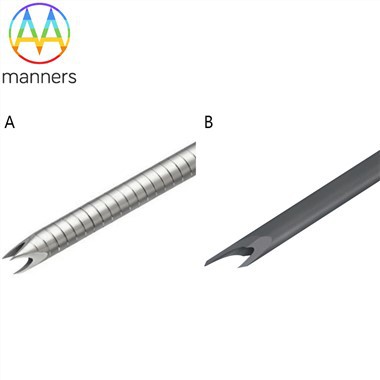
VABB natively supports multi-modality imaging. Laser-etched depth markings on the sample notch cannula are radiopaque under X-ray and MRI. Vacuum suction stabilizes tissue, mitigating target displacement caused by respiratory motion. Presently, VABB is the sole standard biopsy technique compatible with ultrasound, stereotactic and MRI guidance interchangeably.
3. Sampling Efficiency and Tissue Yield
Clinical studies demonstrate that VABB obtains an average of 8–12 tissue cores per single needle insertion, with total specimen weight 3–5 times greater than CNB. Adequate tissue volume is critical for precision medicine assays, including hormone receptor testing, HER2 amplification analysis and gene expression profiling.
Furthermore, VABB enables en bloc resection of suspicious microcalcifications for diagnostic excision, whereas CNB frequently suffers lost calcifications due to fragmented specimens.
4. Equipment Complexity and Cost
CNB features uncomplicated hardware; manual or semi-automatic biopsy guns carry low upfront costs and have a short operator learning curve. VABB requires dedicated vacuum pumps, specimen collection canisters and control platforms (e.g., BD EnCor system), entailing higher capital expenditure. Disposable compatible needles (such as those manufactured by Manners) also command a higher unit price.
Nevertheless, health economic analyses reveal superior cost-effectiveness for specific patient cohorts (BI-RADS 4A and above), as VABB reduces repeat punctures and the likelihood of subsequent open surgical excision.
Conclusion