How Supply Chain & Quality Control Define The True Value Of Disposable Trocars
Jun 07, 2026
https://www.lookmedchina.com/resources/disposable-laparoscopic-trocar.html
The value of disposable trocars extends far beyond the polished physical device held by surgeons. It hinges on rigorously refined supply chain management and end-to-end quality control networks that oversee every stage from raw material sourcing all the way to bedside clinical application. This invisible defensive framework underpins product safety and therapeutic efficacy, constituting an indispensable core component of final product pricing.
Depth and Stability of the Supply Chain: From Ore Raw Stock to Finished Devices
The trocar supply chain forms an extensive, specialized global industrial ecosystem.
- Upstream Raw Material Traceability: Medical-grade 316L stainless steel is no ordinary commodity. Its smelting process mandates stringent control over sulfur, phosphorus and other impurity contents, backed by complete material certification and traceability compliant with specifications such as ASTM A276. Specialty engineered polymers including medical polycarbonate require raw material vendors to furnish full biocompatibility reports (per USP Class VI standards) alongside extractables and leachables testing data. Manufacturers such as Manners implement rigorous third-party audits for critical suppliers to verify their production environments and in-house quality systems comply with prevailing medical device regulatory rules. Long-term strategic partnerships secured for premium-grade feedstock inherently raise entry thresholds and underlying operational costs.
- Balanced Outsourced Core Processing & In-House Oversight: High-gloss precision tube drawing is typically completed by professional tubular component producers, while electropolishing is subcontracted to licensed specialty finishers holding valid environmental compliance credentials. A manufacturer's core competency lies in defining stringent technical benchmarks for outsourced procedures (such as surface roughness Ra readings and passive film thickness), followed by incoming qualification and periodic batch sampling inspection. Minor fluctuations stemming from raw material lot variance or inconsistent subcontractor process parameters directly compromise finished part quality. Robust supply chain governance therefore allocates inspection and administrative expenditure to offset upstream operational uncertainties.
Quality Control: A Zero-Defect Philosophy Embedded Throughout Manufacturing DNA
Disposable trocar QC follows a prevention-first, inspection-supplementary principle embedded across the full production workflow.
- Incoming Quality Control (IQC): Every incoming steel batch undergoes spectroscopic chemical composition analysis and mechanical property verification; polymer pellets are sampled for melt flow index and moisture content testing to guarantee qualified starting material fundamentals.
- In-Process Quality Control (IPQC) – the Backbone of Quality Assurance: Beyond micron-level precision embedded within Citizen CNC machining equipment, regular offline sampling checks verify critical dimensional parameters such as inner cannula bore diameter and cutting edge geometry via contour scanners and optical projectors. During injection molding, operators continuously monitor mold temperature, injection pressure and cycle duration, with rigorous dimensional and cosmetic audits on first articles and periodic specimens - focusing particularly on surface defects within transparent components. Integrated in-line machining and deburring process design serves as an efficient in-process barrier blocking nonconforming parts from downstream workflows.
Outgoing Quality Control (OQC) and Specialized Testing:
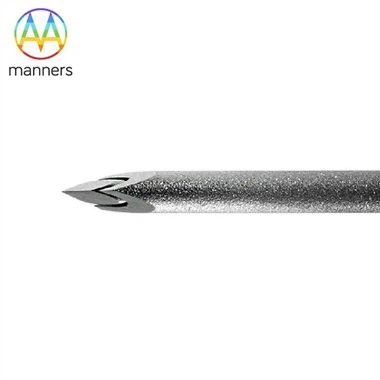
- Functional Performance Testing: Sealing valves undergo airtightness leakage testing under calibrated pressurized conditions; obturator tips are evaluated for penetration force using tissue-simulating substrates.
- Critical Cleanliness Validation: Apart from routine particulate contamination screening, 100% endoscopic visual inspection (manual or automated) of cannula inner lumens eliminates residual metallic shavings, processing grease or fiber debris; complementary extractables testing further quantifies trace leftover contaminants post-cleaning.
- Sterility Assurance: Terminal sterilization such as irradiation undergoes full dose-distribution validation, with end-product sterility testing executed per GB/T 19973 specifications; packaging integrity trials verify seal strength and microbial barrier performance.
In-House Laboratory & Document Control System: On-site laboratories equipped for chemical, physical and microbiological analysis, plus complete quality documentation covering Device History File (DHF), Device Master Record (DMR) and Device History Record (DHR), constitute the regulatory foundation for third-party audits and full-lifecycle traceability. Capital and recurring outlays for such hardware and administrative protocols are amortized into per-unit product costs.
Compliance Expenditure: The Passport to Global Market Access
Cross-border commercialization mandates adherence to disparate regional regulatory frameworks: NMPA registration for China market access, FDA 510(k) or PMA clearance for the United States, CE marking under the EU MDR, plus respective local certification for other territories. Each regulatory submission incurs substantial expenses for authorized third-party type testing, clinical evaluation (including potential clinical trials), regulatory consulting and audit fees. Sustained ISO 13485 certification demands ongoing internal audits, external surveillance assessments, management reviews and staff competency training. These mandatory compliance outlays, required for lawful market launch and regulatory risk mitigation, are ultimately reflected in end-user pricing.
Conclusion: Paying for Predictable Reliability
A substantial portion of hospitals' procurement cost for disposable trocars purchases reliable certainty secured by premium-tier supply chains, full-cycle quality oversight and comprehensive regulatory compliance frameworks:
- Consistent Functional Reliability: Every unit conforms to registered technical specifications with uniform performance metrics.
- Clinical Safety Certainty: Pre-sterilized, non-pyrogenic, non-toxic devices free from residual contaminants.
- Stable Supply Assurance: Resilient supply chain infrastructure safeguards uninterrupted inventory to avoid surgical schedule disruptions.
This invisible defensive framework forms the bedrock of clinical safety. Intangible in physical form, its value is embodied in every flaw-free finished trocar. Accordingly, pricing appraisal for disposable trocars must transcend tangible hardware costs to acknowledge the profound value delivered by robust quality assurance and risk management ecosystems behind production. Selecting vendors with proven mature quality systems equates to partnering with suppliers committed to minimizing inherent clinical medical risks.