How Materials Science And Structural Design Ensure The Stability And Reliability Of Endoscopic Biopsy Needles
May 18, 2026
Within the medical device industry, endoscopic biopsy needles serve as clinicians' "precision‑guided hands". Their performance is fundamentally rooted in materials science and sophisticated structural design. For hospital procurement departments, endoscopy centre directors, and clinicians with strict requirements for device performance, understanding the essence of "materials and structure" behind a biopsy needle is critical to ensuring safe, efficient and reliable diagnosis and treatment. From three dimensions - target audience, application scenarios, and comparative advantages - this article deeply analyses how materials and design jointly shape the superior quality of modern endoscopic biopsy needles.
Target Audience: Decision‑Makers and Practitioners Pursuing Stability and Safety
This article is best suited for the following readers:
Heads of hospital equipment procurement and management departments: Who need to understand product value at the technical core and make procurement decisions balancing optimal cost‑effectiveness and long‑term safety, rather than merely comparing prices.
Directors and senior physicians of endoscopy centres: As direct device users, they well recognise how tactile feedback and reliability influence procedural success, requiring knowledge of both what works and why it works.
Clinical medical students and researchers interested in medical device materials science: Providing vivid real‑world cases linking theory to practice.
Application Scenarios: Routine Gastrointestinal Endoscopy and Biopsy
During routine gastrointestinal endoscopy, when suspicious lesions (e.g., polyps, ulcers, mucosal bulges or colour changes) are identified, physicians must obtain tissue samples precisely using biopsy needles. In such cases, the biopsy needle must:
Pass smoothly through the instrument channel of the endoscope without jamming or deformation.
Maintain rigidity in bodily fluids and complex gastrointestinal environments to accurately puncture or grasp target tissue.
Retain samples effectively after collection, preventing shedding or contamination during withdrawal from the channel.
Avoid causing additional mechanical trauma to patients or introducing harmful substances throughout the procedure.
Comparative Advantages: Dual Assurance from Premium Materials and Human‑Centred Design
Compared with ordinary biopsy needles on the market that only meet basic functional requirements or prioritise low cost, needles engineered with advanced materials science and structural design deliver comprehensive advantages:
1. Balanced Rigidity‑Flexibility and Biocompatibility of Core Materials
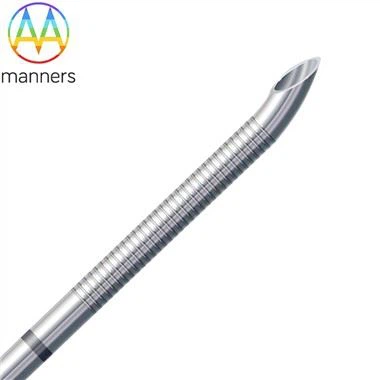
Needle cannula (sheath): Manufactured from 304 or 316 stainless steel. Far more than generic stainless steel, 316 stainless steel contains molybdenum (Mo), granting superior resistance to pitting and crevice corrosion in chloride‑rich environments such as gastric and intestinal fluids. It resists rust over prolonged use, ensuring sterile safety and extended service life. Its rigidity prevents bending during long‑distance advancement, precisely transmitting the physician's hand movements.
Stylet and cutting edge: Fabricated from higher‑hardness martensitic stainless steel or nickel‑titanium (NiTi) alloy. The superelasticity of nickel‑titanium alloy delivers shape memory even within curved endoscope channels, keeping the tip consistently aligned with targets. Excellent wear resistance preserves cutting‑edge sharpness for clean tissue extraction, minimising tearing, bleeding risks and patient discomfort.
Handles and plastic components: Made of medical‑grade polymers. Beyond lightweight construction, they offer exceptional tactile feedback, electrical insulation and chemical stability. Ergonomically designed high‑quality plastic handles provide clear positional feedback (e.g., extension, retraction, deployment), reducing physician fatigue during prolonged procedures and improving operational precision.
2. Meticulous Structural Design
Biopsy window dimensions and edge finishing: Precisely calculated window sizes ensure sufficient valid tissue acquisition for pathological diagnosis without compromising needle‑body strength. High‑precision grinding and polishing produce sharp cutting edges with smooth surfaces, drastically reducing tissue residue and adhesion for intact sample retrieval.
Coating technology adoption: Some high‑end models feature hydrophilic coatings on needle surfaces. Upon contact with water or bodily fluids, friction is reduced by up to 80 %, enabling extremely smooth puncture and channel passage. This greatly improves tactile handling, especially for highly angled duodenoscopes or bronchoscopes, while lowering mechanical irritation to patient mucosa.
Full‑length sealing design: Premium biopsy needles incorporate precision seals at junctions such as needle hubs and control sliders, preventing backflow of bodily fluids that could contaminate internal device components or clinicians' hands - a critical element of infection control.
In summary, a high‑quality endoscopic biopsy needle embodies deep integration between material engineers and clinical needs. From corrosion‑resistant 316 stainless steel cannulas and shape‑memory nickel‑titanium stylets, to ergonomic handles and smooth hydrophilic coatings, every detail serves one shared goal: providing physicians with more stable, precise and safe "hands" inside patients' bodies. Choosing such a product means not only selecting a tool, but also committing to medical quality and patient safety. Pursuing optimal materials and design in seemingly tiny biopsy needles microscopically reflects modern precision medicine.