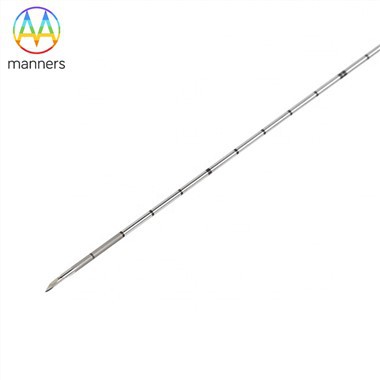
How ISO Standards Safeguard The Ultimate Safety Of Modern Bloodletting Needles
May 29, 2026
Safety is an inviolable bottom line for all medical devices. As percutaneous instruments that penetrate the skin barrier, bloodletting needles must meet dual safety requirements: biosafety (sterility and non-pyrogenicity) during application and physical safety (structural integrity and fracture resistance). From primitive boiling disinfection in ancient times to fully regulated modern production under the ISO 13485 quality management system, safety standards for bloodletting needles have undergone transformative upgrades. Manners Technology's manufacturing practices perfectly embody this evolution.
1. Millennia of Evolution in Sterilization Technology
In ancient times, bloodletting needles were merely disinfected by boiling or flame scorching. Such methods failed to eliminate bacterial spores, easily damaged instruments and carried an extremely high risk of cross-infection. Modern sterilization has developed into a precise science based on microbiology:
- Ethylene oxide (EO) sterilization: One of the most widely used low-temperature sterilization methods for medical devices. It effectively eradicates all microorganisms including spores without causing damage to metal instruments. Disposable bloodletting needles manufactured by Manners Technology undergo validated EO sterilization after final packaging.
- Radiation sterilization: Gamma ray and electron beam sterilization feature strong penetration and thorough disinfection, ideal for mass production. However, they may affect the properties of certain materials.
- Autoclaving (moist heat sterilization): Primarily applied to reusable metal devices. Repeated exposure to high temperature and pressure will accelerate metal fatigue.
2. Modern Sterility Assurance System: Beyond Terminal Sterilization
- Modern quality philosophy holds that product sterility cannot rely solely on terminal sterilization. Instead, strict controls must be implemented throughout the entire workflow from raw material handling to finished products. This constitutes one of the core principles of the ISO 13485 Medical Devices Quality Management System. At Manners Technology, the rules are enforced as follows:
- Controlled clean production environment: Critical procedures such as final assembly and packaging are conducted in cleanrooms to control airborne particulate matter and microorganisms.
- In-process decontamination: Electropolishing and ultrasonic cleaning, as mentioned earlier, serve dual purposes of functional optimization and deep cleansing. They reduce initial microbial and particulate contamination to an extremely low level, laying a solid foundation for effective terminal sterilization.
- Packaging validation: Sterilization packaging materials (e.g., Tyvek pouches) undergo rigorous validation. They are designed to allow full penetration of sterilants during disinfection, while acting as a reliable microbial barrier during storage and transportation to maintain sterility throughout the product shelf life.
3. Physical Safety and Consistent Performance
Physical safety ensures no needle breakage during use and no burrs on the tip that may snag tissues. This is guaranteed via the following measures:
- Material certification: All stainless steel raw materials are supplied with documentation proving compliance with medical-grade standards.
- Process validation: Key process parameters for needle tip grinding, electropolishing and other core procedures are fully validated and strictly controlled.
- 100% inspection or sampling testing: A full range of tests including needle sharpness assessment, connection firmness verification and lumen patency testing are performed to ensure uniform performance across every production batch.
4. ISO 13485: A Systemic Commitment to Safety
ISO 13485 is far more than a simple product certificate. It is a comprehensive management system covering the full lifecycle of medical devices, including design and development, procurement, production, warehousing, distribution, after-sales service and adverse event surveillance. It mandates enterprises to establish standardized risk management protocols to identify, evaluate and mitigate all potential hazards.
For Manners Technology, holding ISO 13485 certification means every bloodletting needle is managed within a transparent, controllable and fully traceable quality network from initial design to final disposal. It delivers systematic safety guarantees to medical institutions and patients that extend beyond the product itself.
Conclusion
Guaranteeing the safety of modern bloodletting needles has evolved from relying on practitioners' experience and last-minute disinfection into a systematic project embedded in every link of design, manufacturing and packaging. By complying with international standards of ISO 9001 and ISO 13485, Manners Technology integrates sterilization science, advanced cleaning technology, in-process control and risk management. We deliver not only sterile medical devices, but also a solemn, lifecycle-long commitment to safety and reliability.