How Does Surface Treatment Technology Define The Biocompatibility And Long-Term Reliability Of Arthroscopic Blades?
May 24, 2026
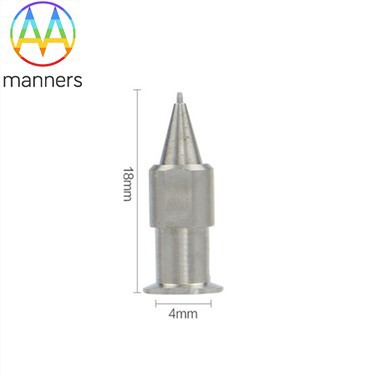
In arthroscopic surgeries, the surface condition of any instrument that enters the joint cavity is not only a functional aspect but also the first line of defense for safety. The burring blade, while rotating at high speed, cuts and grinds the tissue, and its surface continuously interacts with the human tissue and synovial fluid in a complex manner. Manners Technology is well-versed in this and has incorporated two key surface treatment technologies, electrolytic polishing and ultrasonic cleaning, at the manufacturing end of its Arthroscopy Tapered Shaver Blade. This is not a simple "cleaning" process; it is a meticulous engineering aimed at optimizing the instrument-biological interface, enhancing performance, and ensuring patient safety. Together, they transform the precisely machined metal blade into an ultimate surgical tool with excellent biocompatibility, long-lasting performance, and high safety.
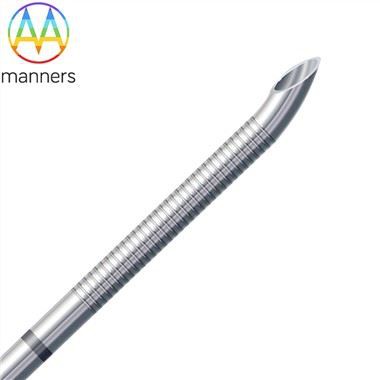
Electrolytic polishing is a sophisticated process that achieves "molecular-level smoothing" of the metal surface through electrochemical principles. When the blade is immersed in a specific electrolyte and an electric current is applied, the microscopic protrusions on its surface (such as the tiny machined marks and burrs left over from machining) will undergo anodic dissolution due to higher current density first. The metal ions are stripped and enter the solution. This process continues, like using an invisible "ironing iron" to gradually smooth out the microscopic "mountains" on the surface until an extremely smooth surface, even reaching a mirror-like effect, is obtained. For Arthroscopy Tapered Shaver Blade, electrolytic polishing brings multiple revolutionary improvements. Firstly, the extreme smoothness (with a significant reduction in surface roughness Ra value) significantly reduces the attachment points of tissue residues and proteins. During surgery, this means less tissue adhering to the blade surface and internal flow channels, significantly reducing the difficulty of postoperative cleaning and fundamentally reducing the risk of cross-infection or pyrogenic reactions caused by instrument contamination. Secondly, the smooth surface reduces the friction resistance when in contact with soft tissue, making the blade move more smoothly within the joint cavity and causing less accidental traction and damage to healthy tissue. Most importantly, electrolytic polishing eliminates the microscopic cracks and stress concentration points on the surface, which are the sources of corrosion and fatigue cracks. By removing this "damaged" machined surface layer, the overall corrosion resistance (especially in the physiological saline environment rich in chloride ions) and fatigue strength of the instrument are significantly improved, extending the service life of the instrument.
However, if a perfectly polished surface is contaminated, all the efforts made will be wasted. During the manufacturing process, the blade may retain trace amounts of polishing paste, metal particles, or environmental pollutants. Any sub-micron residue, even in the magnified view of the arthroscopic lens, could pose a threat. At this point, ultrasonic cleaning technology plays the role of the "ultimate purifier." Its principle is to use high-frequency (typically 20-40 kHz) electrical signals to drive the transducer, generating a dense and intense "cavitation effect" in the cleaning solution. Countless tiny air bubbles form instantly and violently implode, generating local shock waves of up to thousands of atmospheres and high-speed micro jets. This force penetrates everywhere, capable of penetrating the complex internal cavities of the blade, the threaded gaps, and every corner of the laser-cut window. It completely removes the particles, oils, and biological films adhering to the surface. Compared with traditional brushing or high-pressure spraying, ultrasonic cleaning is a comprehensive, uniform, and non-overlapping physical cleaning method. It can achieve a cleanliness level that manual cleaning cannot reach, ensuring that every blade delivered to the operating room is in a "microbiological sense of cleanliness" state.
The combination of electrolytic polishing and ultrasonic cleaning has created an almost ideal "biological interface" for the Arthroscopy Tapered Shaver Blade. This interface has the following characteristics: chemical inertness (the surface after electrolytic polishing has a richer chromium oxide layer, which enhances the passivation film and is corrosion-resistant); physical smoothness (extremely low surface energy, making it less prone to adhesion); absolute cleanliness (no exogenous contaminants). For surgical procedures, this means:
Better tissue compatibility: The smooth and clean surface reduces the risk of foreign body reactions and inflammation.
More stable cutting performance: No tissue adhesion means that the cutting efficiency remains constant throughout the surgical process and does not decrease due to blockage.
Longer instrument lifespan: Excellent corrosion resistance ensures that the blade maintains its performance as new after multiple disinfection and sterilization cycles.
Higher surgical safety: This fundamentally reduces the risk of postoperative infection due to instrument contamination.
Manners Technology has elevated surface treatment to the same strategic level as structural design and precision manufacturing, reflecting its core focus on patient safety and its pursuit of the highest product reliability. In today's era of increasingly sophisticated minimally invasive surgical instruments, the "invisible" nature of the surface is precisely one of the most crucial indicators for evaluating the technical depth and quality commitment of manufacturers. Through electrolytic polishing and ultrasonic cleaning, Manners Technology is not only treating the metal surface, but also meticulously polishing the crucial trust boundary between surgical instruments and the human body.