How Diagnostic IO Needles Unlock New Dimensions Of Physiological Monitoring And Immediate Testing
Apr 24, 2026
The value of the "window" in the bone marrow cavity - How diagnostic IO needles unlock new dimensions of physiological monitoring and immediate testing
Key words: Diagnostic IO needle/pathway + Real-time detection and resuscitation monitoring of bone marrow blood gas, electrolytes and drug concentrations
The traditional role of the intramedullary infusion (IO) needle is as a "treatment entrance", a "back door" that is forcibly opened when the vein "closes". However, cutting-edge research and clinical practice are revealing another long-neglected valuable aspect of the intramedullary cavity: it is a dynamic and informative "physiological window". The intramedullary cavity is closely connected to the systemic circulation through nutrient vessels, and the blood components within its cavity (marrow blood) have a unique and stable correlation with arterial and venous blood. Therefore, IO needles specifically optimized for diagnosis and sampling techniques are transforming this emergency channel into a valuable diagnostic and real-time monitoring channel. This shows great potential in the early assessment of critically ill patients, especially those with circulatory failure.
From "Infusion Tube" to "Sampling Tube": The Scientific Basis of Using Bone Marrow Blood as an Alternative Sample for Testing. In situations of low blood flow such as cardiac arrest and severe shock, peripheral venous blood may become stagnant and accumulate metabolic waste, making it unable to accurately reflect the true condition of the central circulation. In contrast, the bone marrow cavity, due to its unique vascular sinus structure, maintains relatively stable blood flow even at extremely low blood pressure (owing to the self-regulating mechanism of bone tissue), allowing the gas, electrolyte, and drug concentrations in the marrow blood to have a better correlation with arterial blood or central venous blood. Studies have shown that in adults and children, the blood gas values (pH, PaCO2, HCO3-) of bone marrow blood are highly consistent with arterial blood; the lactate level in bone marrow blood can reliably reflect the perfusion and hypoxia status of the entire body tissues, and is a sensitive indicator for assessing the severity of shock and the effectiveness of resuscitation. This provides a theoretical foundation for conducting immediate testing (POCT) through IO pathways when it is impossible to quickly obtain arterial blood.
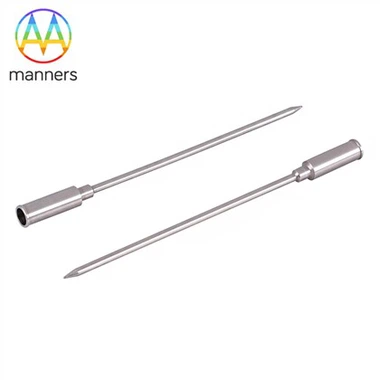
Design of diagnostic IO needles: Optimized for sampling. IO needles for diagnostic sampling differ from pure infusion needles in details. The anti-hemolysis design is crucial: During sampling, if the negative pressure is too high or the blood flow is slow, cells are prone to rupture at the needle tip or in the lumen. Therefore, the polishing level of the inner wall of the needle chamber is higher, or a special coating is used to reduce cell adsorption. In the design of the needle holder, a dedicated, dead-space-free sampling port is reserved, usually a side hole with a diaphragm. Using the small sampling needle from the POCT analyzer to pass through the diaphragm to draw blood, avoiding blood dilution (due to residual infusion) or contamination that may occur when sampling from the main infusion pipeline. Some systems integrate micro sensors on the needle tube or extension tube wall to achieve real-time, continuous monitoring of bone marrow blood oxygen saturation (Sbo2) or lactate, providing dynamic trends rather than single-point data.
The value of real-time navigation in cardiopulmonary resuscitation (CPR) for out-of-hospital cardiac arrest (OHCA) patients. For patients with OHCA, high-quality CPR and the early use of epinephrine are crucial. But how to assess the quality of CPR? Besides end-tidal carbon dioxide (ETCO2), bone marrow blood lactate has become a new dynamic indicator. Before and after the restoration of spontaneous circulation (ROSC), by continuously monitoring the changing trend of lactate levels through the IO pathway, the improvement of systemic perfusion can be indirectly evaluated. At the same time, monitoring bone marrow blood pH and PaCO2 can help determine whether respiratory acidosis/basalosis caused by insufficient or excessive ventilation exists, thereby finely adjusting the parameters of the ventilator. This makes the IO pathway play the role of a "navigator" in resuscitation, moving from blind chest compression and drug administration to precise resuscitation based on physiological feedback.
Diagnostic breakthroughs in critically ill children and patients with difficult vascular access. For infants in shock, repeated arterial puncture for blood collection is extremely challenging and risky. At this time, the established tibial IO access becomes an excellent alternative sampling point. Through microsampling technology, only 0.2-0.3 mL of bone marrow blood is required to complete blood gas, electrolyte, blood glucose, and even some infection markers' testing at the bedside, providing a basis for timely adjustment of treatment plans. For adult patients with severe burns, obesity, or extremely poor vascular conditions, while resuscitating through the IO, monitoring key indicators is carried out using the same access, achieving "treatment and diagnosis on the same path", avoiding additional painful and potentially unsuccessful invasive procedures for blood collection.
The potential applications of drug concentration monitoring and toxicant screening. The bone marrow cavity acts as a compartment for drug distribution, and the drug concentration within it has a certain balance relationship with the plasma concentration. In the rescue of drug overdose or poisoning, the bone marrow blood collected through the IO pathway can be used for rapid toxicant screening or specific drug concentration detection, providing a basis for decision-making on the use of antidotes or blood purification. This is particularly applicable to patients who are unable to provide medical history or obtain routine blood samples due to coma or shock.
In the future, diagnostic IO technology will be deeply integrated with artificial intelligence and miniaturized POCT devices. The next generation of intelligent IO needles may incorporate optical sensors at the needle tip, enabling non-invasive monitoring of hematocrit and hemoglobin levels. After sampling, the bone marrow blood sample is automatically sucked into a microfluidic chip analysis box the size of a credit card for analysis. Within 2-3 minutes, a range of key results including blood gas, electrolytes, lactate, blood glucose, and even troponin are obtained and directly transmitted to the hospital information system via wireless network. In battlefields or disaster sites, this is equivalent to providing each critically injured patient with a "portable ICU laboratory" on their person.
From a simple infusion tube to a multi-functional platform featuring a treatment inlet, a physiological monitoring window, and an immediate testing port, diagnostic IO technology has redefined the clinical value of the bone marrow cavity pathway. It tells us that at the most critical moments, when we choose to carve a path to the deepest part of life, what we obtain is not only a channel for delivering salvation, but also a window to glimpse the true state of the body. The light shining through this window is guiding resuscitation and rescue, moving from an experience-driven era to a data-driven era of precision.