How 15G 25mm IO Needle Manufacturers Evolve Via 2D/3D Drawings
Jul 28, 2026
Industry 4.0 and personalized medicine are shifting device manufacturing from mass standardization to mass customization. Even seemingly commoditized products like the 15G 25mm IO needle face surging bespoke demands. Leading manufacturers transition from blueprint executors to clinical co-creators. Deep customization based on 2D/3D inputs defines competitive edge. We explore this service metamorphosis.
Traditional "catalog" purchasing is insufficient. Clinical nuances demand tailored solutions: low-profile hubs for soldiers in boots, varied tip geometries for veterinary use, or specific fluorescent green hubs mandated by national protocols. This fuels demand for engineering partnerships rooted in technical drawings or physical samples.
Customization initiates with expert interpretation. Engineers perform Design for Manufacturability (DFM) analysis on 2D CAD files (DWG/DXF). Can wall thickness withstand rigidity needs? Does tip geometry suit existing grinders? Collaborative optimization ensures manufacturability without compromising design intent.
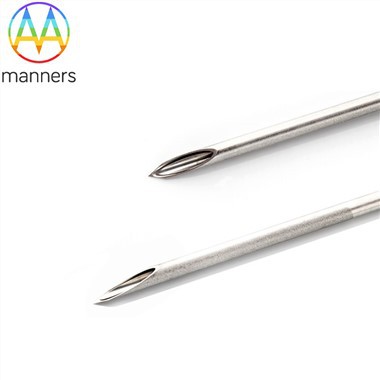
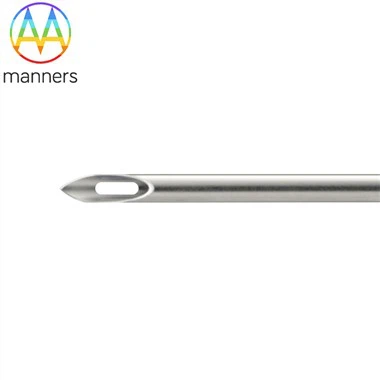
Reverse engineering addresses 3D sample requests. High-precision 3D scanners capture point-cloud data from competitor products or prototypes. CAD reconstruction (SolidWorks/UG) preserves micro-features like tip curvature or surface textures. Rapid 3D-printed prototyping accelerates validation before tooling.
Flexible Manufacturing Systems (FMS) underpin responsiveness. Smart factories deploy CNC grinders with quick-change tooling, modular injection molds, and MES-driven scheduling. Efficient color-change workflows and in-process gauging enable economical small-batch, high-mix production runs.
Packaging customization complements device tailoring. Bespoke sterile barrier systems, multilingual inserts, and customized shipping cartons (optimized for client warehousing) offer turnkey solutions, reducing secondary packaging overheads.
This evolution demands upgraded talent. Engineers require clinical literacy alongside mechanical expertise. Sales teams transform into solution consultants. Project managers orchestrate seamless transitions from concept to scaled production.
Future integration of AI/Big Data will predict optimal designs via historical databases. VR simulations may allow virtual product evaluation pre-production. Such digital convergence will redefine manufacturer-client synergies.
In sum, 2D/3D-driven customization marks the shift from production-centricity to service-orientation. It unlocks niche clinical segments, fosters loyalty, and drives growth. Providers delivering faster, smarter, bespoke services will dominate tomorrow's market.