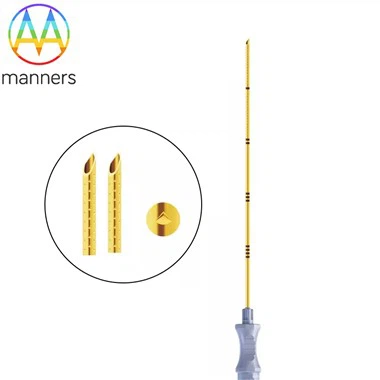
Gauge Selection And Patient Comfort
Nov 09, 2026
The Complaint That Never Goes Away
Ask any hematology ward what patients remember about their diagnostic workup, and the answer is rarely the blood draws. It is the bone marrow procedure: the pressure, the dull ache radiating into the buttock, the second attempt because the first yielded nothing usable. Clinicians describe the same frustration from the other side of the drape - a dry tap, a fragmented core, a needle tip that skates across sclerotic cortex, a stylet that will not seat cleanly after the third pass.
These complaints are usually attributed to operator technique, and technique certainly matters. But a large share of the discomfort and the failed samples trace back to the instrument itself: the gauge, the bevel geometry, the fit between stylet and cannula, the stiffness of the shaft, and the surface finish of the tip. A bone marrow aspiration biopsy puncture needle is a deceptively simple object - a hollow tube with a sharpened end - yet small deviations in its manufacture translate directly into patient pain and diagnostic uncertainty. Understanding the instrument is therefore not an engineering curiosity; it is clinical practice.
The Mechanics Behind a Clean Puncture
Every bone marrow needle performs two mechanically distinct jobs. The first is to open a channel through soft tissue and cortical bone with minimal trauma. The second is to harvest material - liquid marrow in the case of aspiration, an intact tissue core in the case of biopsy.
Penetration depends on the relationship between axial force and tip geometry. A short, steep bevel concentrates force at a small contact area and tracks straight, which is why aspiration needles favour a shorter bevel than a typical hypodermic needle: the goal is a stable channel rather than a fine incision. A longer, more gradual bevel cuts more smoothly through soft tissue but tends to wander when it meets dense cortical bone. Rotational control matters as much as sharpness; a needle that grabs and then releases unpredictably produces the sudden "give" that startles both patient and operator and can drive the tip past the intended depth.
Material choice shapes all of this. Stainless steel 304 offers good formability and corrosion resistance at moderate cost, and remains the workhorse for general-purpose cannulae. Stainless steel 316 and its low-carbon variant 316L add molybdenum, which improves resistance to chloride-bearing environments and to the repeated cleaning cycles that reusable or reprocessed instruments endure. Hardness must be balanced against ductility: a shaft hardened too far becomes brittle and risks tip fracture inside the marrow cavity, while a shaft that is too soft bends during rotation, misaligns the stylet, and produces an elliptical tract that increases discomfort.
Surface finish is the least visible variable and one of the most consequential. Electropolishing dissolves the microburrs left by grinding and passivates the surface, reducing friction along the tract and lowering the risk of tissue adherence and clot formation inside the lumen. Polishing alone improves appearance but does not reliably remove burrs at the bevel edge, which is precisely where trauma begins. Finally, the stylet must sit flush with the bevel. A protruding or recessed stylet either cores tissue ahead of the cannula or leaves a gap where bone debris and clot pack into the lumen - the classic precursor to a dry tap.
Classifying the Devices
Bone marrow aspiration biopsy puncture needles fall into several functional families, and the choice between them is a clinical decision as much as a purchasing one.
Pure aspiration needles are the simplest configuration: a cannula with a locking stylet and a Luer hub, typically with a short bevel and a length suited to the posterior iliac crest. They are used where the diagnostic question is answered by morphology, flow cytometry, cytogenetics, and molecular studies on aspirated marrow.
Biopsy or trephine needles add an inner capture cannula or a core-trapping geometry at the distal end, allowing an intact cylinder of bone and marrow - usually one to two centimetres - to be withdrawn for histology, immunohistochemistry, and assessment of cellularity and fibrosis. These needles need greater shaft stiffness and a more robust handle, since the forces involved in cutting cortical bone are considerably higher.
Combined aspiration-biopsy needles integrate both functions in a single instrument, permitting the operator to aspirate first and then advance for a core through the same puncture. The clinical appeal is obvious: one skin puncture, one anaesthetic infiltration, less procedural time and less discomfort. The manufacturing challenge is equally obvious, since the lumen must remain patent after aspiration while the distal geometry still captures an undamaged core.
Sizing spans a practical range from 8G to 18G, with custom lengths and diameters available on request. Large-bore instruments in the 8G to 11G range suit dense cortex, large-volume aspiration, or biopsies where core integrity is critical. The 13G to 15G range covers most adult aspiration and biopsy work and represents the balance point between sample quality and tract trauma. Finer 16G to 18G instruments serve paediatric patients, small adults, and situations where marrow is hypercellular or fibrotic and a narrow channel suffices. Disposable single-use construction dominates current practice, though reusable handles with interchangeable cannulae persist in some markets.
Packaging and presentation matter more than buyers initially expect. Standard cartons are adequate for bulk supply, but sterility maintenance, tip protection, and lot traceability must be designed into the configuration, and cartons can be customised to a distributor's requirement without altering the instrument itself.
Working Protocol on the Ward
A reliable procedure is built on preparation rather than improvisation. Confirm indications, review coagulation status, and document informed consent. Position the patient in lateral decubitus or prone, identify the posterior superior iliac spine by palpation, and infiltrate local anaesthetic down to and including the periosteum - the periosteal infiltration is the step most often rushed and most often remembered by the patient.
Insert the needle with the stylet locked in place. Advance with controlled pressure combined with gentle clockwise rotation, keeping the shaft aligned with the intended tract; lateral levering is the main cause of bent needles and post-procedural discomfort. When the cortex is breached, the characteristic reduction in resistance confirms position. Remove the stylet, attach a syringe, and aspirate a small volume - typically 0.2 to 0.5 millilitres - then stop. Larger volumes dilute the sample with peripheral blood and degrade the very cellularity assessment the procedure exists to provide. If a core is required, reinsert the stylet, advance the cannula further, rotate to sever the base, and withdraw with a smooth twisting motion. Apply pressure to the site, dress it, and confirm haemostasis before the patient leaves.
Specimen handling determines whether the effort was worthwhile. Aspirate should be expelled onto slides promptly and rolled into thin films before clotting; the remainder goes into an anticoagulant tube for ancillary studies. Cores go into formalin for routine histology, with a separate unfixed portion reserved where molecular testing is planned, and decalcification must be controlled to preserve antigenicity.
Lessons From the Field
Experienced operators compile a private list of failure modes. A dry tap in myelofibrosis or hairy cell leukaemia is a disease phenomenon, but a dry tap in a cellular marrow usually means the lumen was packed with debris or the aspiration volume was drawn too slowly and clotted in the barrel. A core that fragments on withdrawal often reflects insufficient rotation at the base rather than a poor needle. A needle that bends on the first pass should be discarded, not straightened; work-hardened metal at the bend is a fracture risk.
Obese patients need longer instruments and benefit disproportionately from an adjustable depth guard, which prevents over-advancement once the cortex is crossed. Paediatric cases, particularly infants under twelve months, may require the proximal tibia rather than the iliac crest, with correspondingly shorter and finer instruments. Sclerotic bone rewards a fresh, well-polished tip and punishes any attempt to force a dulled needle.
Batch consistency is a quieter problem. Units that switch suppliers sometimes report that "the needle feels different" - a subjective observation that usually reflects measurable differences in bevel angle, tip concentricity, or stylet fit. Requesting dimensional and material certification with each lot turns that intuition into a specification.
What a Good Needle Actually Delivers
Strip away the marketing and the requirements are modest but unforgiving: a bevel that cuts rather than tears, a stylet that seats flush and locks without play, a shaft stiff enough to hold a line through cortex and ductile enough not to snap, a lumen finished so that marrow flows rather than adheres, and documentation proving that each of these properties was measured rather than assumed.
Factories that hold themselves to these standards treat quality control as a process rather than an inspection. Incoming material is verified against certificates; machining parameters are monitored for bevel angle and concentricity; electropolishing baths are controlled for temperature and current density; finished instruments are inspected for patency, sharpness, stylet fit, and surface defects; sterilization is validated; and lot traceability allows any complaint to be reconstructed. That discipline is what allows a supplier to describe equipment as reliable and trustworthy without the claim becoming an empty slogan.
Outlook and Recommendations
The direction of the category is toward fewer punctures, better samples, and more predictable comfort. Combined aspiration-biopsy designs will continue to displace paired instruments; depth-limiting features and imaging-compatible markers are becoming routine expectations rather than premium options; and custom sizing will matter more as procedures shift toward outpatient settings, where a single failed attempt carries disproportionate cost.
For buyers, the recommendations are straightforward. Evaluate with samples rather than catalogues: inspect the bevel under magnification, test stylet fit by feel, measure patency after simulated aspiration. Ask for material certificates, sterilization validation, and lot-level traceability, confirm that packaging protects the tip, and insist that custom sizes are supported by the same quality system as standard ones.
A needle is a small item on a hospital's purchasing list and a large item in a patient's memory. Getting the gauge, the material, and the finish right is not an exercise in specification for its own sake; it is the difference between one quiet, successful puncture and a story the patient tells for years.