Five-axis Coordinated Precision Manufacturing: The Core Barrier And Cost Secret Of The Endoscopic Conical Boring Tool Supply Chain
May 07, 2026
The arthroscopic conical resection tool is not an ordinary metal piece; rather, it is a surgical tool that demands extreme precision, complex geometric shapes, and outstanding reliability. The performance of this tool directly affects the efficiency, smoothness, and controllability of tissue removal during the surgery. Therefore, the core competitiveness and cost structure of its supply chain are deeply rooted in ultra-precision manufacturing technologies such as five-axis联动 processing. These technologies constitute extremely high industry barriers and determine the value distribution of the product.
Core Technology Cluster: The Leap from "Manufacturing" to "Intelligent Manufacturing"
A high-performance conical planing tool requires the following core manufacturing processes. Each step is crucial to the success or failure of the final product:
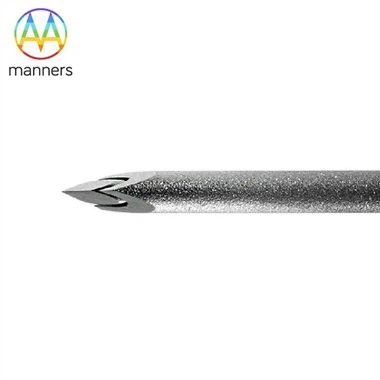
1. Five-axis CNC milling/grinding: This is the core process for shaping the complex three-dimensional conical contours, internal cavities, and cutting windows of the blade head. The five-axis linkage technology allows the tool to approach the workpiece from any direction, enabling multi-face processing with a single setup, ensuring extremely high positional tolerances (up to micrometer level) and excellent surface consistency. This is crucial for achieving blade head balance and reducing vibrations during surgery. Having stable and efficient five-axis machining capabilities is the primary threshold for entry.
2. Five-axis laser cutting: Used for precisely cutting the cutting windows (especially the double internal cutting window design) and fluid channels on the blade head. The laser cutting seam is extremely narrow (15-30 micrometers), with a small heat affected zone, enabling smooth cuts without burrs and smooth edges, which is crucial for ensuring sharpness of the cut and preventing tissue blockage. High-precision five-axis laser cutting machines are another key investment in equipment.
3. Electrolytic polishing and ultrasonic cleaning: After mechanical processing, the surface of the blade head will have microscopic burrs and contaminants. Electrolytic polishing smoothens the surface through an electrochemical process, reducing roughness and enhancing corrosion resistance. Ultrasonic cleaning uses the cavitation effect to thoroughly remove impurities in the internal cavity and complex structures. These two steps directly determine the biocompatibility of the product and the reliability of long-term use.
Supply chain barriers: The accumulation of technology, capital and experience
These advanced manufacturing technologies collectively form multiple barriers in the supply chain:
* High technical barriers: Five-axis programming, process parameter optimization, and tool path planning require profound professional knowledge and extensive experience accumulation. A slight deviation in a parameter can lead to the destruction of the product.
* High capital barriers: Imported five-axis machining centers, five-axis laser cutting machines, and high-precision inspection equipment (such as three-dimensional optical scanners) are extremely expensive, costing millions or even tens of millions of RMB, and have high maintenance costs.
* High talent barriers: It is necessary to have a combined engineer and technician who is proficient in numerical control programming, mechanical processing, materials science, and medical regulations. Such talents are scarce.
* Quality system barriers: As Class III medical devices, the entire production process must comply with strict quality management systems such as ISO 13485 and FDA QSR to ensure that each product is traceable and has consistent performance.
In-depth Analysis of Cost Structure
Take a high-end reusable planing tool as an example. Its cost composition is roughly as follows:
* Raw material cost (15%-25%): Medical-grade special stainless steel or titanium alloy rods. Although it is not the highest proportion, it has extremely high requirements for material purity and uniformity.
* Manufacturing cost (40%-50%): This is the largest cost item. It mainly includes: a) Equipment depreciation and energy consumption: depreciation of expensive equipment such as five-axis machines; b) Processing time: complex multi-process processing takes a longer time; c) Tools and consumables: specialized tools and laser consumables for precise processing are expensive; d) Yield rate: High precision processing leads to a relatively higher waste rate, which increases the average cost.
* Post-processing and quality control cost (15%-20%): Includes the costs of electrolytic polishing, cleaning, sterilization, full-size inspection, and performance tests (such as cutting force tests).
* Research and development and certification cost (10%-15%): Costs for new product design, prototype testing, animal experiments, clinical trials, and global market registration.
* Sales and management expenses (10%-20%).
The reshaping of the supply chain by technological evolution
1. Exploration of Additive Manufacturing (3D Printing): For cutting heads with extremely complex internal cooling channels or personalized structures, metal 3D printing technology has begun to be applied. This requires the addition of metal powder material suppliers at the upstream of the supply chain, and the integration of 3D printing and post-processing capabilities in the middle stage.
2. Intelligence and Online Inspection: The introduction of machine measurement and automated optical inspection systems enables real-time monitoring and feedback of the processing process, improving the yield rate and consistency, which relies on the integration of industrial software and sensor technologies.
3. Application of Coating Technology: To enhance wear resistance and reduce friction, wear-resistant coatings such as diamond-like carbon (DLC) are applied to the surface of the cutting head, introducing a new surface treatment process step.
Therefore, the supply chain of the arthroscopic conical reaming tool is essentially a "precision manufacturing-driven" value chain. Only enterprises that possess core five-axis processing technology, have stable processes and large-scale production capabilities can control costs and ensure quality, thereby gaining an advantageous position in the fierce global competition. Chinese manufacturers such as Manners Technology have been able to move from contract manufacturing to brand ownership and participate in global competition by deeply specializing in these precision manufacturing technologies.