Epinephrine Application Safety Of Nerve Block Needles
Sep 27, 2026
1. Core Safety Pain Points in Clinical Medication
Adjuvant medication in nerve block surgery has always been a key safety control link in regional anesthesia. The most prominent clinical pain point is the unscientific concentration matching of epinephrine. Excessively high epinephrine concentration causes excessive local vascular contraction, leading to tissue ischemia and nerve compression; excessively low concentration cannot slow down anesthetic absorption, failing to achieve the effect of prolonging anesthesia. Second, the blurred contraindication boundary of epinephrine application leads to frequent medical accidents. Many operators fail to fully master the prohibition of epinephrine in extremities such as fingers, toes, ears and nose, resulting in irreversible local tissue necrosis. Third, the coordination error between needle injection speed and drug diffusion affects the anesthesia effect. Fast injection leads to uneven drug distribution, local excessive drug concentration and increased toxic reaction risks, while slow injection reduces surgical efficiency. In addition, the poor sterilization stability of individual unqualified needles increases the risk of postoperative puncture site infection, restricting the safe application of adjuvant medication.
2. Medication Synergy Principle of Nerve Block Needles
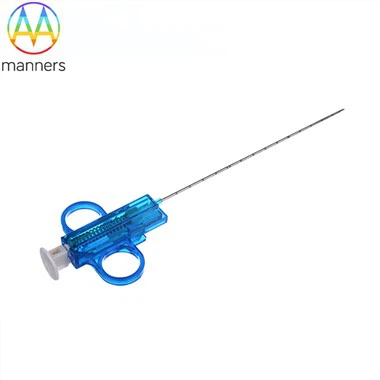
The synergistic working principle of nerve block needles and epinephrine adjuvant medication is based on dual optimization of physical delivery and pharmacological regulation. High-precision nerve block needles achieve directional fixed-point delivery of anesthetics, ensuring that drugs accurately act on the target nerve plexus and avoid diffuse drug waste. The diluted epinephrine with a concentration of 1/100000 to 1/200000 exerts mild vasoconstrictive pharmacological effects, which can shrink local tiny blood vessels around the nerve block site, reduce the blood perfusion rate of anesthetics, and effectively delay systemic drug absorption. On the one hand, this principle prolongs the maintenance time of local nerve block anesthesia, avoids repeated puncture and drug supplementation; on the other hand, it reduces the amount of anesthetics entering the systemic blood circulation, fundamentally reducing the incidence of absorption poisoning, hypotension, tachycardia and other adverse reactions. The sterile and smooth needle body ensures stable drug delivery without contamination, guaranteeing the safety of adjuvant medication.
3. Equipment Adaptability Classification
Different specifications of nerve block needles have distinct adaptability to epinephrine adjuvant medication scenarios. Large-specification needles (8G-14G) are suitable for large-area nerve block in trunk and major limb surgeries, matching high-dose anesthetic mixed with standard-concentration epinephrine. The large inner diameter ensures uniform mixing and stable delivery of drugs, suitable for long-duration major surgery anesthesia. Medium-specification needles (16G-22G) are universal models, compatible with most routine surgical epinephrine adjuvant schemes, with moderate drug delivery speed, which can fully coordinate with vasoconstrictive effects to achieve balanced anesthesia duration and safety. Small-specification needles (24G-26G) are used for ultra-delicate surgery, with low single injection drug volume. In non-extremity delicate operations, low-concentration epinephrine (1/200000) can be added appropriately, while extremity operations are completely contraindicated. Customized needles can be designed with special inner diameter structures according to personalized medication needs to adapt to precise adjuvant medication in special surgeries.
4. Medication and Injection Operational Guidelines
The standardized operation of nerve block needle combined with epinephrine medication includes three core links: drug preparation, injection operation and contraindication control. First, drug preparation must strictly follow the concentration standard of 1/100000 to 1/200000, avoid arbitrary concentration adjustment, and use professional dilution equipment to ensure accurate proportioning. Second, before formal injection, use the nerve block needle for negative pressure aspiration test to confirm that the needle tip is not in the blood vessel, so as to prevent intravascular injection of epinephrine mixed solution and cause systemic vasoconstriction crisis. During injection, maintain a uniform low-speed injection to ensure full diffusion of anesthetics and epinephrine in the nerve plexus tissue. Third, strictly implement contraindication specifications: all terminal limb parts with single blood supply including fingers and toes are prohibited from adding epinephrine to completely avoid tissue necrosis caused by vascular spasm and blood supply interruption. After injection, observe the patient's vital signs and local tissue status in real time.
5. On-Site Practical Experience Summary
Clinical practical experience confirms that standardized epinephrine application can increase the effective anesthesia duration of nerve block by 50%-70% and reduce the incidence of anesthetic poisoning by more than 80%. In clinical practice, the 1/150000 epinephrine concentration is the most universal safe proportion, suitable for 90% of routine nerve block surgeries. For elderly patients and patients with cardiovascular diseases, appropriately reduce the epinephrine concentration to 1/200000 to reduce cardiovascular load. When using small-size fine needles for delicate surgery, reduce the single injection volume to avoid local drug accumulation. In addition, laser-marked needle body scales can help operators control injection depth and drug dosage more accurately. Clinical accident statistics show that almost all extremity tissue necrosis cases are caused by illegal epinephrine addition, so establishing a strict contraindication review mechanism is the key to avoiding risks.
6. Summary and Refinement
Epinephrine adjuvant medication is an important technical means to improve the clinical effect of nerve block needles, and scientific and standardized application can maximize the advantages of regional anesthesia. The core of safe medication lies in accurate concentration control, strict contraindication identification and standardized injection operation. High-quality nerve block needles provide precise instrument support for targeted drug delivery and safe medication. The unscientific medication operation is the main cause of clinical safety hazards, rather than the limitation of equipment itself. Only by matching appropriate needle specifications according to surgical scenarios and standardizing the whole process of medication and injection can we effectively balance the anesthesia effect and clinical safety.
7. Industry Optimization and Development Suggestions
At present, the industry lacks unified popularization standards for epinephrine medication matching nerve block needles. In the future, the industry should formulate unified clinical medication guidelines, clarify the matching relationship between needle specifications, surgical sites and epinephrine concentration, and standardize contraindication operation specifications. Manufacturers can optimize product design, add anti-counterfeiting scale marks and medication prompt marks on needle bodies, and improve the convenience of clinical standardized operation. Medical training institutions should strengthen special training on adjuvant medication safety, focus on popularizing extremity medication contraindications, and reduce human error risks. At the same time, promote the iterative upgrade of high-precision customized needles to meet the precise medication needs of complex and special surgeries.