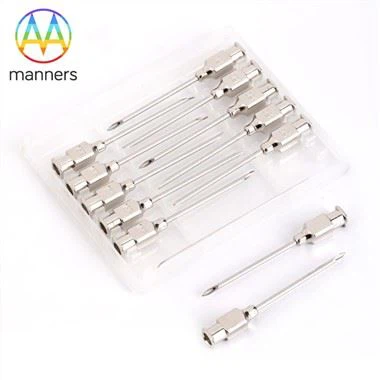
Emergency Reserve Value And Implications For Healthcare Systems Of Needle For Intraosseous Access
Jul 25, 2026
Within modern public health emergency frameworks, pre-hospital rescue systems and grassroots healthcare networks, stocked emergency medical devices form the foundation of enhanced medical response capacity against sudden health incidents. Featuring ultra-fast access establishment, cross-scenario compatibility, high safety and simple operation, needles for intraosseous access rank among priority emergency supplies for medical institutions of all tiers and rescue teams. They carry strategic significance for improving emergency treatment capacity for critically ill patients and responding to public health crises, making intraosseous access needles a key product category prioritized by medical device manufacturers.
For the construction of pre-hospital emergency systems, intraosseous access needles fill critical equipment gaps in out-of-hospital rescue. Road traffic incidents, wilderness rescue and other pre-hospital missions operate under constrained environments with limited tools. Conventional venipuncture consumes excessive time with low success rates and delays rescue efforts. Intraosseous access needles are compact, portable and require no auxiliary equipment. Emergency personnel can carry them on-site and establish life-saving vascular access within 10 seconds, securing valuable time for patient transportation and definitive in-hospital treatment. The technology strengthens integrated pre-hospital and in-hospital emergency chains. Currently, multiple emergency centers worldwide have incorporated intraosseous access needles as standard equipment on ambulances for widespread deployment.
In grassroots healthcare upgrading, intraosseous access needles address insufficient emergency capacity at primary care facilities. Clinicians working in township health centers and community clinics often possess limited experience in complex emergency procedures. Sophisticated puncture instruments carry steep learning curves and face barriers to popularization, restricting treatment capacity for critically ill local patients. Intraosseous access needles manufactured by formal suppliers feature intuitive operations and high fault tolerance. Basic training enables grassroots clinicians to achieve competent performance, supporting initial stabilization of critically ill patients and facilitating tiered medical treatment. The product alleviates uneven distribution of emergency healthcare resources.
The emergency reserve value becomes particularly prominent during public health emergencies and mass casualty events. Natural disasters, industrial accidents and public health incidents generate large volumes of patients requiring simultaneous intervention. Conventional infusion instruments involve cumbersome workflows incapable of supporting mass treatment efficiently. Intraosseous access needles enable rapid parallel establishment of infusion pathways with controllable consumable costs and low complication incidence. They support timely volume resuscitation and medication delivery to reduce casualty rates. Moreover, products maintain stable quality during long-term sterile storage, perfectly matching long-duration emergency inventory requirements and representing essential stock for medical emergency depots.
Additionally, intraosseous access needles deliver reliable medical support in field military care, disaster relief and remote rural regions. Operations remain feasible under harsh conditions independent of location and auxiliary equipment to expand medical coverage. As national emergency medical systems and tiered diagnosis frameworks continuously improve, the scope of intraosseous access needle deployment and stockpiling will keep expanding. Leading manufacturers persist in optimizing product performance, expanding production capacity and perfecting supply chains for emergency stock to deliver robust device support for global medical emergency response networks.