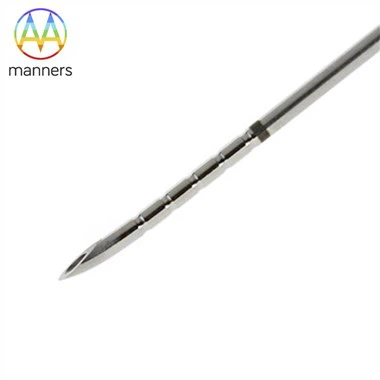
Disposable Vs. Reusable: The Ultimate Battle And Industrial Trajectory Of Hypodermic Needles
May 08, 2026
In the field of hypodermic needles, a model-driven rivalry spanning more than half a century is approaching its final chapter: disposable products have secured an overwhelming victory and completely reshaped the entire industry. The outcome of this contest was not determined by technical superiority alone, but by the combined forces of infection control principles, healthcare economics, legal frameworks, and humanitarian considerations. Understanding this rivalry is the key to grasping the logic of the modern medical puncture needle industry.
Historically, reusable glass syringes with stainless steel needles were standard equipment in hospitals, reused repeatedly after rigorous cleaning, disinfection, and sterilization. Their core advantage lay in low single-use costs. However, their inherent drawbacks became critically amplified under contemporary healthcare systems:
Infection control risks: Even with the most stringent processing, there is no 100% guarantee against cross-transmission of pathogens (especially hepatitis B, hepatitis C viruses, and prions) via microscopic residues.
Operational inefficiency: Reprocessing workflows are cumbersome, consuming significant labor, space, water, and electricity resources.
Performance degradation and legal risks: Needle tips wear and dull after repeated use and sterilization, increasing patient discomfort. In the event of an infection, hospitals face substantial legal liabilities and reputational damage.
The rise of disposable injection needles provided a definitive solution to these pain points. They guarantee absolute sterility and consistent performance (brand-new, sharp) with every use. The HIV epidemic in the 1980s and the establishment of Universal Precautions heightened global healthcare fears of bloodborne pathogen transmission, making disposable syringes/needles the first physical barrier against healthcare-associated infections. Meanwhile, leaps in automated manufacturing drastically reduced the cost of disposable products, unlocking significant economies of scale. In developed countries, stringent occupational safety regulations (e.g., the U.S. Needlestick Safety and Prevention Act) mandate the use of safety-engineered disposable sharp devices to protect healthcare workers-legally sealing the outcome of the rivalry.
The result of this battle has profoundly transformed the industry landscape:
Business model shift: From selling "durable assets" to high-volume, high-frequency consumables, creating stable, sustained massive market demand.
Manufacturing transformation: Drove the industry toward highly automated, large-scale production, with cost control and supply chain management becoming core competencies.
Product innovation focus: Centered on making disposable products safer (needlestick prevention), more comfortable (ultra-fine needles), and more convenient (prefilled syringes), spawning specialized segments such as insulin pen needles and auto-injectors.
New environmental challenges: Generated massive volumes of medical plastic waste, prompting the industry to explore recyclable materials, optimize packaging, and establish secure waste management systems.
Thus, the triumph of disposable injection needles is an inevitable outcome of advances in medical technology, heightened safety demands for patients and healthcare workers, and industrialized production capabilities. It marks a new era for the medical puncture consumables industry, defined by safety, convenience, and affordability. Future competition will unfold within the disposable product category, centered on higher levels of safety, comfort, and intelligent user experiences.