Disposable Trocar Market Size And Growth Prospects
Jul 02, 2026
https://www.lookmedchina.com/resources/disposable-laparoscopic-trocar.html
A Billion-Dollar Track Riding the Wave of Minimally Invasive Surgery
As the core entry instrument for establishing pneumoperitoneum and operative channels in Minimally Invasive Surgery (MIS), the disposable trocar (also known as a disposable laparoscopic port/access needle) has traced a steadily upward growth curve in the global medical device market in recent years. According to data from Fortune Business Insights and Precision Reports, the global trocar market reached USD 870 million in 2025 and is projected to grow to USD 1.41 billion by 2034, with a Compound Annual Growth Rate (CAGR) of approximately 5.47%–6.11%. Among these, disposable trocars already account for over 67% of global trocar usage, exceeding 70% in developed European and American markets, while the Asia-Pacific region is rapidly catching up with the widespread adoption of minimally invasive procedures.
Three core drivers fuel this market expansion. First, the continuous surge in global laparoscopic surgery volumes - over 38 million laparoscopic procedures were performed worldwide in 2025. General surgery, gynecology, urology, and bariatric surgeries heavily rely on trocars to establish working ports, with each procedure typically consuming 3–5 trocars of various specifications, forming a high-frequency, rigid demand. Second, increasingly stringent healthcare-associated infection (SSI) control standards mean that health regulatory bodies and JCI-accredited hospitals prefer single-use devices over reusable products requiring repeated sterilization, completely eliminating the risk of cross-contamination due to incomplete sterilization. Third, the expansion of Ambulatory Surgery Centers (ASCs) and primary hospitals - these facilities often lack high-level Central Sterile Supply Departments (CSSDs). Disposable pre-sterilized trocars are ready-to-use upon opening, significantly shortening OR turnaround times and reducing management costs.
The Chinese market also demonstrates remarkable performance. The domestic localization rate of disposable laparoscopic trocars has reached as high as 98.1%, with over 200 approved products. In the first three quarters of 2025, the number of first-time registrations increased by 75% year-on-year. Provinces including Guangdong, Fujian, and Henan have included them in provincial volume-based procurement (VBP) programs, with winning bid prices ranging from RMB 26 to 1,148. While normalized VBP compresses channel margins, it also accelerates penetration into county-level and lower-tier hospitals.
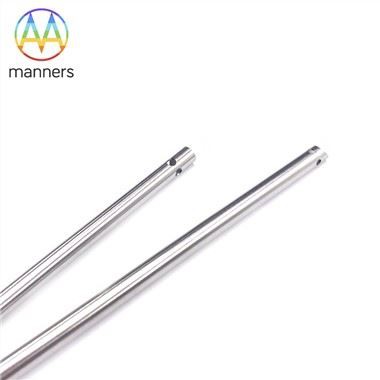
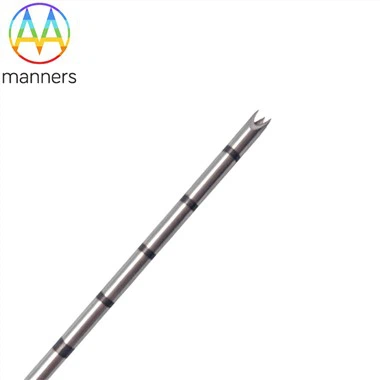
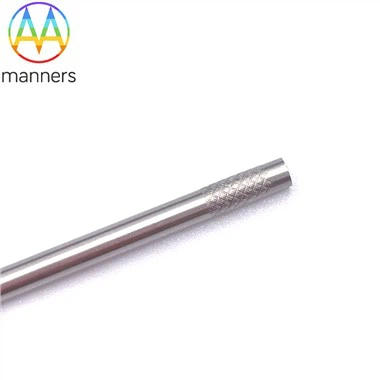
In terms of product structure, 5 mm and 10 mm diameters are the most mainstream specifications (accounting for over 60% of sales volume), while 12 mm and 15 mm are mainly used for specimen extraction or linear stapler passage. Lengths typically range from 75–150 mm, with materials primarily consisting of 304/316L stainless steel cannulas combined with ABS/PC/silicone sealing components. High-end optical trocars utilize Makrolon or Lexan transparent tips to enable direct visualization during abdominal entry.
It is worth noting that the rise of Robot-Assisted Laparoscopic Surgery (RALS) has created new growth opportunities for disposable trocars - da Vinci and domestic surgical robot-specific ports demand higher sealing performance, kink resistance, and fixation stability. The unit price of such robot-compatible trocars is typically 2–4 times that of standard models, becoming a key area of differentiation for leading enterprises.
Looking ahead, as the penetration rate of minimally invasive procedures in emerging markets such as Asia-Pacific and Latin America rises from the current level of less than 30% toward the 60%+ level of developed countries, significant room remains for global demand growth of disposable trocars. For manufacturers, controlling costs through precision machining (such as Citizen Cincom Swiss-type turning with ±0.01 mm tolerances), electropolishing, and ultrasonic cleaning under the ISO 13485 quality system is the foundational key to participating in global competition.