Digital Era: BLT In Guided Workflow
Oct 19, 2026
Freehand implant surgery survived for decades because it worked often enough. But "often enough" is not good enough in the anterior zone, where 2 degrees of angulation error become 0.5 mm of mid-facial recession, and 1 mm of depth error becomes an exposed collar. The pain of freehand is invisible at surgery and obvious at year one. The dentist remembers the torque. The patient remembers the black triangle.
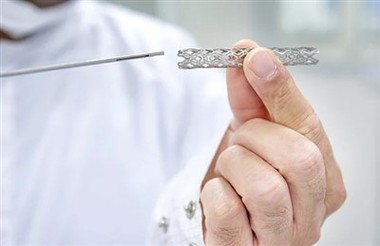
The Bone Level Tapered Dental Implant enters the digital era not because it is new, but because its design parameters-known diameters, known hex platforms, known collar contour, known apex shape-are perfectly describable as data. A 4.1 mm RC implant with a 2.5 mm hex and a consistent subgingival contour is not a mystery object; it is a CAD entity. That makes it guidable, predictable, and auditable.
The principle of digital workflow is closed-loop planning: start from the final tooth, not the available bone. The tooth position dictates the crown; the crown dictates the abutment; the abutment dictates the implant shoulder; the shoulder dictates the osteotomy; the osteotomy respects the nerve, sinus, bone density, and buccal plate. In freehand surgery the brain does this loosely. In guided surgery the software does this explicitly, and the surgical guide enforces it.
Device and data classification now matters as much as physical inventory. You need a CBCT with low artifact and accurate voxel scale. You need an intraoral scanner capable of capturing the edentulous ridge and opposing arch without distortion. You need a implant library containing Ø3.5 / Ø4.1 / Ø4.7 / Ø5.3 mm and lengths 7–15 mm, with the correct hex and abutment contact values. You need a planning platform that allows prosthetically driven placement, not just bone-driven placement. You need surgical sleeves matched to the drill sequence. You need a torque-controlled driver and a depth stop. And you need a digital validation tool: photo, scan, or probe record that confirms the placed implant matches the plan.
The hands-on digital guide is sequential and unbending.
Acquire data first: CBCT plus IOS plus face photo plus bite registration. Do not plan the implant until the tooth is designed virtually. Place the virtual tooth in harmony with the contralateral dentition, lip support, incisal plane, and papilla goals. Then drop the implant so the platform sits correctly relative to the emergence profile; for bone-level tapered implants, this usually means the shoulder is subcrestal but the emergence is still crown-driven. Check clearance: nerve canal, sinus floor, nasal floor, mental loop, adjacent roots. Choose diameter by space and load: Ø3.5 for narrow anterior, Ø4.1 universal, Ø4.7–5.3 for posterior load. Choose length by apical bone quality, not by habit. Print or mill the guide with proper support-tooth-supported, mucosa-supported, or bone-supported depending on span and stability. At surgery, seat the guide, verify stability, drill through the sleeves, re-check depth with a pin, place the BLT implant, and record insertion torque plus resonance frequency if available. After surgery, scan the provisional and compare soft-tissue contour with the plan. At final restoration, capture a new IOS and compare marginal fit, papilla fill, and facial tissue level.
Real-world experience with guided BLT is nuanced. Guides remove catastrophe; they do not remove judgment. A beautiful STL plan built on a distorted scan becomes a beautiful mistake. A guide that rocks on a flabby ridge drills into the wrong bone. A clinician who ignores the planned depth because "it feels shallow" rebuilds the freehand error inside a digital workflow. The technology exposes discipline and indiscipline equally.
Another practical truth: the biggest gain is not angle. It is documentation. When a Bone Level Tapered implant is placed guided, the practice can prove what was planned, what was placed, what torque was achieved, and how the tissue responded. That protects the patient, the clinician, and the brand. In a market flooded with generic implants, guided traceability becomes a premium argument.
The summary: BLT plus digital plan equals predictable root replacement, but only when the data is honest. The implant is no longer just a screwed titanium-zirconium object. It is a node in a treatment dataset: designed virtually, placed physically, restored digitally, and monitored longitudinally.
The outlook is the most exciting in implant history. We are moving toward simulated bone remodeling, where software predicts crestal change at 6 months based on collar design and provisional contour. We are moving toward printed guides that include the temporary shell, so surgery and tissue shaping happen in one appointment. We are moving toward AI radiograph readers that measure peri-implant bone yearly and alert the hygienist before disease becomes visible. The Bone Level Tapered implant, with its defined platforms, SLAcitive surface, cross-locking connection, and bone-control collar, is uniquely suited to this future because it is standardized enough to be modeled and individual enough to be aesthetic.
For manufacturers, the roadmap is clear: open libraries, accurate STL/PDF data, validated guide protocols, and education that treats software as part of the surgical kit. For dealers, the sale is no longer a box of implants; it is a workflow subscription: scans, planning, guide production, provisional design, and follow-up analytics. For clinicians, the mindset shift is the hardest: stop placing implants into bone and start delivering teeth through bone.
The practices that understand this will not compete on price. They will compete on predictability. And predictability, in implant dentistry, is the only luxury that never goes out of fashion.