Decoding The Core Technology And Clinical Value Of Disposable Trocar Kits
Jun 07, 2026
https://www.lookmedchina.com/resources/disposable-laparoscopic-trocar.html
Against the global prevalence of Minimally Invasive Surgery (MIS), laparoscopic, thoracoscopic and related procedures have become the preferred therapeutic option for numerous diseases. Underpinning all such operations is an ostensibly simple yet critically essential device: the disposable trocar kit. Functioning as the gateway for surgical instruments to access body cavities, it serves as a core component safeguarding operative safety, sustaining stable working conditions and governing procedural efficiency. This paper elaborates on the core technical architecture and irreplaceable clinical value of disposable trocar kits.
I. Structural Design: Precision-Engineered Minimally Invasive Access Port
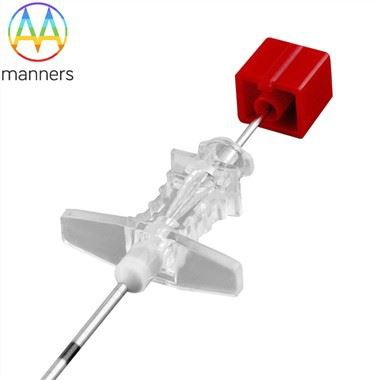
A standard disposable trocar kit consists of three fundamental components: obturator, cannula and sealing cap/valve. The obturator creates the initial percutaneous access through abdominal or thoracic walls, with diversified tip configurations ranging from sharp cutting styles to expandable bladeless dilating variants tailored for distinct tissue anatomy and surgical entry requirements. Left indwelling inside the body throughout the procedure, the cannula is engineered with robust mechanical strength and reliable biocompatibility.
The top-mounted sealing system represents the pinnacle of design sophistication: it enables unobstructed passage of variable-diameter instruments including graspers, scissors and harmonic scalpels while reliably preventing leakage of carbon dioxide insufflation gas that maintains operative cavity pressure - the lifeline for consistent visualization and stable working space during laparoscopy. Select trocar kits integrate an auxiliary insufflation port for on-demand gas replenishment.
II. Material Science: Cornerstone of Safety and Functional Performance
Raw material specification directly defines product safety, dependability and intraoperative tactility, with premium-grade trocar kits adopting rigorously vetted feedstock. Main cannula bodies are commonly fabricated from medical-grade stainless steel such as corrosion-resistant 316L or higher-tensile L605 cobalt-based alloy, resisting deformation and particulate shedding amid repeated instrument manipulation and tissue contact.
Obturator grips and sealing assemblies rely on specialized medical polymers: high-clarity, high-impact polycarbonate (e.g. Makrolon 2458) forms transparent visual obturator tips, allowing surgeons to discern layered tissue architecture for direct-vision cannulation and drastically enhanced procedural safety. High-resilience medical-grade silicone is deployed for gaskets to deliver outstanding wear resistance, consistent sealing performance and anti-aging properties. Advanced insert injection molding achieves seamless bonding between metallic substrates and polymer components.
III. Precision Manufacturing: Elevating Product Standard from Qualified to Exceptional
Production of disposable trocar kits extends far beyond basic molding and manual assembly. Stainless steel cannulas mandate ultra-smooth inner and outer surfaces free of scratches, pits or contaminants exceeding 0.01 inch in dimension - a specification intended not only for cosmetic finish but also to mitigate abrasive tissue trauma and bacterial adhesion risk. Tight process control commences at the tube drawing and preliminary polishing stage instead of relying solely on post-fabrication electropolishing.
Machining adheres to micrometer-level dimensional tolerance (±0.01 mm). Premium Swiss-type turn-mill centers such as Japan's Citizen Cincom L12-1M7 complete micro-bore drilling, in-situ deburring and edge radiusing within a single clamping cycle, realizing finished-edge quality upon primary machining. Uniform rounded port openings eliminate sharp edges that could sever sutures or damage delicate surgical instrumentation intraoperatively.
IV. Core Clinical Value: Safety, Operational Efficiency and Clinical Standardization
- Maximized Patient Safety: Single-use construction fundamentally eliminates cross-contamination risks stemming from incomplete reprocessing and sterilization of reusable hardware. Transparent visual obturator tips and bladeless dilating geometry lower the incidence of accidental visceral and vascular injury. Rigorous intraluminal cleanliness protocols including manual particulate inspection prevent retained foreign bodies within patient cavities.
- Superior Intraoperative Efficiency: High-performance integrated sealing preserves stable pneumoperitoneum over prolonged surgery to sustain crisp operative visualization. Smooth cannula lumens enable seamless instrument exchange with minimal procedural interference. Uniform factory-calibrated performance eliminates gradual functional degradation induced by repeated autoclaving cycles seen on reusable alternatives.
- Streamlined OR Standardized Management: Ready-to-use out-of-pack design simplifies preoperative preparation, alleviates workflow burden and recurring expenditure for Central Sterile Supply Departments (CSSD), optimizes surgical scheduling, and aligns with refined modern perioperative management protocols.
Conclusion
Disposable trocar kits represent high-tech medical consumables integrating material science, ultra-precision mechanical fabrication and clinical-oriented design within contemporary minimally invasive surgical systems. Their value transcends mere single-use disposability, anchored by consistently superior, repeatable performance enabled by state-of-the-art manufacturing. These devices deliver foundational safeguards for safety and therapeutic outcomes across the full spectrum of minimally invasive patient procedures.