Custom Flared Hypotubes For Abdominal Aortic Aneurysm Repair
Sep 05, 2026
1. Identifying the Pain Point: The Customization Dilemma
Abdominal Aortic Aneurysm (AAA) repair stands as one of the most challenging frontiers in vascular surgery, and the pain point is stark: the human aorta is as unique as a fingerprint, with variations in diameter, tortuosity, and lesion morphology that defy standardization. Traditional off-the-shelf hypotubes, even those with sophisticated laser cut patterns, often fail to conform to these individual anatomies. A delivery system that is too stiff can cause arterial dissection, while one that is too flexible may buckle under the push forces required to deploy a stent graft. The laser cut hypotube offers a solution with its ability to be tailored from near end to far end, but the raw cut edges and diameter mismatches at connections introduce new problems. Micro-burrs and recast layers can snag on calcified plaque or the stent graft itself, leading to deployment errors, endoleaks, or even rupture. Moreover, traditional flaring methods lack the precision required for the small, complex geometries of AAA interventions. This forces surgeons to compromise, potentially leading to suboptimal outcomes. The medical device industry is thus confronted with a dual challenge: how to create a hypotube that is not only custom-shaped to the patient's anatomy but also features a perfectly smooth, flared transition that enhances trackability and can serve as an integration point for markers. This customization pain point is exacerbated by regulatory hurdles, as patient-specific devices must navigate a complex approval process without compromising the ISO 13485 certified quality management system.
2. Introducing the Principle: Patient-Specific Flaring Engineering
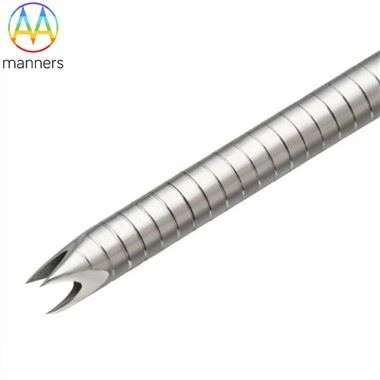
The principle of a custom flared hypotube for AAA repair is rooted in the convergence of digital imaging and precision manufacturing. It begins with high-resolution CT or MRI scans of the patient's aorta, which are converted into a detailed 3D model. Using advanced CAD software, engineers design a laser cut pattern that matches the curvature and taper of the aneurysm. The flaring process is then strategically applied to critical transition zones-typically the proximal or distal ends where the tube must interface with larger components or navigate the iliac arteries. By melting and expanding the edges into a smooth, controlled flare, the transition reduces friction and eliminates stress concentrators that could lead to kinking. Furthermore, the flare can be designed to act as a reservoir for radiopaque markers, such as gold or platinum coils, which are inserted post-flaring to provide real-time visibility under fluoroscopy. This patient-specific approach transforms the hypotube from a generic component into a bespoke instrument that conforms to the body's inner landscape, improving deployment accuracy and reducing the risk of complications. It is a paradigm shift from "one size fits all" to "made for you," embodying the essence of personalized medicine.
3. Equipment Classification: Custom Manufacturing Ecosystem
Producing custom flared hypotubes demands a flexible, reconfigurable equipment ecosystem. The first class is 3D laser cutting systems with dynamic focusing capabilities. These machines can interpret the 3D model and adjust the laser beam's focal length on the fly to maintain a consistent 0.012mm kerf width across complex, tapered geometries. The second class is software-driven flaring stations integrated with CAD/CAM platforms. These systems simulate the thermal and mechanical effects of flaring on the digital model before any physical processing, allowing engineers to optimize parameters for each unique design. The third category includes rapid prototyping machines that combine laser cutting, flaring, and inspection in a single cell, enabling fast iteration and reducing lead times. For quality control, micro-CT scanners and optical coherence tomography (OCT) are used to verify the internal smoothness and dimensional accuracy of the flare. All equipment operates within a framework of ISO 9001:2015, ensuring that even custom devices meet rigorous medical standards.
4. Practical Guide: From Scan to Device
The journey from patient scan to finished device is a meticulously orchestrated process. It starts with the acquisition of DICOM images, which are segmented to create a 3D surface model of the aorta. Engineers then use this model to design the hypotube's cut pattern, specifying the location, angle, and size of the flare based on the anticipated bending stresses and connection requirements. The design is exported as a 2D/3D drawing and loaded into the laser cutting machine. The tube, typically made from 304 stainless steel or Nitinol, is cut with micron precision. Next, the flaring process is initiated. The tube is placed in a fixture that matches the desired curved shape, and a pulsed laser or mechanical mandrel is used to form the flare. For Nitinol, this is done under argon to prevent oxidation. After flaring, the tube is cleaned, passivated, and if required, radiopaque markers are crimped or welded into the flare. The final device undergoes rigorous testing, including fatigue simulation and trackability assays, before being sterilized and packaged in custom medical packaging. This end-to-end process requires seamless collaboration between the hospital, the design team, and the manufacturing floor.
5. Real-World Experience: Tailored Success
Our factory has been at the forefront of custom AAA repair devices. In a landmark case, a patient presented with a highly tortuous aorta that conventional stent grafts could not navigate. We produced a flared hypotube with a bespoke interrupted spiral pattern and a targeted 20° flare at the distal bend. The flare was filled with platinum-iridium markers for enhanced visibility. During the procedure, the surgeon reported unprecedented ease in advancing the device through the iliac arteries, and the stent graft deployed without any endoleaks. However, the project was not without challenges. The initial lead time was over four weeks, which is impractical for emergency cases. We have since implemented a streamlined workflow that reduces turnaround to 10 days, leveraging automated programming and parallel processing. This experience has solidified our belief that custom flared hypotubes are not a luxury but a necessity for complex vascular interventions.
6. Conclusion and Sublimation
The custom flared hypotube represents the pinnacle of personalized medical engineering. It is a bridge between the digital and physical worlds, where a patient's anatomy is translated into a life-saving device with micron-level precision. This technology embodies the noblest aspirations of healthcare: to treat the individual, not the disease. By harnessing the power of flaring to create smooth, patient-specific transitions, we create instruments that are not only functional but also harmonious with the human body. It is a testament to the relentless pursuit of excellence that defines the medical device industry.
7. Prospects and Recommendations
The future of AAA repair will be increasingly personalized. We recommend the development of AI algorithms that can automatically generate optimal cut patterns and flare parameters from patient scans, drastically reducing design time. Investment in on-demand manufacturing facilities, located within or near hospitals, could bring production times down to hours. Regulatory bodies should establish fast-track pathways for patient-specific devices to ensure timely access. As the technology matures, the cost of custom hypotubes will decrease, making them accessible to a broader patient population. The era of personalized vascular care is upon us, and the flared hypotube will be its cornerstone.